Scientists have for a long time been puzzled by the existence of the Great Dyke of Zimbabwe, which is arguably one of the most peculiar and interesting rock formations on the surface of the planet. According to experts, the Dyke is in essence a linear geological feature that shouldn't be there. It is located at ... |
13 October 2010 05:28 GMT |
 |
Scientists have taken a new step in better understanding the complex and intricate processes that go on under our planet's crust, when they have recently discovered the first Earth pump, which they say plays a crucial role in the formation of ore deposits, and in creating the best conditions possible for earthqu... |
19 June 2009 07:02 GMT |
 |
1.Mining started in the Neolithic (New Stone Age), 12,000 years ago, when people gathered grit from the surface of the ground, and later from subterranean deposits. At first, grit mines were made of vertical wells, up to 2 m (6.6 ft) wide and 10 m (33 ft) deep. Tunnels were excavated at the bottom of the well, until ... |
28 January 2008 06:56 GMT |
 |
There are over 200 species of plants linked to the existence of underground ore deposits. Plants usually need in low amounts metals for their metabolism. If there is too high the amount encountered in the soil, the plants depose the absorbed excess in their tissues. Sometimes, the deposits can be so big, that when th... |
21 November 2007 10:06 GMT |
 |
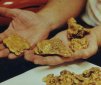
Golden nuggets triggered various gold rushes in the last two centuries, from California and Alaska to South Africa and Australia. The endeavor of thousands of people resulted in gold used for making jewels: from the necklaces of the rappers with bad taste to the most sophisticated royal adornments.Now, a new research... |
17 October 2007 03:56 GMT |
 |
Could the humble iron make us rich? Swedish researchers tend to say yes, as they linked iron ore deposits to gold deposits. In northern Sweden, iron ore has been extracted for many centuries and today it is still mined from two places-Kirunavaara and Malmberget. Kirunavaara site has also given its name to the Kiruna ... |
28 May 2007 06:05 GMT |
 |
|