 14 DAY TRIAL //
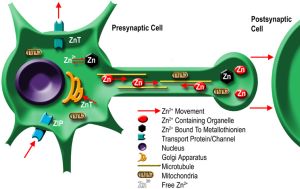
 German scientists have recently proved that zinc plays an important role in the neuronal signaling.
Neurobiologists have been puzzled by the considerable levels of free zinc ions among certain types of neurons. For 50 years, studies were made in the neurobiology field to understand the neuronal role of the zinc. Many studies showed that zinc can be toxic on transmission of neural impulses, but none could conclusively display the metal's function in normal neuronal transmission.
By eliminating a gene encoding a proteic neuronal zinc sensitive receptor, called glycine receptor, the researchers achieved mice with symptoms similar to human hyperekplexia (or " startle disease"), when children have an exaggerated paralysis as a response to fright. In fact, the same receptor is mutated in humans with hyperekplexia. The receptor is a modulator of neuron transmission in both motor and sensory signaling pathways in the brain and spinal cord.
This approach was more specific; previous ones just decreased overall neuronal zinc amounts using chemicals called chelators that absorb zinc ions. The mutant mice presented tremors, delayed ability to right themselves when turned over, odd gait, altered transmission of visual signals, and the specific enhanced startle response to sudden noise.
Electrophysiological studies of the mutants' neurons revealed significant zinc-related abnormalities in signaling at the neuronal synapses level. "The data presented disclose a pivotal role of ambient synaptic [zinc ion] for glycinergic neurotransmission in the context of normal animal behavior."
Manipulating synaptic zinc levels could shift the neuronal action of zinc, but such manipulation "highlights the complexity of potential therapeutic interventions," which could cause an imbalance between the excitatory and inhibitory circuitry in the central nervous system.
Alan R. Kay, Jacques Neyton, and Pierre Paoletti wrote " This work provides a clear demonstration that interfering with zinc modulation of a synaptic pathway leads to a significant alteration in the phenotype of the animal."