 14 DAY TRIAL //
 The most powerful ground based telescope in the world, the Large Binocular Telescope located on Mount Graham, equipped with two 8.4 meter mirrors and the only operational telescope functioning in binocular light, has recently released its first three images featuring a galaxy more than 102 million light years away from Earth. The LBT represents a collaboration between the US, Germany and Italy, meaning that the US basically has access to a quarter of the observation time.
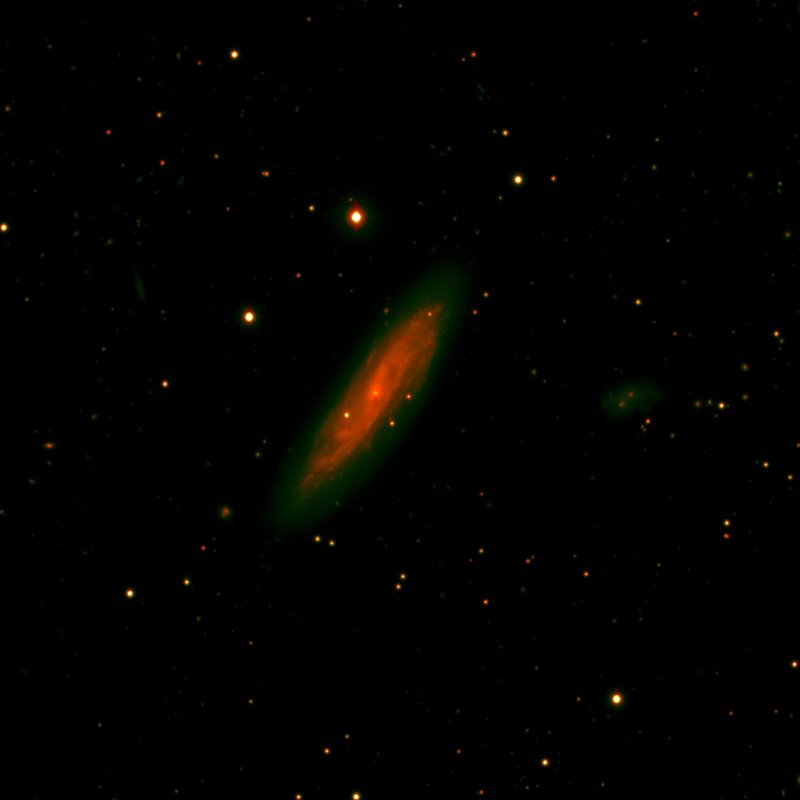
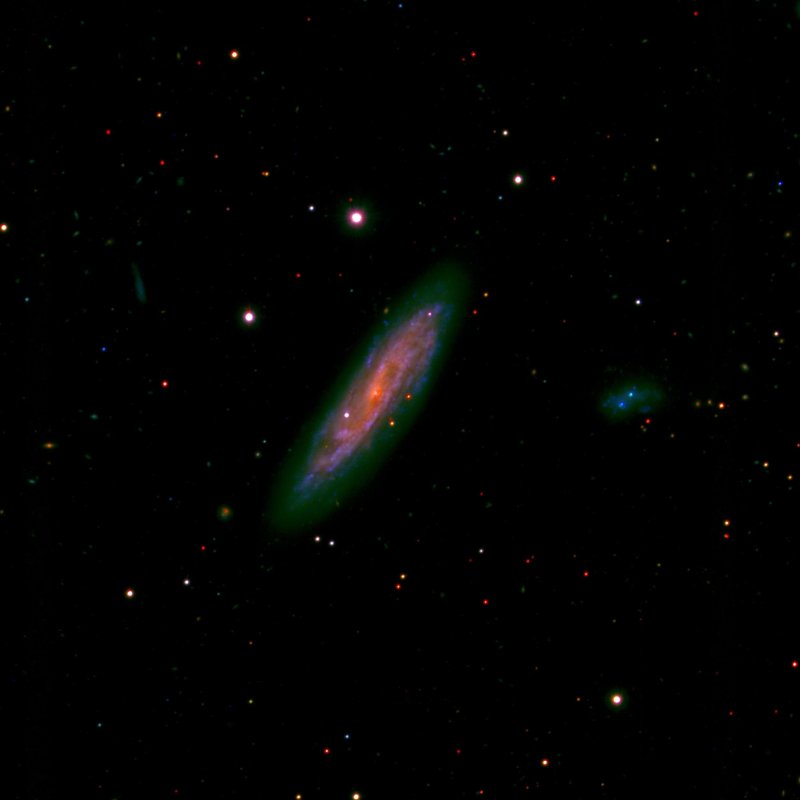
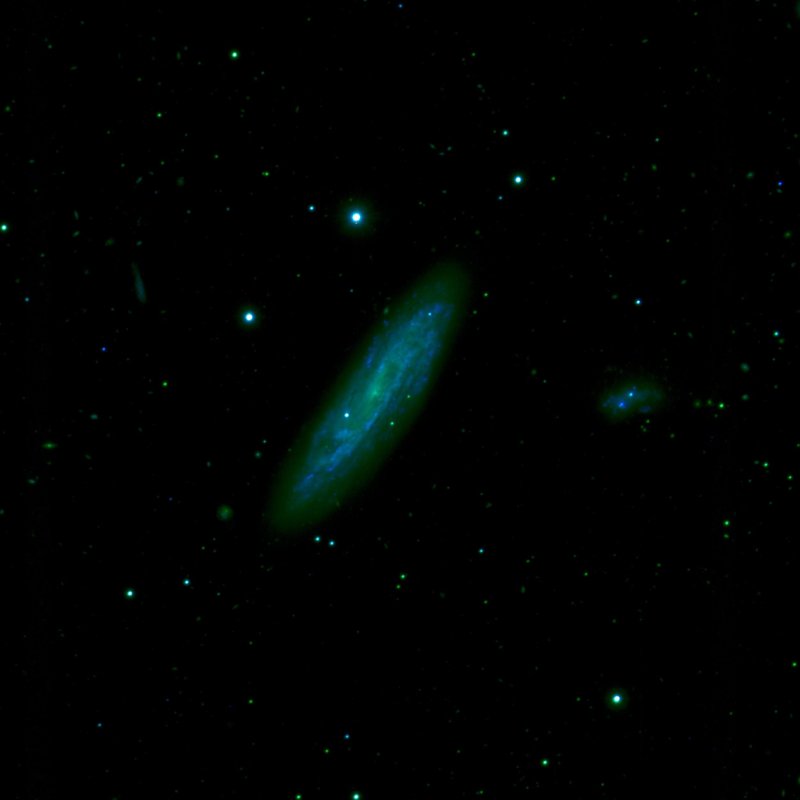
NGC 2770 is a spiral galaxy in the close vicinity of the Milky Way, with a flat galactic disk and a gassy glowing feature slipping slowly away from it - center right of the image. The LBT was able to take three composite images of the galaxy, one in the ultraviolet and green wavelengths of the electromagnetic spectrum, another in far red and the last in ultraviolet, green and deep red. Each of these pictures was taken with a specific purpose.
For example, the first picture, the one in green and ultraviolet wavelengths, indicates regions of the galaxy where new stars have recently formed, the second has the role of revealing cooler stars present throughout the galaxy, while the composite in ultraviolet, green and far red creates a more detailed picture of the galaxy, incorporating both hot, moderate and cool stars.
The LBT originated in a idea proposed during the early 1980 by astronomer Roger Angel, director of Steward Observatory Mirror Lab, but the build started only in 2002, and the first of the mirrors of the observatory was moved to Mount Graham in Arizona, one year later. Also, the Mirror Lab produced the first of the mirror through a revolutionary new technique which involved the use of a rotating furnace to polish it to perfection through a stressed-lap technique. The Mirror Lab also got credit for the invention of the first adaptive optics technology that counteracts the flickering phenomenon produced by the turbulence in Earth's atmosphere.
The cameras and image processing units were provided by the Rome Astrophysical Observatory, led by Emanuele Giallongo. The two 8.4 meter mirrors have a combined light gathering capability of that of a single 11.8 meter mirror. However, by implying composite image techniques, the observatory can achieve the sharpness of a telescope with a single 22.8 meter mirror.
In 2004, scientists aligned the first of primary mirrors of the LBT, followed in the next year by the second one. The two panoramic CCD cameras, capable of producing pictures with a resolution of 36 megapixels, were delivered in 2005 and 2007, thus completing the build of the world's most powerful telescope. As of November last year, the telescope became officially operational.