 14 DAY TRIAL //
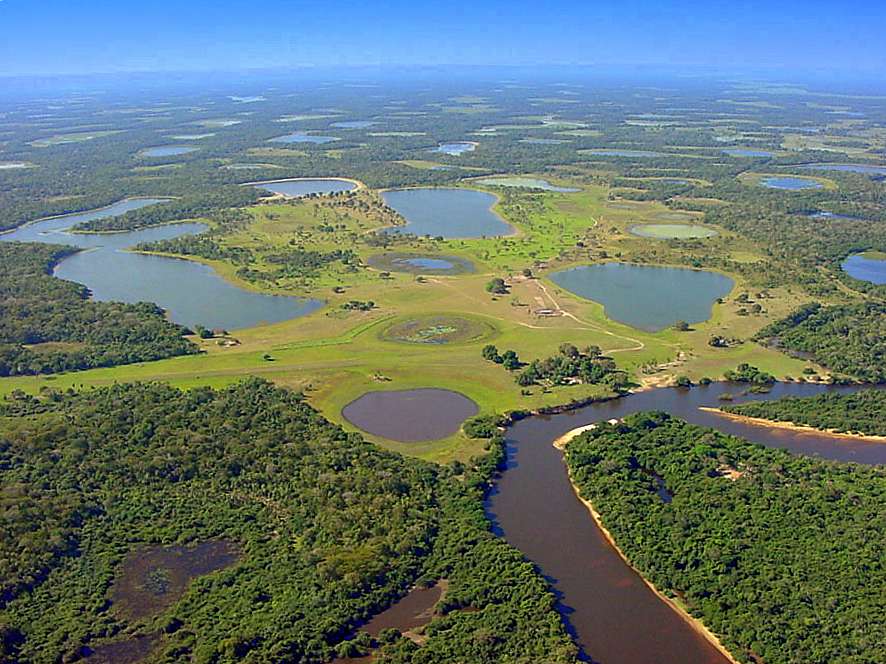
 In Spanish "pantano" means marshland and Pantanal is indeed the world's largest swamp, in a gently sloping relief with meandering rivers. Pantanal is located in southwestern Brazil, but small areas are also found in the neighboring Bolivia and Paraguay, covering a surface of 150,000 square kilometers, more than England!
During the rainy season (December-May), 80% of the area is flooded and here the highest variety of water plants in the world is to be found.
Pantanal's flora and fauna are as diverse as in Amazon, but Pantanal is surrounded by dry forests, not a rainforest. This huge inland delta is drained by the Paraguay river. The inhabitants of the Pantanal are called pantaneiros, a mix of Amerindians, Black People and Spaniards. The main activity of the pantaneiros is cattle ranching and horse keeping. There are about 2,500 ranches (fazendas) in Pantanal and 8 million cattle.
The clime of Pantanal is characterized by a rainfall of 1,000-1,400 mm annually and an average temperature of 25 ?C, even if temperatures can vary between 0 to 40 ?C.
During the rainy season water levels rise over 3 m (10 ft), fertilizing the soil.
Over 2 % of the Pantanal is declared reserve. There are 3,500 species of plants, about 650 birds (including parrots, macaws, jabiru storks, herons and so on), 400 species of fish (three times more than in the whole Europe, including piranha), 100 species of mammals (with jaguars and many wild cats, maned wold, giant otter, capybara (world's largest rodent), tapirs, deer), and 80 species of reptiles (like the spectacled cayman and anaconda (the largest snake in the world)).
Pantanal is menaced by some factors. River sedimentation has increased in the last years, fueled by deforestation in the Andes, impeding navigation and isolating banks of the Pantanal. Increased drought cycles, of 15-20 years, could produce catastrophic effects on the flora and fauna. Herbicides coming from farms surrounding Pantanal reach the marshlands through the table water. Another menace is represented by the gold mining, contaminating the water with mercury and the cleaning system of the Pantanal is overloaded. Poaching is also a huge menace for the Pantanal fauna. Increasing tourism also leaves a lot of waste.