 14 DAY TRIAL //
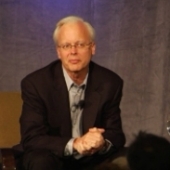
 What does the future hold for Windows 8, Windows 9 and beyond? Where is Windows heading in the next five years, or in the next decade? Is the post-PC era going to usher in the post-Windows era as well? Are the two synonymous? These are legitimate questions, especially on a day when Microsoft’s soon to be ex-Chief Software Architect Ray Ozzie opines that we’re at the dawn of a new day and that the post-PC era is coming.
And just in case that the post-PC concept sounds just a tad too familiar, I want you to think to a few months ago, when Apple Chief Executive Officer Steve Jobs also predicted the death of personal computers as we see them today.
Ozzie seems to share Jobs’ view on the fact that the world is ready to evolve beyond the PC. He ties this with the 25th anniversary of Windows which will come on November 20th, 2010.
“The next five years will bring about yet another inflection point – a transformation that will once again yield unprecedented opportunities for our company and our industry catalyzed by the huge & inevitable shift in apps & infrastructure that’s truly now just begun,” Ozzie states.
After 25 years of Windows, imagining a post-PC world is like forcing a revelation that Microsoft might not be able to comprehend, let alone embrace. An exercise into reinventing itself so drastically, that the very core of the company would implode.
And make no mistake about it, 25 years after Windows 1.0 was launched, Windows is still the heart of the software giant.
And fact is that the world is no longer welcoming with open arms Bill Gates’ old vision for his company “a PC on every desktop and in every home, running Microsoft software.”
Yes, Windows is pervasive, PCs are ubiquitous, but have a look at the device growth beyond computers, and you’ll be surprised.
There are customers that would much rather buy a new smartphone, a new tablet/slate, than a Windows PC.
Users strive for new computing models, and new form factors. In a world where simplicity is the de facto standard for next generation computing experiences, Windows has been accused time and again of being old, bloated, inflexible, overly complex.
“As the PC client and PC-based server have grown from their simple roots over the past 25 years, the PC-centric / server-centric model has accreted simply immense complexity.
“This is a direct by-product of the PC’s success: how broad and diverse the PC’s ecosystem has become; how complex it’s become to manage the acquisition & lifecycle of our hardware, software, and data artifacts.
“It’s undeniable that some form of this complexity is readily apparent to most all our customers: your neighbors; any small business owner; the ‘tech’ head of household; enterprise IT.
“Success begets product requirements. And even when superhuman engineering and design talent is applied, there are limits to how much you can apply beautiful veneers before inherent complexity is destined to bleed through.
“Complexity kills. Complexity sucks the life out of users, developers and IT. Complexity makes products difficult to plan, build, test and use. Complexity introduces security challenges. Complexity causes administrator frustration,” Ozzie said.
At the same time, Ozzie also argues that there’s no escaping complexity, especially as offerings mature.
With longevity, products also grow in complexity, building a foundation of interdependencies that keep customers anchored, dependent, loyal.
Ozzie is not rushing to pronounce the PC dead. Quite to the opposite in fact.
“Our PC software has driven the creation of an amazing ecosystem, and is incredibly valuable to a world of customers and partners. And the PC and its ecosystem is going to keep growing, and growing, for a long time to come,” he states.
Still, Ozzie does warn that Microsoft’s business is at risk if the company is unable to imagine a post-PC era, which seems to be inevitable.
“And so at this juncture, given all that has transpired in computing and communications, it’s important that all of us do precisely what our competitors and customers will ultimately do: close our eyes and form a realistic picture of what a post-PC world might actually look like, if it were to ever truly occur.
“How would customers accomplish the kinds of things they do today? In what ways would it be better? In what ways would it be worse, or just different?
“Those who can envision a plausible future that’s brighter than today will earn the opportunity to lead,” Ozzie added.
Microsoft’s CSA sees a future in which the PC will be replaced by a combination of Continuous Services and Connected Devices.
“We’re moving toward a world of 1) cloud-based continuous services that connect us all and do our bidding, and 2) appliance-like connected devices enabling us to interact with those cloud-based services,” Ozzie predicts.
This is a new world, and one in which the static PC might not have a future. Instead new devices with PC capabilities, will connect seamlessly to the Cloud. Instead of PCs, consumers will opt for appliances, namely form factors that are more specialized than general-purpose.
“At first blush, this world of continuous services and connected devices doesn’t seem very different than today,” Ozzie said.
“But those who build, deploy and manage today’s websites understand viscerally that fielding a truly continuous service is incredibly difficult and is only achieved by the most sophisticated high-scale consumer websites.
“And those who build and deploy application fabrics targeting connected devices understand how challenging it can be to simply & reliably just ‘sync’ or ‘stream’. To achieve these seemingly simple objectives will require dramatic innovation in human interface, hardware, software and services.”
Ozzie compares the transition from the PC to a world of Continuous Services and Connected Devices, as the migration from the mainframe to the desktop computer. The need for simplicity and broad approachability is catalyzing this change, and it is a change that cannot be stopped.
But again, where will this leave Windows? Windows 8 is in the making as I write these words, and Windows 9 will follow it sometime in the next decade, perhaps 2015. What then?
Windows has certainly evolved, and the company is still hammering away at the operating system relentlessly, even attempting to simplify the platform as much as possible with projects such as MinWin.
Looking at the Windows 7 Table PCs today, or lack-there-of, it’s painfully evident that Windows as it is today is not the best fit for non-PC form factors. It was pure luck that Windows XP was around to win the notebook battle with Linux.
But who’s going to win the table battle against Android slates and the iPad? Microsoft is most likely to bet on Windows 8.
And beyond that? What Windows release will be tasked with being pre-installed on next generation form factors in the post-PC era?
Microsoft is also building new operating systems, Midori is an excellent example, and there are others, but are these new platforms created for the devices of tomorrow, or for the aging and dying PC?
Will Microsoft have the Audacity to dream big? Will it have the genius to sacrifice PCs and Windows in a gambit which would secure its future in a world where there’s a new dream, that of ubiquitous computing, in every device, on every surface?
“Today’s PC’s, phones & pads are just the very beginning; we’ll see decades to come of incredible innovation from which will emerge all sorts of ‘connected companions’ that we’ll wear, we’ll carry, we’ll use on our desks & walls and the environment all around us,” Ozzie said.
“Service-connected devices going far beyond just the ‘screen, keyboard and mouse’: humanly-natural ‘conscious’ devices that’ll see, recognize, hear & listen to you and what’s around you, that’ll feel your touch and gestures and movement, that’ll detect your proximity to others; that’ll sense your location, direction, altitude, temperature, heartbeat & health.
“Let there be no doubt that the big shifts occurring over the next five years ensure that this will absolutely be a time of great opportunity for those who put past technologies & successes into perspective, and envision all the transformational value that can be offered moving forward to individuals, businesses, governments and society.
“It’s the dawn of a new day – the sun having now arisen on a world of continuous services and connected devices.”