 14 DAY TRIAL //
 For the past century, mankind reached an unprecedented degree of development that would made our ancestors consider us wizards. Technological breakthroughs are in the news everyday, new materials are created that almost defy logic, if not the laws of physics.
However, nature keeps surprising us when we least expect it. The remarkable way of doing things found in nature is just beginning to be understood by the most brilliant scientists in the world. In many ways, we are just trying to mimic what nature has been doing for millions of years.
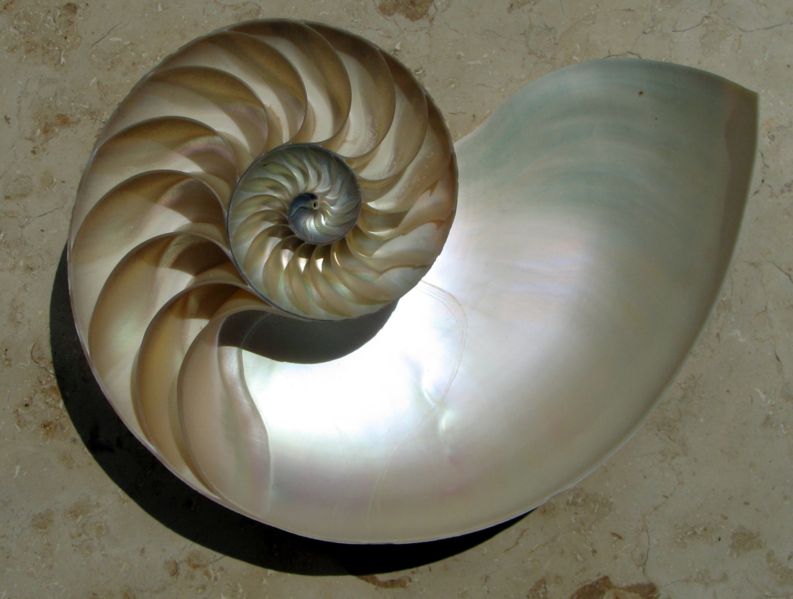
Mother-of-pearl is a good example. Also known as nacre, it is a naturally occurring organic-inorganic composite secreted by the epithelial cells of the mantle tissue of certain species of mollusk. They are made of hexagonal platelets of aragonite, between 10 and 20 microns wide and less than a micron thick, arranged in a continuous parallel lamina.
The beauty of this material has been admired for centuries in jewelry and other applications, but its physical properties are still puzzling scientists.
Pupa Gilbert, a physicist at the University of Wisconsin-Madison and his colleagues, studied this strange material, hoping to understand its strength and to offer clues into how this remarkable material forms.
This naturally occurring material is 3,000 times more fracture-resistant than the mineral it is made of, aragonite, according to Gilbert. "You can go over it with a truck and not break it - you will crumble the outside [of the shell] but not the [nacre] inside. And we don't understand how it forms - that's why it's so fun to study. We don't know how to synthesize materials that are better than the sum of their parts."
A biomineral, much like the one found in bones and teeth is only 5 percent organic and is thought to form when organisms collect or ingest mineral components from their environment, in this case, calcium carbonate, which assembles spontaneously in the shell.
"Ninety-five percent of the mass of this biomineral is self-assembled, while only 5 percent is actively formed by the organism," she says. "It is one of the most efficient mechanisms you can think of."
The results of the study were impressive. It seems that nacre is actually a mosaic of non-aligned crystals, which form a naturally strong material, like those that form the facets of a cut diamond, a poly-crystal stronger that any individual crystal in it. This is what gives the structure its impressive strength.
"Understanding the mechanism by which nacre forms would be the first step toward harnessing its strength and simplicity", concluded Gilbert.