
Softpedia
 

NEWS CATEGORIES:


NEWS ARCHIVE >>
SOFTPEDIA REVIEWS >>
MEET THE EDITORS >>
Home > News > Linux > Open Source Software

August 28th, 2009, 10:11 GMT · By

Ubuntu Software Store Will Be Available in Ubuntu 9.10

SHARE:

Adjust text size:


Ubuntu Software Store
Enlarge picture
After the new X-based graphical boot splash introduced a couple of days ago, Canonical unveiled today what it was only a mockup a few months ago, the Ubuntu Software Store (previously known as Ubuntu AppCenter), a piece of software that would unify all the existing package managers in the Ubuntu operating system. At the moment, the Ubuntu Software Store is not installed by default in the current development release of the upcoming Ubuntu 9.10 (Karmic Koala) distribution, but it can be easily installed by searching "software-store" in Synaptic.

The goal of the new Ubuntu Software Store application is to replace many system-administration programs, such as Synaptic Package Manager, Add/Remove, GDebi, Computer Janitor and even the popular Update Manager tool, in order to offer to both the new and experienced Ubuntu users an easier and more intuitive way to search, install, update or remove applications.

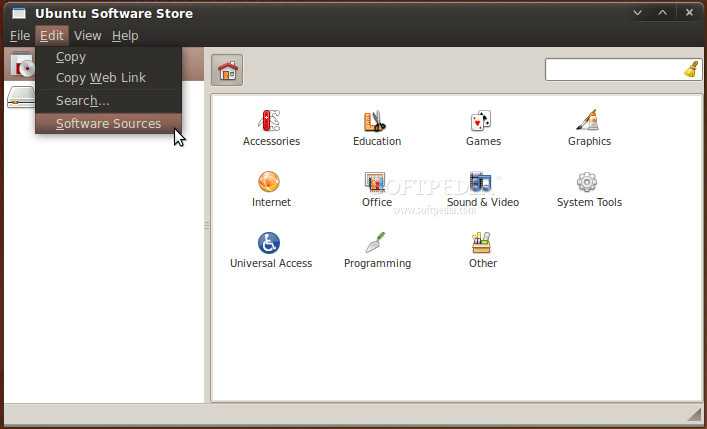
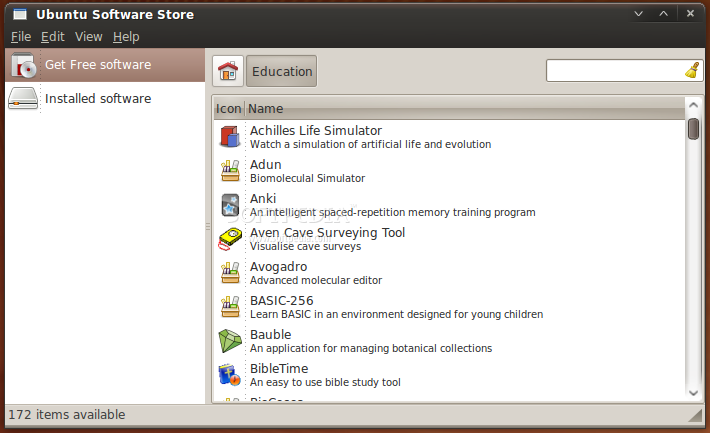
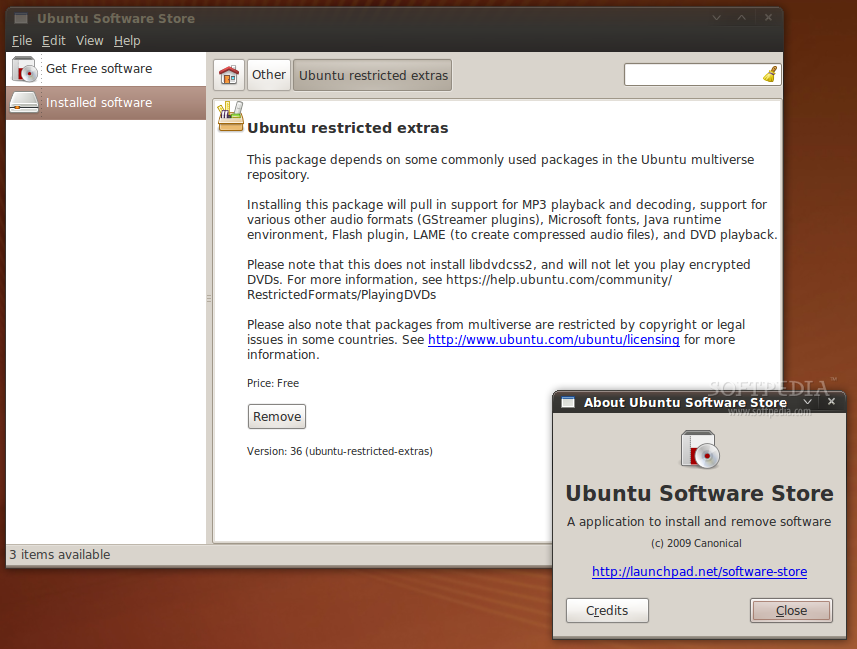
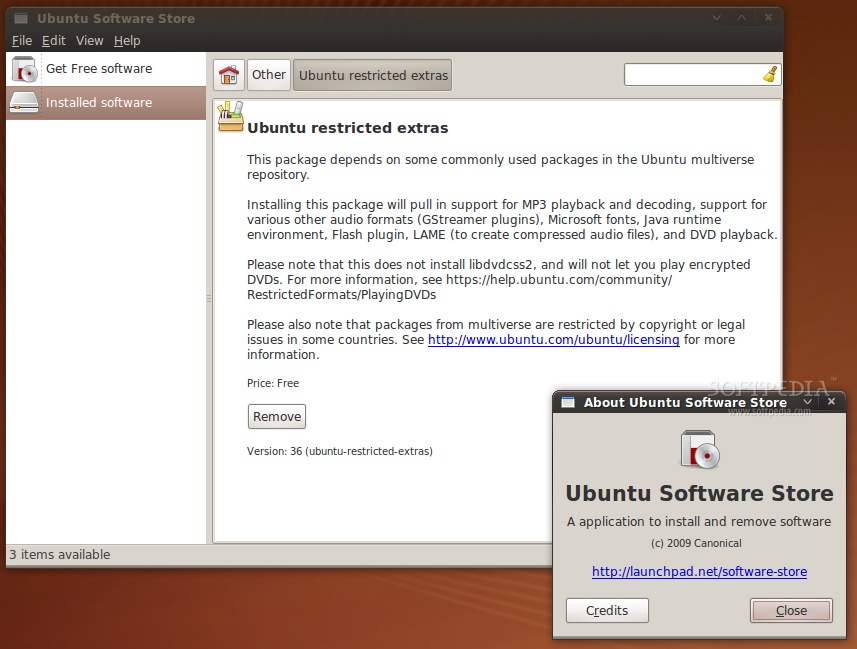
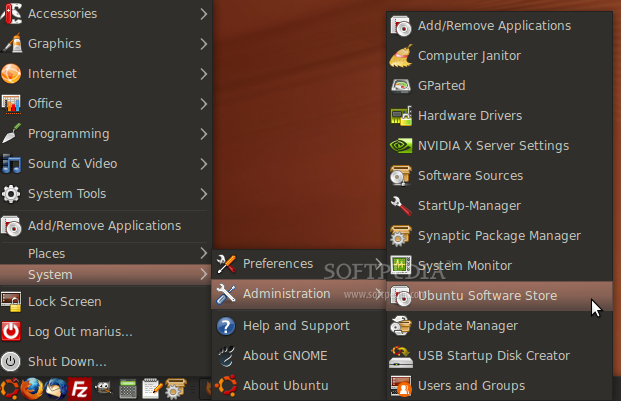
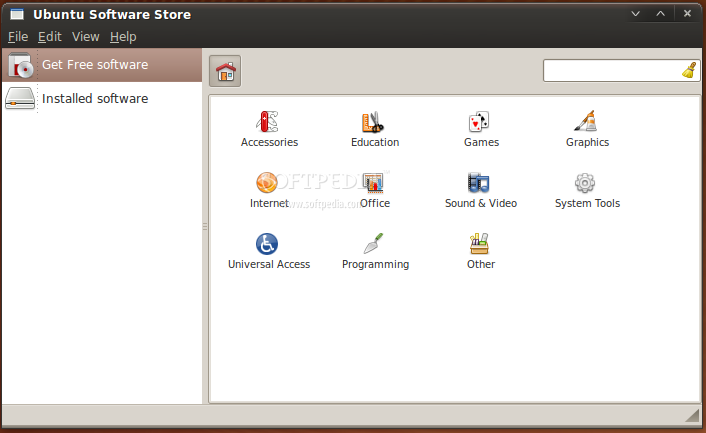
However, even if the Ubuntu Software Store will be available in Ubuntu 9.10 (Karmic Koala), it will NOT replace the aforementioned applications, as the users are still used to them and because the Ubuntu Software Store is still in development! Below, you can see a screenshot tour of Ubuntu Software Store, showing menu entries, navigation, search capabilities, and more...

Menu entry
Enlarge picture
Main window
Enlarge picture
Edit Software Sources
Enlarge picture
View only Canonical Maintained Applications
Enlarge picture

View Applications
Enlarge picture
Application description
Enlarge picture
About dialog
Enlarge picture
Search applications
Enlarge picture


Even if, at the moment, you can only search, install and remove applications, in the near future, Ubuntu Software Store will have the following features:

· search software;
· search software sources;
· retrieve information about software;
· install software;
· software overviews;
· software screenshots;
· user reviews;
· user ratings;
· user friendly;
· Ubuntu upgrades;
· Ubuntu updates;
· buy software;
· install Windows applications;
· install fonts;
· install screensavers.

...and many more!

In conclusion, we, here at the Softpedia Labs, think that Ubuntu Software Store is and will be a great piece of software for the future of the Ubuntu operating system. Having a single piece of software for all the package management tasks, and not four or five different applications, like we have now, is more than welcome and it will bring lots of new users to the open-source world!
TELL US WHAT YOU THINK:

22,172 hits · 7 comments · Link to this article · Print article · Send to friend · Subscribe to news

MUST-READ RELATED ARTICLES:


Ubuntu 9.10's New X Based Boot Splash

New Ubuntu Installer Coming Soon

Introducing the Ubuntu Enterprise Cloud Alpha Images

Ubuntu 9.10 Alpha 4 Has Firefox 3.5 as Default Browser

How to Install KDE 4.3 on Ubuntu 9.04

READER COMMENTS:


Comment #1 by: sam gardner on 28 Aug 2009, 13:43 UTC reply to this comment

The application usability responsibility is the central problem for linux adoption: for the moment, each distro has its own version of every software. This is wrong: the application responsability should stay with the coders, not be moved to the distro.

So if Ubuntu supports a joint linux effort for a joint software store, with only one download per application, not one for each distro, we will be out of the woods. The rest is just propaganda.

Click'n run of linspire did not get support from the other distro's, and so did not take of.

Comment #1.1 by: NTTP on 18 Sep 2009, 10:33 GMT

How is this wrong?

Slackware uses tarballs, if you like Slack use Slack. Same goes for any disto out there. RPM was the other way until apt-get. All this is for Ubuntu is a wrapper for apt-get, nothing more. Gentoo does not use a package manager - it gets the pure source plus any needed patches and creates the package as needed.

How and why is it the responsibility of the coders to maintain the package across platforms? If someone codes an app for x86 and not for _64 - on purpose - then why is it that coder's responsibility to make a 64 bit port? (Throwing this out there because I *know* some 32-bit stuff does not play well on 64 -- learned that with Gentoo) How about ppc or alpha? It has been the responsibility of the *distro's maintainers* to get updates and new packages out to the users. Why is it so easy to create a new Linux distro? Have you actually seen distrowatch.org? Some die from lack of community support, some get a cult following and flamewars ensue.

I can't get over the feeling that somehow, you're a MS shill - only in that camp do I *ever* hear the phrase "application usability". In Linux we're too busy getting things done to come up with colorful management-speak phrases like this.

Comment #1.2 by: Mathias on 30 Sep 2009, 01:32 GMT

This is really exciting.
I do tend to agree with Mr. Gardner. It would be nice if the various distros would all support a same single package format such that coders can write one program for Linux rather than one for each distro. However, I understand and appreciate that the different distros have and intend to pursue very different ways of doing things.


Comment #2 by: HereAndNow on 28 Aug 2009, 15:49 UTC reply to this comment

I think the "buy software" option is a VERY good move. This may help to entice commercial software vendors (Adobe, Intuit, etc.) to port their applications to Linux, if they know they have a way to generate revenue from software sales. Plus, it would provide a channel for just about anyone to make some cash, if they create a good & popular application.


Comment #3 by: dave on 30 Aug 2009, 04:31 UTC reply to this comment

I agree with sam gardner's comments above. Some distos use debian packages, some use yum, etc. It would be nice if the package update application was configured with all relevant distro specific stuff, and then the packages are distro agnostic. It may be hard to be universal, but at least support Ubuntu/Debian, Fedora, Suse, and other major linux distros.


Comment #4 by: edo on 01 Sep 2009, 06:50 UTC reply to this comment

Can anyone tell what s that called that beautiful Ubuntu Interface and How to get it? tahnkx!

Comment #4.1 by: Marius Nestor on 18 Sep 2009, 06:15 GMT

It's the Dust theme from Ubuntu 9.04

Copyright © 2001-2012 Softpedia. Contact/Tip us at

WindowsGamesDriversMacLinuxScriptsMobileHandheldNews

SUBMIT PROGRAM   |   ADVERTISE   |   GET HELP   |   SEND US FEEDBACK   |   RSS FEEDS   |   UPDATE YOUR SOFTWARE   |   ROMANIAN FORUM