 14 DAY TRIAL //
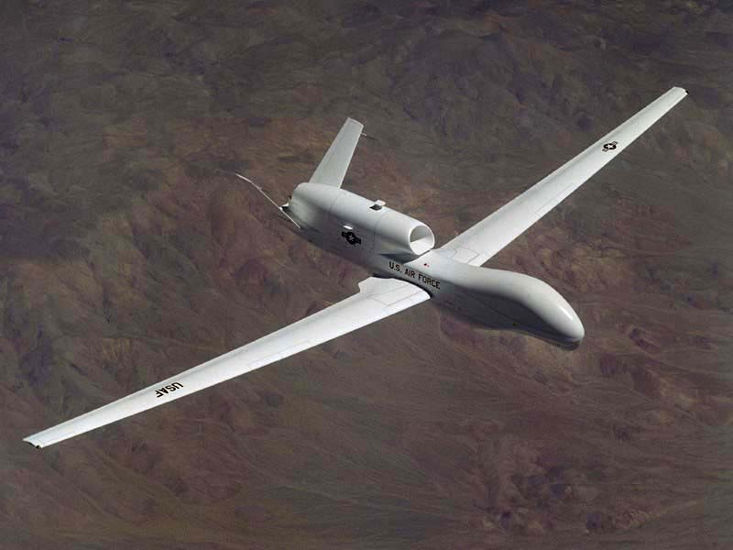
 Unmanned aerial vehicles (UAV) are currently being used for a variety of applications, from surveillance and monitoring to understanding how the planet's atmosphere is structured and keeping an eye on volcanoes. But one of the main limitations these machines have is their “vision,” which is also arguably their most important asset. Pilots need to be able to see where they are going for starters, and the quality of the images the reconnaissance UAV send back needs to be crystal clear. A science team in the United States is currently working on exceeding these limitations.
The investigators are looking into the advantages and challenges associated with using holographic adaptive optics-based instruments aboard UAV. Undoubtedly, such systems would generally improve the quality of observations these aircrafts produce. In addition to their applications in the aviation industry, these adaptive optics devices could also be included in high-energy lasers, as well as in free-space optical communications. In the latter field, including them would result in networks that are able to boost each others' efficiency and speed, which would result in faster speeds for people using them.
Investigation into these instruments is currently being conducted at the United States Air Force Academy's Laser and Optics Research Center, in Colorado Springs. In charge of the study team here is senior researcher Dr Geoff Andersen, who managed to attract funding and support for the initiative from the Arlington, Virginia-based Air Force Office of Scientific Research (AFOSR). The group has already produced innovation recently, when they demonstrated adaptive optics using hologram technology. In addition, the new instruments are lightweight and compact, which makes them cheaper.
“We will see hugely improved images from these new surveillance platforms that holographic adaptive optics will make possible. The current system for UAV imagery, lasers and optics is computer software driven, but the next phase is to replace that with an electronics system called High Altitude Large Optics. Such a system would be orders of magnitude faster than anything else available, while being much more compact and lightweight,” Anderson believes. In the future, hologram adaptive optics could be used to produce telescopes with amazing resolve powers, as well as cameras that produce extremely sharp images.