 14 DAY TRIAL //
 One of the most severe limitations of chemistry today is the fact that experts cannot, for example, mix two highly reactive compounds together until they are sure they want the reaction to proceed. In other words, they cannot place two such substances in a mix, and then trigger the reaction between them at will. Through a new effort at the University of California in Berkeley (UCB), scientists may be able to do just that from now on, with the development of the first laser-operated, reactant storing method.
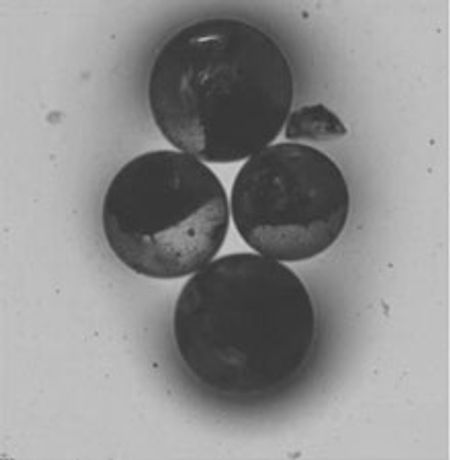
Essentially, the new work allows for even the most highly reactive materials to be stored inside nylon microshells, through the use of carbon nanotubes. The microshells – containing all sorts of reactants – could then be placed in a mixture together, and held in this form for as long as scientists deem necessary. Then, when the time to start the reaction comes, near-infrared laser light can be used to agitate the tiny capsules, which begin to heat up, and eventually burst open. When this happens, the normal chemical reaction that takes place between the specific reactants ensues.
According to Technology Review, the new system could have tremendous applications in fields such as printing, industrial chemical synthesis, or even medicine. Future drugs could be safely and gradually released inside the body through this method, a feature that could benefit patients suffering from chronic pain, diabetes or cancer. These people need their medication given to them on an on-demand basis, and a gradual-release system is preferred to other options. “We've developed a way to have incompatible chemicals in a single container, and an external means to make them react,” UCB organic chemist Jean Frechet says.
“The novelty is not the particle itself, but the fact that it can be addressed by a cheap laser,” the expert adds. The capsules are between 100 and 1,000 micrometers in diameter, depending on the stirring method used on the nylon to form them. Inside, carbon nanotubes that soak up the individual reactants are trapped, and then stored until their release is forced by lasers. Details of the new chemical method appear in the latest issue of the respected Journal of the American Chemical Society (JACS).