 14 DAY TRIAL //
 Many drivers around the world report in studies that driving through tunnels makes them experience increased levels of anxiety. Researchers say that minimal steps taken by authorities could help these people cope better with the road conditions, and avoid a growing number of car crashes taking place underground. Such accidents are extremely difficult to clear out, and can kill many people. If a car starts burning, the smoke alone could suffocate a lot of drivers who just happen to be at the scene.
The very definition of anxiety calls the condition an unfounded fear. Researchers indeed say that there is nothing to be afraid of while driving through such a road structure, from a logical point of view. “Driving in tunnels is actually twice as safe as driving in the open air, when all factors are taken into account,” Gunnar Jensen, who is a scientists at SINTEF, the largest independent research organization in Scandinavia, explains. Statistics demonstrate that between ten and 20 percent of all drivers are either uncomfortable, or extremely uncomfortable when being in tunnels, and indicate that the elderly are the most likely to exhibit this type of anxiety.
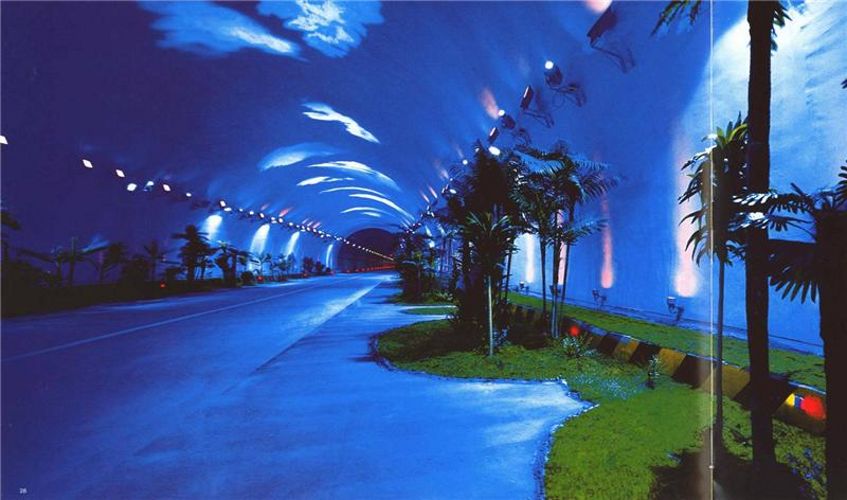
The proper use of cavern spaces in tunnels has been determined by the SINTEF experts to be one of the most important aspects of relieving people's fear. The colors, lighting and patterns employed by architects and constructors have also been found to be important in the way people perceive these passages. In the case of people driving through tunnels where no special attention was paid to these elements, they reported feelings of seeing the road, the walls, and the markings between the lanes shrink. They add that this makes them feel extremely exhausted by the time they exit the tunnel.
“The cavern in the tunnel is one measure that is high on our list. The trumpet-like widenings of the caverns’ entrances and exits are a way of breaking up the impact of long tunnels. The 24.5 km-long Laerdal Tunnel has three well-lit caverns designed according to proposals submitted by the Kadabra Produktdesign company, researchers and the artists Arild Juul and Brit Dyrnes,” the expert adds. He reveals that he was the leader of the team that was in charge of breaking the monotony of the Qinling Zhongnan Mountain Tunnel in China, the longest such structure ever built.
“The tunnel is 18x2 kilometers long, and to begin with it was a dry, monotonous tunnel, which was then developed in collaboration with Norwegian artists and designers into an oasis with palm-trees and clouds on the roof,” Jenssen says. Caverns were constructed inside at three- to seven-kilometer intervals, and the interior was adorned with drawings and palm trees, so as to make people feel like they were out in the open, AlphaGalileo reports.