14 DAY TRIAL //
 Insects can be masters of disguise. In simple cases, you cannot detect the green grasshopers in the vegetation. But think about the orchid mantis (Hymenopus coronatus) from southeastern Asia, which mimics a pink flower so well that pollinating insects go straight into the killing arms of this predator. The stick insects and leaf insects are hard to distinguish from the items they imitate and they form a whole order, Phasmatodea, comprising about 3,000 species. Most species of moths can be hardly differentiated from the tree bark they rest on.
Moreover, insects can be "moody" and change their camouflage along their life time. Such is the weird case of the swallowtail caterpillars. When young, these larvae resemble bird droppings; later, they turn vividly green, copying leaves.
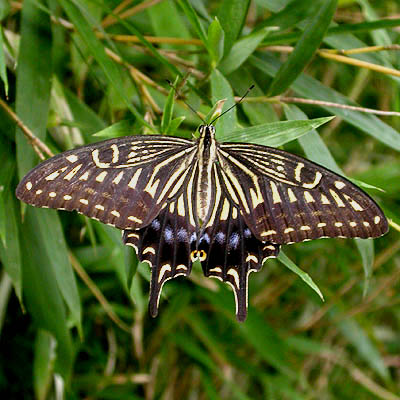
A new research published in the journal Science has found that a hormone is what enables the caterpillar to experience such changes. The juvenile hormone maintain the larvae of the swallowtail butterfly Papilio xuthus, a common species in Japan, in their black and white camouflage mimicking bird excrements.
When the caterpillar reaches the last stage of its development, the concentrations of this hormone decrease, determining the metamorphosis into the green leaf phase.
"We found that juvenile hormone works as a switch for the camouflage pattern. That is a novel aspect of this hormone," co-author Haruhiko Fujiwara of the National Institute of Agrobiological Sciences in Japan, told LiveScience.
"Juvenile hormones are known to regulate many aspects of insect development including molt - when an insect sheds its outer shell - and metamorphosis - as when a caterpillar becomes a butterfly. Juvenile hormone also appears to govern this camouflage process. The hormone may regulate genes involved in color, pattern and surface formation," said Fujiwara.
The bird-feces disguise is meant to protect the larvae from hungry birds until they grow bigger and more mobile.