 14 DAY TRIAL //
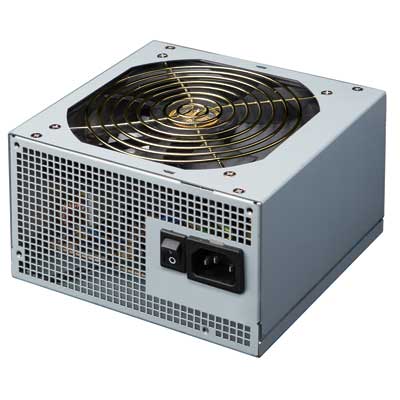
 Like most computer hardware parts, the power supply units are coming attached to a high number of stories, half truths and downright misleading conceptions. While most of the average users do not need to go too deeply into the hardware components of their computers there are some that are interested in doing so and while they may be well intentioned they inadvertently start rumors, stories and so on. One of the most widespread misconceptions out there is that a higher power supply unit will automatically mean a higher energy consumption and of course a higher power bill.
Maybe this is the first and the biggest myth of all, as a power supply unit, PSU for short, delivers exactly the power needed by the computer system, sometimes less but certainly nothing more. Most power supply units are rated to a certain number of watts, let's say for argument's sake 500W, but while this is the maximum power output of the unit, if the computer's power requirements are below that figure, let's say 350W, than the PSU will deliver only 350W and not 500W as that additional power will most likely destroy the hardware components. This is not meant as a downplay of the powerful power supply units, as such units are needed when building computers with a lot of computing power, which is generated by a powerful and power hungry central processing unit, a high energy intensive graphics card or several hard disk drives. One of the most overlooked characteristics of a power supply unit is its rated efficiency, which means how much of the electrical energy is wasted away as residual heat. A higher efficiency rated PSU may cost more but in the long run users can expect to actually save money as less energy is wasted.
There are different brands of PSUs out there, ranging from the more expensive branded units that are built by well known and established manufacturers, to the so called "white" units built from lower quality material but which cost a lot less. The second myth is centered around the power rating of such units, as almost all of them are now coming with tags claiming huge power outputs. When calculating the maximum power output of a supply unit it is usual to consider an ambient temperature of only 25 degrees centigrade even if most PSUs are running at a much higher temperature of 40 degrees or even more. For most PSUs the power rating drops as the temperature climbs, so a cheap unit may yield with 30 or even 50 percent less power than the nominal claim under the "normal" operating conditions.
Another popular myth about power supply units is that several, in fact the more the better, 12V rated rails are better for today's computer systems than a single rail. A single 12V rail can transmit all the output energy from the power supply unit to the computer, while a multi rail design must share the total output between multiple rails. In the end, because of that sharing, each rail will deliver only a fraction of the claimed power as a number of factors, like distribution losses, are causing as much as 30 percent of the energy to be wasted. This phenomenon is similar to trapping the energy, as a rail rated for 20 amps which delivers to a consumer only 10 amps cannot redistribute the rest of the power to other rails, so the remaining power is simply wasted away. Because there is a limit of the power rating on every single rail on the multi rail design of a power supply unit, sharing a rail between big consumers like the modern graphics cards can lead to erratic behavior, as the respective hardware components are receiving less energy that they need for a normal operation.