 14 DAY TRIAL //
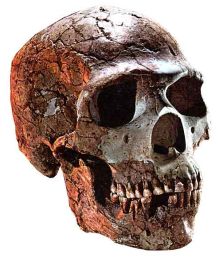
 Two Neanderthal fossils excavated from Vindija Cave in Croatia in 1998, believed to be the last surviving Neanderthals, may be 3,000-4,000 years older than originally thought.
An international team of researchers involving Erik Trinkaus, professor of anthropology at Washington University in St. Louis; Tom Higham and Christopher Bronk Ramsey of the Oxford University radiocarbon laboratory; Ivor Karavanic of the University of Zagreb; and Fred Smith of Loyola University, has redated the two Neanderthals from Vindija Cave, the results of which have been published in the Jan. 2-6 early edition of the journal Proceedings of the National Academy of Sciences (PNAS).
The resultant ages are between 32,000 and 33,000 years ago, and perhaps slightly older. In 1998, the fossils were radiocarbon dated to 28,000-29,000 years ago. Since that time, the increasing application of direct radiocarbon dating to late Neanderthal and early modern human fossils in Europe has greatly altered perceptions of the chronological relationships between Neanderthals and modern humans during the time that the latter spread westward across Europe.
In particular, it has shown that many of the purportedly early modern human fossils are much more recent, while confirming the early ages of important fossil samples in central and Eastern Europe. This work has been combined recently with refinements in the sample purification techniques for the radiocarbon dating bone and teeth, to provide more accurate, and usually older, dates for important fossil specimens.
These new fossil ages still document a substantial chronological overlap between Neanderthals and modern humans in Europe, but primarily the work highlights the currently flimsy nature of scenarios of modern human dispersals in Europe based on small numbers of direct radiocarbon dates, using various sample preparation protocols, on diagnostic human fossils in this time range.