 14 DAY TRIAL //
 This is the whale of the ground-dwelling arhtropods (articulated-feet invertebrates). The coconut crab, also called the robber crab (because it is believed to steal shiny objects, like a magpie), lives only on the tropical islands of Indian and Pacific Oceans (Christmas, Seychelles, Cook, Andaman, Nicobar, Carolines). There are larger crabs living in the sea, their weight being "supported" by the water!
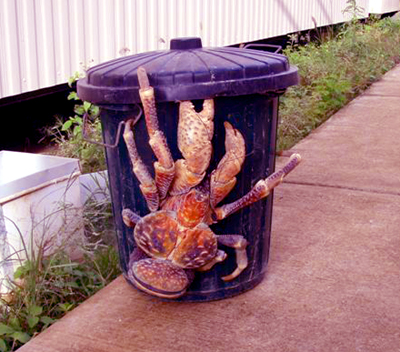
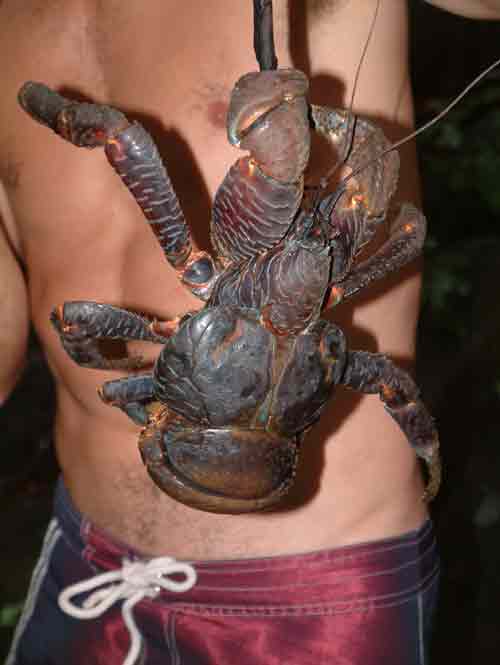
The adult crabs can reach a leg span of 1 m (3.3 ft), a body length of 40 cm (1.3 ft) and weigh up to 17 kg (38 pound), even if usually they reach 4 kg (9 pound). The largest insects (Goliath beetles) weigh just 100 grams... These crabs can live up to 60 years (!), a lot of time for a crustacean and they grow throughout their entire life.
Despite its name, the coconut crab is not a typical crab, but a land-turned hermit crab. But while the sea hermit crabs protect their soft abdomen in snail shells, this huge species hardens it like in lobsters. Typical crabs have a greatly reduced abdomen.
They are nocturnal, spending the day hidden in three hollows, dens dug in sand or loose soil in the jungle or rock crevices, but only at up to 6 km (3.7 mi) from the ocean. By night they go out feeding on...you have guessed, coconuts. Their huge and powerful pincers enable them to crack the tough husk of the coconuts, but they also eat various softer green plants, especially figs and bananas and also carrion or turtle eggs (hatchlings too), and even rats! In fact, the pincers can lift objects up to 29 kg (64 lb)!
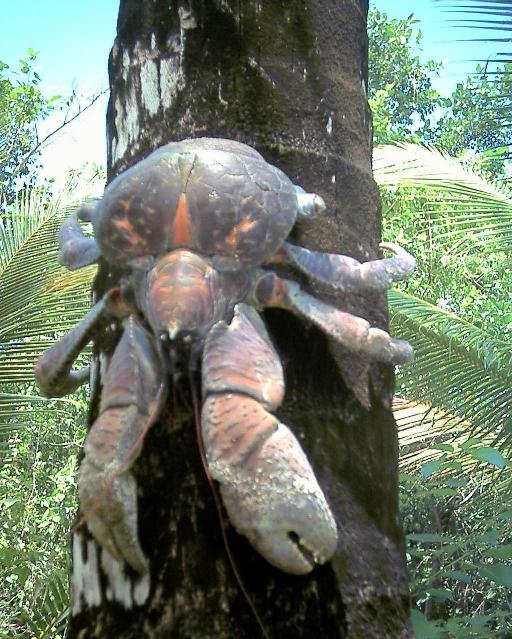
Still, they do not climb coconut trees only for fruit, but they eat a palm's trunk content. These huge crustaceans have a developed olfaction, as they will detect the smell of rotting meat or fruit from large distances. Their eyesight is poor and just like snakes, they detect ground vibrations.
Coconut crabs are known to climb trees up to 6 m (20 ft) high. Their presence is betrayed by the pieces of coconut husks left at the entrance into their hollows, in rotten tree trunks fallen to the ground, as they bring food to their dens to eat safely. They are adapted to terrestrial life, they will drown in the sea, as they breathe through lungs! During June-July, the crabs moult and stay hidden in their dens for up to 30 days.
Still, the sea origin of the animal is obvious during reproduction, as females have to lay eggs in the sea and the larvae live 28 days in the ocean. The young use shells just like any hermit crabs, or coconut husks, if they are not available. Sexual maturity is reached at 4-8 years, extremely late for an arthropod.
The meat of this large crab is extremely appreciated, just like lobster or other crabs and it is also considered an aphrodisiac. Still, the meat can contain toxins from the ingested plants.
That's why in many places, like the Solomon Islands, this species is endangered. There are laws limiting the number of egg carrying females and the size at which they can be collected and exported. In fact, human consumption exterminated long ago this giant crab from Borneo, Indonesia or New Guinea.
Farming these crabs would be a solution, but more about the reproductive habits of this crab must be revealed.
One issue: the coconut crab will attack a person in case it feels threatened!