
Search Perform an advanced search query SOFTPEDIA
 
SOFTPEDIA
Updated one minute ago
HomeSubmit a program for being reviewedAdvertise on our websiteGet help on surfing our websitesSend us your feedbackGet information about our XML/RSS backend and how to use itBrowse the news archiveVisit our discussion forumVizitati forumul in limba romana


KLIP
  1. HOME
  2. SCIENCE
  3. TECHNOLOGY
  4. WEBMASTER
  5. SECURITY
  6. MICROSOFT
  7. LINUX
  8. APPLE
  9. GAMES
  10. TELECOMS
  11. REVIEWS
  12. LIFE & STYLE
  13. EDITORIALS
  14. INTERVIEWS
  15. RSS
Welcome!
Hello, Guest

Login if you have a Softpedia.com account.

Otherwise, register for one.

SCI PRY

The Fastest Raising Mountains

- Between China and Tibet

By: Stefan Anitei, Science Editor

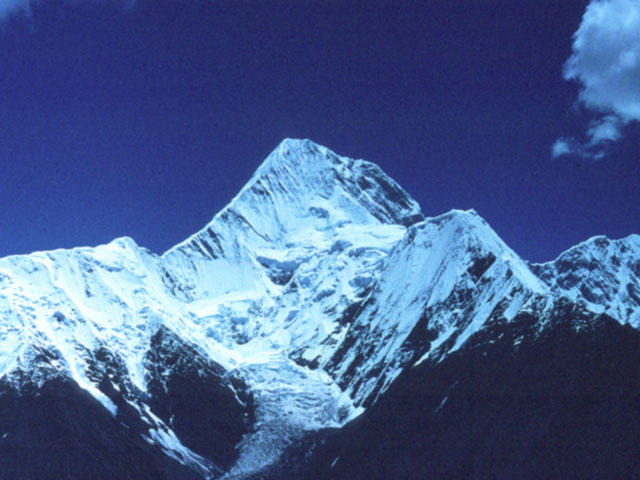
The Sino-Tibetan mountainous chain, also called the "the Alps of Sichuan", are located between Tibet and China. The highest peak is Gongga (7,556 m or 25,186 ft), China's highest peak outside Himalaya, located in the Hengduan Mountains. The Sino-Tibetan chain is the place on Earth
where the terrestrial crust experiences its highest rising rhythm: 12 cm (4.8 in) per year, much faster than in Himalaya, Andes, Rocky or Alps.

That is why the slopes are extremely steep and the isolated mountains have pyramidal shapes. The ridges are extremely narrow and the valleys can be 5,500 m (18,330 ft) deep.

This is the point where Kun-Lun and Himalaya mountains join, after surrounding the Tibetan Plateau (Qinghai-Xiziang) to the north and to the south, respectively. Many larger rivers of south and eastern Asia, like Brahmaputra, Irrawaddy, Salwen, Menam, Yangtze, Dujiang, Mekong and Huang He, originate in the valleys of these mountains. To the southeast, other mountain chains spread: Indo-Burmese, Burmese, Malay and Annamite.

The monsoons enter into the steep valleys of the Sino-Tibetan Mountains via Indochina, bringing rich rainfall during the summer and maintaining high temperatures most part of the year. This results into a rich local flora: from wet tropical forests at the base of the mountains to evergreen subtropical forests (including Podocarpus, a coniferous typical for the Southern Hemisphere and tropical mountains, but also palms of the genera Calamus and Trachycarpus) as altitude increases, then temperate forests (including the relict gymnosperm Ginkgo and magnolia trees), coniferous forests (with a rich bamboo thicket), subalpine scrubs and alpine pastures. The highest peaks are covered by perennial snow and glaciers. The most famous animal of these mountains is the giant panda (Ailuropoda melanoleuca).

With all the tough relief of these mountains, people have managed to practice agriculture, making terraces on the scree cones, a work that required a huge effort.

MORE RELATED ARTICLES: How Blue or Green Eyes Appeared Hawaii: Some Volcanic Records The Oldest People in North America: 14,300 Years Old Orgasmic Calls Boosting Sperm Competition Flowers: Legends, Myths, Symbols How Does it Feel After Being Brain Dead? The Amazing Bamboo How Modern Coins Appeared and the Richest Man of Antiquity The Sea Silk Road About Bermudas and the Bemuda Triangle
 
Comments | Link here | Subscribe
Print | Send to friend
Today's News | Yesterday's News

Search:


11th April 2008, 12:46 GMT | Copyright (c) 2008 Softpedia | Contact:
Read by 297 user(s) | Rating: | 6 vote(s) so far | Cast your vote:
The Fastest Raising Mountains - USER OPINIONS


We are sorry, there are no opinions available for this article.


SHARE YOUR OPINION ABOUT The Fastest Raising Mountains

Since you are not logged on, your comments will have to be approved before being displayed.
Click here to login, or register.
Your Name:
Your Email:
Type in the result:
Your Opinion:


DO YOU WANT TO CONTACT US?  

If you have some comments or you want to send us some information you can send us an email directly to .
You can use the form below for the same purpose.
Your full name: (at least 3 characters)
Your email address: (at least 5 characters)
Message subject: (at least 5 characters)
Message text:
(at least 10 characters)
Type in the result:


© 2001 - 2008 Softpedia. All rights reserved.
Softpedia™ and Softpedia™ logo are registered trademarks of SoftNews NET SRL.
Copyright Information | Privacy Policy | Terms of Use | Contact Softpedia | Update your software | Archive