 14 DAY TRIAL //
 Africa is the continent that will suffer most under climate change. Temperature rise will trigger "sharp declines in crop yield in tropical regions", estimated at 5 to 10 % in Africa with an associated increase in undernourishment, malnutrition, malaria and related deaths.
50 % of all malnutrition-related deaths (4 million annually worldwide) occur in Africa, while a 2?C rise in temperature will increase the people affected by hunger, potentially by 30 to 200 million worldwide.
Globally, Africa and Western Asia will suffer the largest crop losses, while these regions are highly dependent on agriculture and have the largest limits in purchasing power. Conflict and violence triggered by scarce resources and famine will likely bring West Africa to socio-political instability. Even prosperous regions like the Cape will be touched, as millions of people will be displaced by drought and water shortages in the poorer areas.
World Bank specialists estimated that approximately 7 million people migrated - driven by food scarcity - out of the 80 million semi-starving in sub-Saharan Africa due to environmental factors, and this is only to be aggravated in the future due to global warming.
South Africa, one of the more stable African economies, will likely see a significant rise of the emigrant number from other African countries. A 2?C temperature rise will drop 20 to 30 % water availability in southern Africa. The South African soft fruit industry has suffered a 1?C temperature rise in the last 30 years.
In 2004, many South African farmers reported that rising temperatures impeded trees from sufficient winter resting, while fruit was becoming sunburned during ripening season. The shifting areal of the tree aloe (or kokerboom) to the south supports the observation that the Karoo desert is pushing south into the Cape.
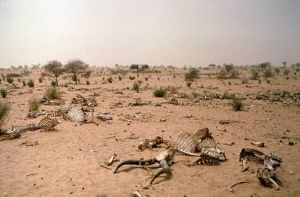
The westerly storm bringing winter rainfall in the Cape region is expected to move south, missing the continent and losing their water out to sea. Drought has impacted Cape's wheat production in the last years, and this trend has just begun. Future water scarcity - paradoxically - will increase water demand for human consumption, further cutting water amounts for an increasingly necessitated agriculture.
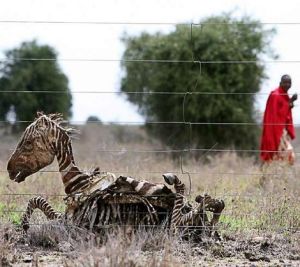
Higher temperatures and drought will cause more powerful wildfires in Africa, during the summer on Cape and during the winter on savanna zones. A new study made on the Kenyan Tsavo National Park showed that "large infrequent disturbances" like a severe drought on Maasai territory at the end of the 19th century (1883-1902) led to the most devastating effects. "Severe disturbance events and rapid environmental change tend to occur infrequently, but can have a lasting effect on both environment and society" says Dr Lindsey Gillson.
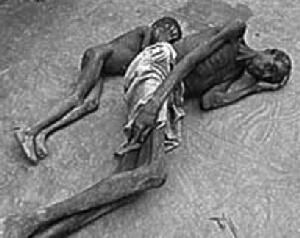
This period was characterized by epidemics of bovine pleuropneumonia, rinderpest and small pox and in 1897 and 1898 the rains failed completely. The Austrian explorer Dr Oscar Baumann noted in 1891: "There were women wasted to skeletons from whose eyes the madness of starvation glared ... warriors scarcely able to crawl on all fours, and apathetic, languishing elders. Swarms of vultures followed them from high, awaiting their certain victims."
"It is important to use long-term historical and palaeoecological data to try to understand the frequency and effects of extreme events, and the way societies and ecosystems respond to them" Lindsey Gillson explains.
Her work involved analyzing sediments from the famous Tsavo National Park. Gillson analyzed sediments from Tsavo for age, pollen and charcoal fragments to make a picture of environmental changes that confirmed the sad episode from Maasai history. Great Savings on Dr Jon Lovett, who has been researching the impacts of climate change on Africa, says that we must learn from history and be prepared. "Events like this are going to become more common in the future, and we need to be ready for them" said Dr Jon Lovett.
As the greenhouse effect acts within a lag system, the sun's energy stored today will take 20 to 30 years to redistribute throughout the system, thus what we see today is due to atmosphere contamination before we were born. At the current level of contamination, the global average temperatures will likely rise by as much as 5?C. This will affect by 5 to 20 % global living standards, thus developed nations will also be impacted, not only Africa's poor countries.