 14 DAY TRIAL //
 Telepathy sounds like something out of the freak show, or SF stories. But, this trait has been found to be displayed by the DNA molecules. DNA double helixes can recognize fitting sequences from a distance and then join together, without the implication of enzymes or other molecules. Researchers had not suspected that the DNA double helixes could sort themselves.
The DNA helixes are chains of 4 joined nucleotide bases (A, T, C and G). But A binds chemically only to T, and C to G. The DNA helixes have been tagged with fluorescent chemicals and placed in saltwater with no proteins or other chemicals that could influence the DNA behavior.
The researchers noticed that DNA molecules with identical sequences of bases were twice more likely to gather together, than in the case of DNA molecules of different sequences. But what attracted the DNA stretches together were not the same factors keeping the double helixes together, as the nucleotide bases of the DNA double helixes are located inside the helix.
The outer helix is made by highly electrically charged chains of sugars and phosphates, which have the same chemically structure in any DNA molecule.
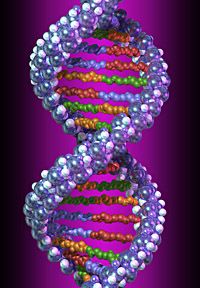
The telepathic DNA recognition works under laws of physics. The DNA double helixes work like corkscrews, and the bases that form a DNA strand make the corkscrew bend one way or the other.
DNA with identical sequences form corkscrews "whose ridges and grooves match up," said researcher Sergey Leikin, a physical biochemist at the National Institute of Child Health and Human Development in Bethesda, Md.
"The electrically charged chains of sugars and phosphates of double helixes of DNA cause the molecules to repel each other. However, identical DNA double helixes have matching curves, meaning they repel each other the least. This could help avoid errors in how DNA combines, errors that underpin cancer, aging and other health problems. Also, the proper shuffling of DNA is essential to sexual reproduction, as it helps ensure genetic diversity among offspring," explained Leikin.