 14 DAY TRIAL //
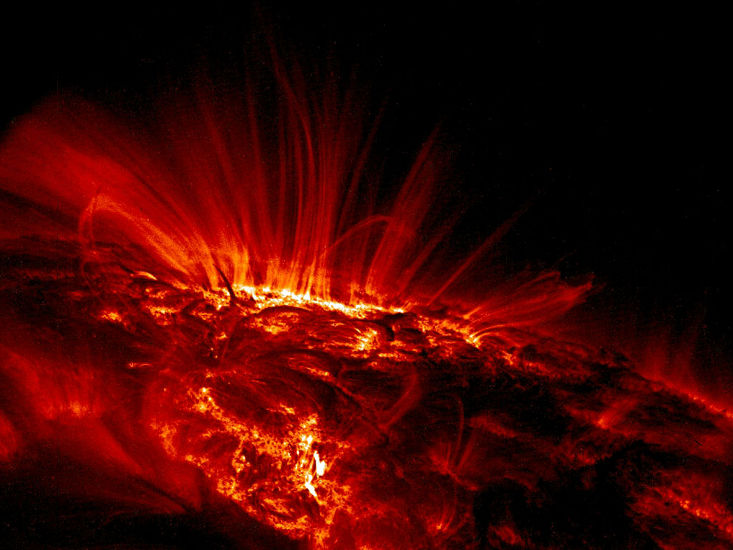
 Understanding the Sun is one of the main goal researchers at the American space agency have. As such, they are currently preparing to conduct a new series of scientific investigations that will this time target an area of the star that is seldom seen. The transition region is located between the surface and the Sun's outermost level, and the magnetic fields that are present in the region have thus far eluded measurements. The region is important to science because it is the point of origin for such events as solar flares and coronal mass ejections, Space Fellowship reports.
These space phenomena can have extremely dangerous consequences for the astronauts living aboard the International Space Station (ISS). Power grids and satellite electronics are also at risk of being fried from the sudden solar discharges, a fact that could cause billions of dollars in damages and destroyed infrastructure. Predicting space weather is therefore a very important objective, but one that is proving to be rather elusive. NASA investigators hope that they will be able to clear some of the mystery by using the Solar Ultraviolet Magnetograph Investigation (SUMI) instrument.
The device could be precisely what experts at the NASA Marshall Space Flight Center, in Huntsville, Alabama, need in order to look at the transition region. Solar physicists suspect that the area may conceal vast temperature fluctuations, that could reach from several tens of thousands of degrees Fahrenheit to several million, over a short time frame. Using SUMI, the NASA team wants to calculate the strength and direction of magnetic fields, even if the region never revealed its secrets to other observations tools. SUMI has a diameter of only 22 inches, and is about 10 feet long, but its capabilities are more than enough for the job, the Marshall team says.
“The core thing we must understand to one day predict solar flares is what is changing with the magnetic field. To determine what is changing in the magnetic field, you first have to be able to measure it. SUMI will take the first measurements of the solar magnetic field in the transition region, where large eruptive events may originate,” says MSFC astrophysicist Dr. Jonathan Cirtain, the principal investigator of the SUMI instrument. The solar magnetic field is “like an onion, and we’re slicing through the layers to get a picture of what the onion looks like at all these different layers. Eventually we’ll glue the onion back together and have a 3D representation of what an onion might look like – or in this case, the magnetic fields of the Sun,” the expert concludes.