 14 DAY TRIAL //
 Two days ago, on September 14, officials at the Boeing Company and DARPA signed an agreement that made the corporation the main contractor on developing and flying the Solar Eagle.
The project for this unmanned aircraft is part of the Vulture II demonstration program, that is being conducted by experts at the US Defense Advanced Research Projects Agency (DARPA).
Boeing has approximately two and a half years, until 2014, to develop the aircraft, under the provisions of an $89 million agreement, officials at the corporation announced.
“SolarEagle is a uniquely configured, large unmanned aircraft designed to eventually remain on station at stratospheric altitudes for at least five years,” explains Pat O'Neil.
“That's a daunting task, but Boeing has a highly reliable solar-electric design that will meet the challenge in order to perform persistent communications, intelligence, surveillance and reconnaissance missions from altitudes above 60,000 feet,” O'Neil adds.
He is the program manager for Vulture II at Boeing Phantom Works. The official adds that this contract calls for the creation of a full-scale flight demonstrator.
In addition, the company also needs to ensure the maturation of the critical power system and structures technologies, in collaboration with Versa Power Systems and QinetiQ.
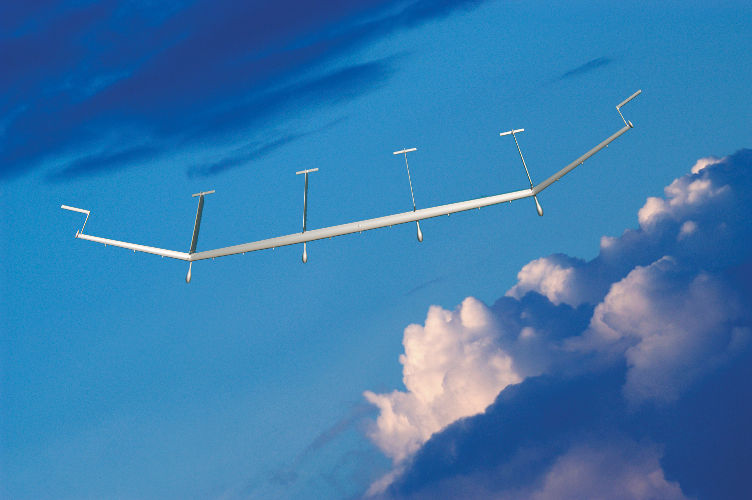
The Solar Eagle will be an aircraft capable of flying missions of virtually unlimited duration, as it will be powered by multiple electrical motors.
These motors will be in charge of providing the thrust for propulsion and steering, and this will be done by using differential thrust of different motors.
“During testing, the Solar Eagle demonstrator will remain in the upper atmosphere for 30 days, harvesting solar energy during the day that will be stored in fuel cells and used to provide power through the night,” Boeing announces in a press release.
“The aircraft will have highly efficient electric motors and propellers and a high-aspect-ratio, 400-foot wing for increased solar power and aerodynamic performance,” the document adds.
At this point, this aircraft is not the only thing Phantom Works is developing. Engineers here also need to build the fighter-sized, unmanned, advanced technology demonstrator called Phantom Ray.
The aircraft, which will get its maiden flight next year, is also accompanied by the High Altitude Long Endurance (HALE) demonstrator Phantom Eye.