 14 DAY TRIAL //
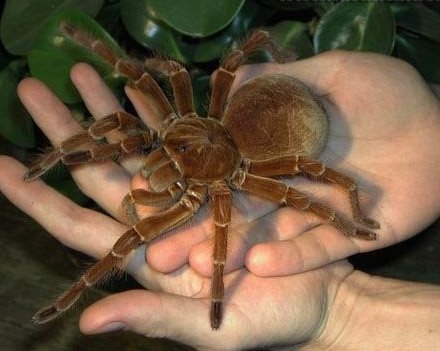
 It is assumed that we have an ancestral fear of snakes and spiders deeply rooted in our genes. But a new research made at the School of Psychology, from the University of Queensland, challenges this concept, as signaled by ScienceDaily.
"Previous research shows we react differently to snakes and spiders than to other stimuli, such as flowers or mushrooms, or even other dangerous animals?.or cars and guns, which are also much more dangerous. [In the past, this] has been explained by saying that people are predisposed by evolution to fear certain things, such as snakes and spiders, that would have been dangerous to our ancestors. [However], people tend to be exposed to a lot of negative information regarding snakes and spiders, and we argue this makes them more likely to be associated with phobia."- said co-author Dr. Helena Purkis.
The team compared the reaction to stimuli of subjects lacking any experience with snakes and spiders, to that of snake and spider experts.
"Previous research has argued that snakes and spiders attract preferential attention and that during this early processing a negative (fear) response is generated? as an implicit and indexed subconscious [action]. We showed that although everyone preferentially attends to snakes or spiders in the environment as they are potentially dangerous, only inexperienced participants display a negative response," said Purkis.
This investigation has differentiated for the first time between preferential attention and emotional response: your attention may be attracted rapidly by something without a negative emotional response being triggered.
"The findings could significantly increase understanding about the basic cognitive and emotional processes involved in the acquisition and maintenance of fear. If we understand the relationship between preferential attention and emotion it will help us understand how a stimulus goes from being perceived as potentially dangerous, to eliciting an emotional response and to being associated with phobia. [This] could give us some information about the way people need to deal with snakes and spiders in order to minimize negative emotional responses," explained Purkis.