 14 DAY TRIAL //
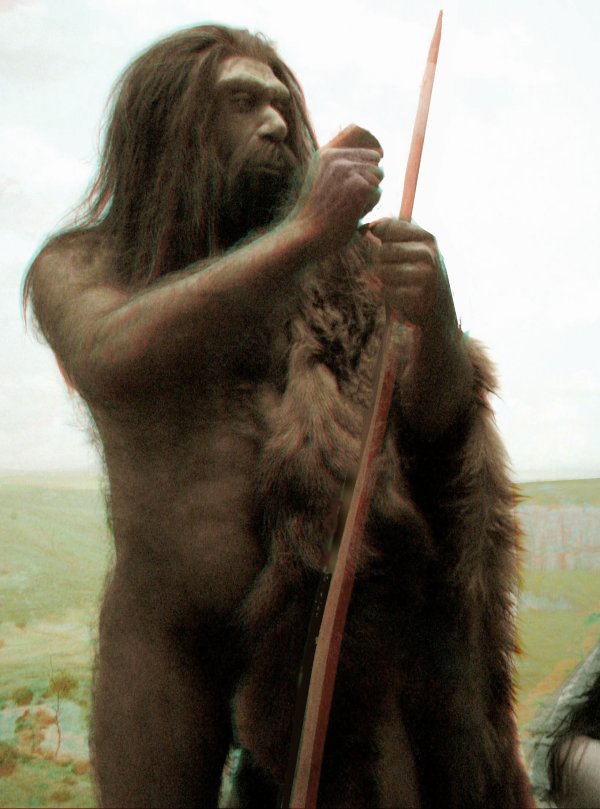
 This seems like taken from the most surreal fiction, but you could soon say "Hallo" to creatures that preceded you in the evolution. A team studying Neanderthal DNA says it could be possible to build a complete Neanderthal genome, despite the degradation in time of its genetic material.
The team led by Svante Paabo of the Max Planck Institute for Evolutionary Anthropology in Leipzig, Germany, also wants to reconstruct the genome of the mammoth and cave bear. If the Neanderthal genome is completed, it would be the answer to the question of whether there was crossbreeding between Neanderthals and modern humans, or the later just wiped out the former. The genome sequencing of Neanderthals would be based on specimens that lived in Europe until about 30,000 years ago.
"In studies of Neanderthals, cave bear and mammoth, a majority of the DNA recovered was that of microorganisms that colonized the tissues after death," the researchers said.
Still, the team could track down some DNA from the original animal, and determine how it degraded over time. They also developed procedures to impede contamination by the DNA of humans manipulating the material. "We are confident that it will be technically feasible to achieve a reliable Neanderthal genome sequence. Problem of damaged areas in some DNA could be overcome by using a sufficient amount of Neanderthal DNA from different individuals, so the whole genome can be determined," the researchers wrote.
"The contamination and degradation of DNA has been a serious issue for the last 10 years. This is a serious attempt to deal with that issue and that's welcome. I'm not sure they have completely solved the problem, but they've made a big step in that direction," observed Erik Trinkaus, a professor at Washington University in St. Louis, not involved in the research.
"This work is a very significant technical study of DNA decay. They have tried to answer important questions about the potential to sequence ancient DNA," said anthropologist Richard Potts of the Smithsonian's National Museum of Natural History Potts, not involved in the research.
"This sample intensive and I'm not sure enough DNA is available to complete the work. Curators don't like to see their specimens ground up," said Milford Wolpoff, a University of Michigan Anthropologist.