
Softpedia
 

NEWS CATEGORIES:


NEWS ARCHIVE >>
SOFTPEDIA REVIEWS >>
MEET THE EDITORS >>
Home > News > Editor Blogs > Science

February 1st, 2012, 16:18 GMT · By

BLOG

Reaching Life's Mass Limit Took 24 Million Generations

SHARE:

Adjust text size:

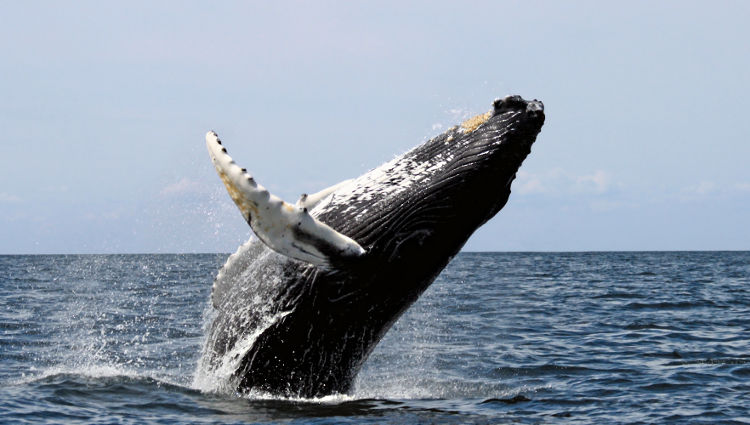
Whales needed about 10 million generations to grow to their largest masses Enlarge picture - Whales needed about 10 million generations to grow to their largest masses
Lifeforms need about 24 million generations to develop into something entirely different from what they once were; case in point: the rabbit-to-elephant transition. A new study found that this is the length of time needed to affect such impressive changes in a creature.

The same study found that it takes about 100,000 generations for a species to become a dwarf version of its former self. The researchers, based at the Arizona State University, said that land-based animals needed 10 million generations to grow to their largest possible mass (mammoths, elephants, whales, etc.)

The paper is published in the esteemed journal Proceedings of the National Academy of Sciences (PNAS).

I find that this research totally puts evolution in a more manageable perspective, providing clear figures to hold on to during debates, or when trying to wrap your head around the timescales at which the process operates.

TELL US WHAT YOU THINK:

691 hits · Link to this article · Print article · Send to friend · Subscribe to news

MUST-READ RELATED ARTICLES:


We May Be Living in a 'Biological' Universe

Facebook Helps Reveal How Friendships Form

Initial Stages of Supernova Explosion Finally Observed

Creationists Attack Public School Science, Again

Analyzing Ultrafine Particles Released by Home Appliances

READER COMMENTS:


No user comments yet.
Be the first to express your opinion!
Copyright © 2001-2012 Softpedia. Contact/Tip us at

WindowsGamesDriversMacLinuxScriptsMobileHandheldNews

SUBMIT PROGRAM   |   ADVERTISE   |   GET HELP   |   SEND US FEEDBACK   |   RSS FEEDS   |   UPDATE YOUR SOFTWARE   |   ROMANIAN FORUM