 14 DAY TRIAL //
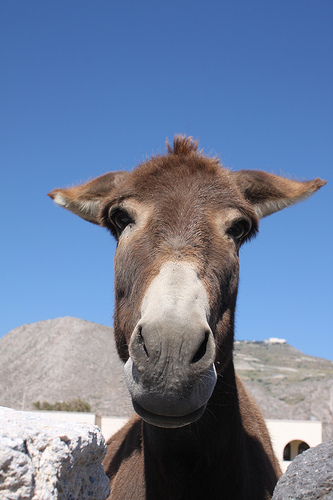
 Indeed, the identity of the strange breed of 'horse' that has been discovered in 2004, at Pompeii, has been cleared out by a Cambridge University researcher, who realized it was actually a donkey.
Back in 2004, when academics unearthed skeletons found at a house in the ancient Roman town that was covered in ashes in 79 AD, they thought it belonged to an extinct breed of horse.
The mistake was made at the DNA analysis, and Susan Gurney – from the University's Institute of Continuing Education, working with Dr Peter Forster on horse genetics at the University of Cambridge, realized the mistake when she revisited the study.
What happened really was that there seems to have been a mix-up in the lab, which led to horse DNA being combined with donkey DNA, creating an artificial hybrid that actually never existed.
Six years ago, the skeletons of equids having belonged to a rich Roman household in Pompeii were analyzed.
There were found in the stables of a probably wealthy politician, and all five of them were very well preserved by the volcanic ash that covered Pompeii and Herculaneum, when Mount Vesuvius erupted.
The team then analyzed the mitochondrial DNA sequences (mtDNA) of each of the horses, and found that one of them had a mysterious type of DNA, that was no longer found today, probably an unknown breed of horse, which had disappeared.
Luckily, Susan Gurney examined the research and found that there was an accidental combination of a donkey mDNA sequence with that of a horse.
She explained in her journal article that the first 177 nucleotides matched existing patterns of donkey, and the next 193 nucleotides matched those of an existing breed of horse.
“Looking at the research with hindsight, it's possible to recognize two separate strands of horse and donkey DNA,” she said.
"In addition, the horse DNA that appears to have been inadvertently mixed in with the donkey's genetic information is the same type as that found in another Herculaneum horse, which might be the source of the mistake.”
This research could still have its importance, because apparently the DNA of this newly identified donkey finds its closest match with the DNA of domestic donkeys related to the Somali wild ass that lives in Italy today.
This might be evidence that the 'Somali' ass lineage dates back to at least Roman times, whereas in other European countries, asses are often descended from the Nubian lineage.
Susan Gurney wrote in the new issue of the Journal of Cellular Biochemistry.