 14 DAY TRIAL //
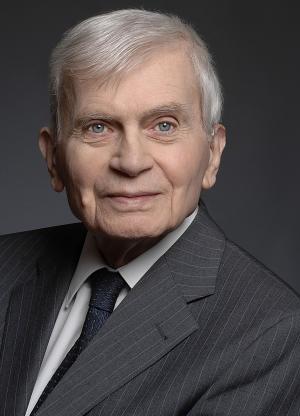
 Well-renowned for his work in the field of quantum mechanics and theoretical physics, French physicist and philosopher of science Bernard d'Espagnat has won the Templeton Prize this year, amounting to one million British pounds ($1.4 million), for his concept of a “hypercosmic God.” The scientist will officially receive the award on May 5th at the Buckingham Palace, from the hands of the Duke of Edinburgh. His studies into the concept of reality have been the ones to land him the award.
D'Espagnat is a disciple of the outlook that states that there is a reality beyond us, which is veiled from view. If we are to believe Einstein's theory of relativity, then another reality exists, different from our own, all around us.
This other reality, which cannot be directly observed, can either be observable, non-observable, or veiled, and this year's Templeton Prize winner is a supporter of the third option.
“There must exist, beyond mere appearances (...) a 'veiled reality' that science does not describe but only glimpses uncertainly. In turn, contrary to those who claim that matter is the only reality, the possibility that other means, including spirituality, may also provide a window on ultimate reality cannot be ruled out, even by cogent scientific arguments,” the scientists says. This view is exactly the kind of attitude the John Templeton Foundation is looking for. The forum is dedicated to reconciling the viewpoints of science and religion in a single theory that would explain our reality and the one beyond.
It seems like a bit outstretched, however, that quantum mechanics could yield this type of conclusion. On the other hand, no one can say for sure that the scientist is wrong in his assertion. And that is precisely the main issue here. How can anyone know for sure that the reality that is “veiled” from us holds the God that d'Espagnat is talking about. He stresses that the Almighty can be known only partially, just like the “other reality,” but that it will remain fundamentally unknown.
This is the kind of non-logical assertion that can easily win life-long supporters or critics. It's up, in the end, to each individual to decide to which point of view to relate. If you are one of those who seek to reconcile science and religion, then this outlook is one of the best ones you'll find. Should you want to deny any other realities beyond that of the matter that exists, then this is not a point of view you would want to debate, simply because no one has any arguments for or against it. It's only a hypothetical discussion, but one that has been set in motion so clearly that it has won the French scientist one million pounds.