
Softpedia
 

NEWS CATEGORIES:


NEWS ARCHIVE >>
SOFTPEDIA REVIEWS >>
MEET THE EDITORS >>
Home > News > Life and Style > Home & Living

August 25th, 2009, 19:21 GMT · By

Paraffin, Scented Candles Can Cause Cancer, Study Reveals

SHARE:

Adjust text size:


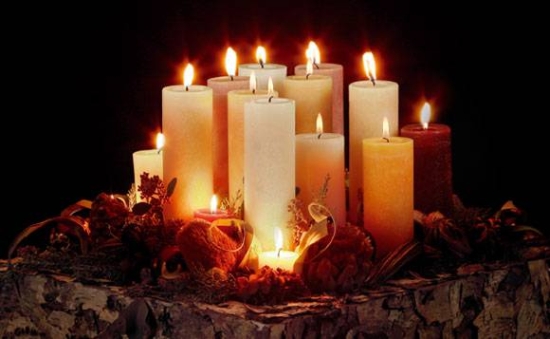
Scented candles made of paraffin and with artificial scents are dangerous for our health, study says
Enlarge picture
Women’s undying love for scented candles seems to be just one of the many mysteries men can’t understand, no matter what. Whichever the reason behind it, though, it’s not something that will go away anytime soon, as ladies have shown in recent years they’re determined to stick with this one. A new study and warning issued by the American Chemical Society might make them change their mind, since it shows paraffin, scented candles can actually cause cancer if lit on a daily basis, the Daily Mail informs.

Naturally scented, beeswax (or soy or vegetable) candles are OK, no matter how often we want to light them, the study says. Those that contain paraffin and artificial scents are not, though, being linked to a plethora of affections, including asthma attacks, lung cancer and all sorts of allergies. Still, those who light one or two candles every now and then when they take a bath are not in any serious danger, the study adds: it’s those who do it every day and then inhale the toxic fumes that should consider themselves warned.

“The annual conference of the American Chemical Society has let it be known that scented candles made from paraffin wax give off toluene, benzene, and a host of other toxins linked to asthma, eczema and cancer.” the Mail writes on the findings of the study. Benzene and toluene, which are released in the air when the paraffin is burnt, are dangerous and we should avoid inhaling them no matter what, experts agree. So, if we’re really that hooked on scented candles, we might as well look for natural variants and steer clear of artificial products.

“Benzene and toluene are solvents that are used industrially to make glue and gloss paint. When people sniff glue, it is solvents like this that are making them high. Benzene particularly is a known carcinogen – i.e. it has been proven to cause cancer. It’s not a substance that I would ever expose myself to in the lab.” Dr. Andy Beeby, chemistry expert from Durham University, shares for the Mail.

The trick with learning about the dangerous ingredients in scented candles (that is, paraffin, parabens, which are “chemicals used in preservatives that can cause allergic reactions,” and artificial scents) is that most of these products do not disclose this type of information because it’s considered a trade secret, the Mail further explains. However, candles made with all-natural ingredients are bound to put that on the package, while it will also be reflected in the pricing, so this is where we should start first. 
FILED UNDER:
candle
home
living
study
cancer

TELL US WHAT YOU THINK:

7,632 hits · 2 comments · Link to this article · Print article · Send to friend · Subscribe to news

MUST-READ RELATED ARTICLES:


Lindsay Lohan Burglarized

Gwyneth Paltrow Expands Next Door with 33-Room Superhouse

Hugh Hefner Sells Mansion

Johnny Depp Takes Vanity Fair on His Private Island

READER COMMENTS:


Comment #1 by: Fragrances on 16 Apr 2011, 04:49 UTC reply to this comment

First, it seems that there are still alot of people that are falling into the whole “Eco Friendly Candle” dis-information campaign!

We still have people come up at shows and ask us, “Do you make the all natural, cleaner soy candles?” For a split second every time I hear this I just about * up! But then Reality, my Humanity and Logic takes over and I simply explain some of the facts and the reasons why we choose to make the candles that we make.

I guess I just don’t understand why alot of people just read or hear supposed (facts/fiction), and take it as absolute truth. Well I guess I should understand it. Look at almost any election and it’s easy to see that things continue to stay in a mess, but that’s another discussion. Let’s focus on candle wax.

Paraffin vs Soy Wax

So, let’s look at the word “natural” for a minute.

Mirriam-Webster.com - as an adjective

#10a. growing without human care; also : not cultivated

Dictionary.com - as an adjective

#1. existing in or formed by nature ( opposed to artificial): a natural bridge.

#5.in a state of nature; uncultivated, as land.

#6.growing spontaneously, without being planted or tended by human hand, as vegetation.

#7.having undergone little or no processing and containing no chemical additives: natural food; natural ingredients. Compare organic ( def. 11 ) .

-as a noun

#38. a natural substance or a product made with such a substance: an ointment containing mink oil and other naturals.

"Should be and Easy Putt from there."

This part of the discussion should be finished but, I am sure it’s not. Both waxes come from natural sources.

If you think about it and educate yourself, you might come to the conclusion that crude is far more natural than soybeans.

Soybeans:

This simple fact should be apparent especially if you take into account that soybeans, as we know them, are not exactly natural. This was taken from the Organic Consumers Association and they site: “US soy, the world's largest source of genetically modified food and animal feed.” It is also heavily subsidized upward of 70% by your tax dollars. Read the rest here: http://www.organicconsumers.org/gefood/govtsoyloans.cfm

More education materials below, and there are many others as well.

http://en.wikipedia.org/wiki/Soybean

http://articles.mercola.com/sites/articles/archive/2010/07/08/genetically-engineered-soybeans-may-cause-allergies.aspx

http://www.actionbioscience.org/biotech/pusztai.html

So do all of the previously mentioned definitions fit? You Decide.

Crude:

Surely you know where crude comes from right? Plant and Animal matter highly compressed in our mother Earth for millions of years without any assistance from mankind until it is found by man and used, just like the original soybean, for the good of mankind.

So do all of the previously mentioned definitions fit? You Decide.

“Can someone please run out and pick me or dig me up some candle wax? I need to order soon."

So when companies say that their candles are all natural, step back a minute and think. Maybe you could ask them where the cinnamon bun or cotton candy fragrance oil was dug up at. “Oh the Laboratory, yeah that’s it.”

Both waxes are refined from their natural resource, one from crude oil and one from soybean oil. I won’t bother to explain the details of both processes but each use chemicals and other things in the refinement of these natural resources to finally end up as wax in many forms. Both are food grade and used widely in many industries like for instance the nice shiny vegetables and fruit you may have recently eaten."Shiny and somewhat protected from bugs compliments of paraffin wax"

However, for this discussion I only care about candles. More importantly Highly Scented Candles and just Scented Candles and the waxes used. If you are interested in educating yourself on these refinement processes you can go here for a start:

Crude: to wax
http://igiwax.com/wax-basics/how-wax-is-made/

Soy: to wax
http://www.fao.org/inpho/content/compend/text/Ch19sec2.htm

Renewable?

Both are also renewable as well, sort of. If there was a horrible drought and or the government quit subsidizing it, would soybeans be as renewable?
On the other hand no matter what we do. I'll say again, "No Matter What We Do", the Earth will continue its cycle of making natural crude whether we are here or not.

Sometimes the light of truth just smacks you right in the middle of the forehead doesn’t it?

What do they mean by Eco friendly?

One of our biggest suppliers of Palm wax has recently stopped sellling it because of the very real issue of de-forestation of Palm.

The soy industry has done a great job of convincing people that Paraffin wax is toxic, unsafe and generally evil. Once again truth comes to the rescue. One only has to look at the National Candle Association or NCA which is widely recognized as the leading technical authority on candles and candle manufacturing. The answers are out there when you look. Paraffin is not toxic or evil and is completely safe to burn when well formulated and burned safely. Same goes for Soy. You can read this here:
http://www.candles.org/about_faq.html

“Paraffin candles soot” Oh, really!

Well this is another misleading statement. All candles can, and will soot. It does not matter whether it is Soy or Paraffin. If the wick is not kept properly trimmed and or the flame is disrupted due to ceiling fans or other air disturbances you will get soot. Paraffin soot is darker and Soy soot is lighter in color. Soot is however Soot.

I guess the point is that everyone should get educated before blindly deciding that one thing is bad and the other is good just because one side does a great job of demonizing the other with false information and outright lies. Think for yourself, and not just about candles, but anything that you might be presented with. I think it would make for a better world if we all just took the time to actually think about things logically and become educated.

So look, I am not against protecting the environment, not at all. If I think that something will actually help, I am glad to do whatever I can to help keep our world a better place. However, with this one, the facts just don’t bear out any problems. If you feel better buying soy candles or paraffin candles great. Please use whatever you like! It’s sort of a free world. Just do it for your own reasons and not someone else’s.

Why we use our proprietary wax blend

Well in our continuing efforts to develop High quality, Super strong, long lasting candles we took the path of researching and experimenting with our own blends of highly refined wax. We use many ingredients in our formula including Paraffin and Soy. Yes we use some Soy but not because of the environment. We incorporate a precise amount because of a particular property it has. We use a lot of other ingredients in our formula as well but, for one reason only. We want the best scent throw we can get! This drive for excellence and quality in our products is number one for us. Our formula provides this and we continually strive for improvements. Simply put we push the envelope in the scented candle world. We believe you will easily discover that our candles are the best scented candles you will find anywhere.

We do have one warning however, and I mean this very sincerely. If you are a very sensitive asthmatic person and you use candles, which most do not, please do not use our candles. At local shows like the Tennessee State Fairgrounds, you will know we are there when you enter the very large building. When you smell say for instance, Macintosh Apples upon entering, just follow the scent as it gets stronger and you’ll find us. We are not allowed to burn the candles in the building. This just comes from a candle warmer with our formula in it. Anyhow, a small handful of times, particularly sensitive people have sped up and walked by complaining. We do apologize and feel very sorry for those that have this affliction.


Comment #2 by: loulou on 11 Oct 2011, 02:50 UTC reply to this comment

would the warning be the same for wax tarts that are made from paraffin wax..since you dont burn them...you melt them.

Copyright © 2001-2012 Softpedia. Contact/Tip us at

WindowsGamesDriversMacLinuxScriptsMobileHandheldNews

SUBMIT PROGRAM   |   ADVERTISE   |   GET HELP   |   SEND US FEEDBACK   |   RSS FEEDS   |   UPDATE YOUR SOFTWARE   |   ROMANIAN FORUM