
Softpedia
 

NEWS CATEGORIES:


NEWS ARCHIVE >>
SOFTPEDIA REVIEWS >>
MEET THE EDITORS >>
TRENDING TODAY
Home > News > Security > Security Fixes and Improvements

January 30th, 2013, 09:39 GMT · By

Over 40 Million Devices Vulnerable to Attacks Because of Universal Plug and Play Flaws

SHARE:

Adjust text size:

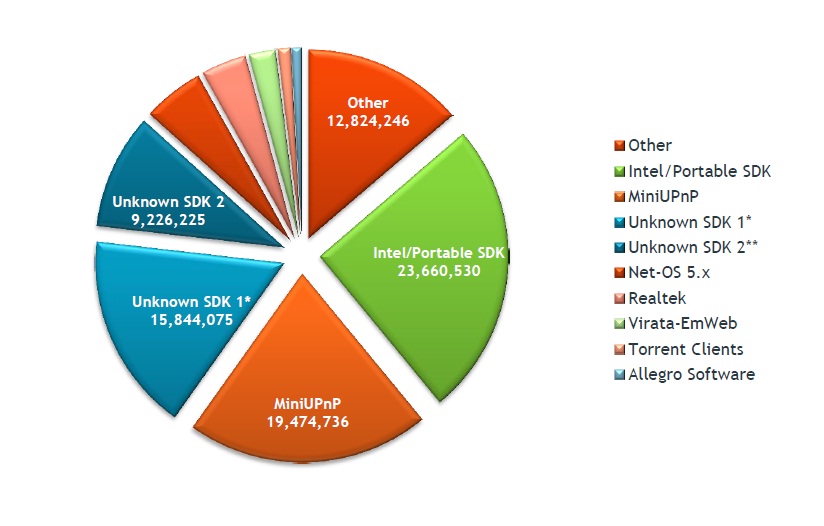
Exposed UPnP implementation
Enlarge picture
Security researchers from Rapid 7 have identified three types of vulnerabilities which affect the Universal Plug and Play (UPnP) protocol used by devices such as PCs, printers and other Internet-enabled devices.

Experts have found that of the 80 million IPs that responded to UPnP discovery requests, between 40 and 50 million are vulnerable to at least one type of attack.

According to the whitepaper released by Rapid 7, three classes of problems have been identified: programming flaws in common UPnP discovery protocol (SSDP) implementations, exposure of the UPnP control interface (SOAP), and programming flaws in the UPnP HTTP and SOAP implementations.

“The two most commonly used UPnP software libraries both contained remotely exploitable vulnerabilities. In the case of the Portable UPnP SDK, over 23 million IPs are vulnerable to remote code execution through a single UDP packet,” Rapid 7’s HD Moore explained

“All told, we were able to identify over 6,900 product versions that were vulnerable through UPnP. This list encompasses over 1,500 vendors and only took into account devices that exposed the UPnP SOAP service to the internet, a serious vulnerability in of itself,” he added.

Even the US Computer Emergency Readiness Team (CERT) has published an alert regarding the security holes identified in libupnp, the portable SDK for UPnP. The organization advises users to apply the latest update which addresses the vulnerabilities, restrict untrusted sources from accessing port 1900/udp, or disable UPnP altogether.

CERT has attempted to notify over 200 vendors that use the vulnerable versions of the libupnp library, including Cisco, Fujitsu, Huawei, Linksys, NEC, Siemens, Sony, Belkin, D-Link and EMC.

Rapid 7 has released a free scanner which allows users to check if their network-enabled devices are vulnerable to cyberattacks.

ScanNow for Universal Plug and Play is available for download here


1,874 hits · 1 comment
Link to this article · Print article · Send to friend

MUST-READ RELATED ARTICLES:


McAfee: 631 Botnet Command and Control Servers Currently Active in the US

Finland Publishes Its Cyber Security Strategy

New DDOS Tools: Server-Based Botnets and Encrypted Layer Attacks

Solutionary Q4 2012 Report: 70% of Exploit Kits Originated in Russia

Security Experts Warn About Fake “Temple Run 2” for Android

READER COMMENTS:


Comment #1 by: computerrepairportland on 12 Feb 2013, 23:54 UTC reply to this comment

Vulnerabilities like this have existed for a while, and many more certainly exist that people are not aware of. That’s one of the reasons why becoming aware of a virus does not necessarily mean that it has recently entered the world. Many people may have had viruses that entered through a vulnerability and even had computer repair to have them removed before the actual vulnerability is found. So don’t worry when you see alarmist warnings about new viruses – mostly they just want to catch your attention.

To make sure you stay protected from these threats in the future, just remember the basic rule of internet surfing (as well as real surfing) be careful! Most of these vulnerabilities will only cause problems if you let something in in the first place. Make sure to stay updated with your current virus protection software like Microsoft Security Essentials and to call computer repair before things escalate!

Copyright © 2001-2013 Softpedia. Contact/Tip us at

WindowsGamesDriversMacLinuxScriptsMobileHandheldNews

SUBMIT PROGRAM   |   ADVERTISE   |   GET HELP   |   SEND US FEEDBACK   |   RSS FEEDS   |   UPDATE YOUR SOFTWARE   |   ROMANIAN FORUM