 14 DAY TRIAL //
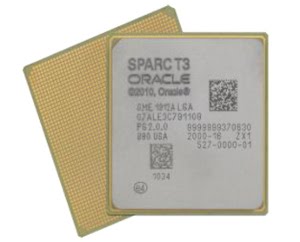
 Oracle just announced the company will speed up the development of its next-generation SPARC T5 processor, which is expected to deliver higher performance thanks to the move to the 28nm process technology.
Oracle has published its SPARC server processor roadmap in August of last year, and vowed to deliver a SPARC T-series systems with 128 physical CPU cores that will be able to handle up to 16,384 threads at the same time by 2015.
Despite the impressive targets it set for itself, Oracle apparently managed to accelerate the production of its chips and has recently stated that it will begin to test the next-generation SPARC T5 CPUs in October, which should mean that the chips will arrive about a year earlier than it planned.
"We are actively in test and have [software] systems up and running along the next line of generation of [hardware] systems,” said John Fowler, executive vice president of systems at Oracle.
“We have made some modifications to this roadmap and we pulled-in some upgrades to T-series and added another upgrade to the T-series, which we will detail in the future," concluded the company's rep.
No information regarding the architecture was made public, but the SPARC T5 is expected to be fabricated using the 28nm production process, which should enable the chip maker to raise core count, clock speeds and the amount of cache included in these CPUs.
In addition, Oracle also plans to introduce a series of proprietary special-purpose hardware accelerators into its chips to speed up its own software. These will include, memory versioning, in-memory columnar database acceleration, hardware decompression and other such accelerators.
"We are on-track, or ahead of schedule, along the core microprocessor that will give us the next generation which will then add to all the other technologies that we are [developing] like [...] networking and Solaris to produce the world's best enterprise platforms," stated the vice president of Oracle. (via Xbit Labs)