 14 DAY TRIAL //
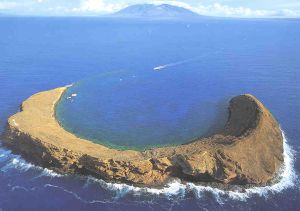
 The Vava'u group, in Northen Tonga archipelago (Southwestern Pacific Ocean) has a new island, but is dwindling day by day and may only last a month before waves erode it. In August 12, a yacht passing toward Fiji reported seeing floating chunks of light pumice stone near the underwater Home Reef volcano, then spotted the active volcano.
Then, an entire new island emerged around 1 mile (1.6 km) across, and complete with four peaks and a central crater. One of Nuku'alofa's (the capital of the Kingdom of Tonga) eastern beaches also had been "flooded" with black pumice shortly after the eruption. Seismographs recorded the event and satellite images confirmed the occurrence of a new land mass. "It looks like there was a similar type of eruption. It has built up a new island and produced huge amounts of pumice," said Ed Venzke, an editor with the Smithsonian Institution's Bulletin of the Global Volcanism.
Satellite image measured the island's surface of 0.098 square acres (0.04 hectares). "If it's just pumice that has built up the island, the waves will knock it down and erode it very quickly. It won't last long," he said.
Images obtained on the 14th of November from NASA's Terra satellite showed a decrease by a third of the island's surface since early October. The small volcanic lakes have already disappeared. Home Reef last erupted in 1984, when it produced an island of about the same dimension that has since vanished under the impact of the waves.
There is not known if the eruption is still continuing, or if there is any lava flow. "But if this eruption continues and produces lava flows, the lava flows will cool and form a hardened shell on the island that will be more resistant to being eroded away," Venzke said.
This type of volcanoes are remote, so scientists have very little knowledge about them. "There are many cases in the past where we received reports of pumice rafts, but had no idea of where the rafts came from," said Venzke.
A big pumice raft with unknown origins, recently spotted sweeping across Fiji, is presumed to have been from Tonga. "A previous eruption in the area generated a small island and similar fields of floating pumice," said Richard Wunderman of the Global Volcanism Network.