
Search Perform an advanced search query SOFTPEDIA
 
SOFTPEDIA
Updated one minute ago
HomeSubmit a program for being reviewedAdvertise on our websiteGet help on surfing our websitesSend us your feedbackGet information about our XML/RSS backend and how to use itBrowse the news archiveVisit our discussion forumVizitati forumul in limba romana


KLIP
  1. HOME
  2. SCIENCE
  3. TECHNOLOGY
  4. WEBMASTER
  5. SECURITY
  6. MICROSOFT
  7. LINUX
  8. APPLE
  9. GAMES
  10. TELECOMS
  11. REVIEWS
  12. LIFE & STYLE
  13. EDITORIALS
  14. INTERVIEWS
  15. RSS
Welcome!
Hello, Guest

Login if you have a Softpedia.com account.

Otherwise, register for one.

SYSTEMS

New Technology to Kneel WW2 Encryption Algorithms

- World War 2 fought with modern weapons

By: Bogdan Botezatu, Hardware Editor

War is not much of a healthy passion for anybody, or at least I wouldn't like it to be so for our own safety. However, history is, and a group of enthusiasts set up a code-breaking contests that aimed at cracking
one of the encryption keys used to hide World War 2 messages.

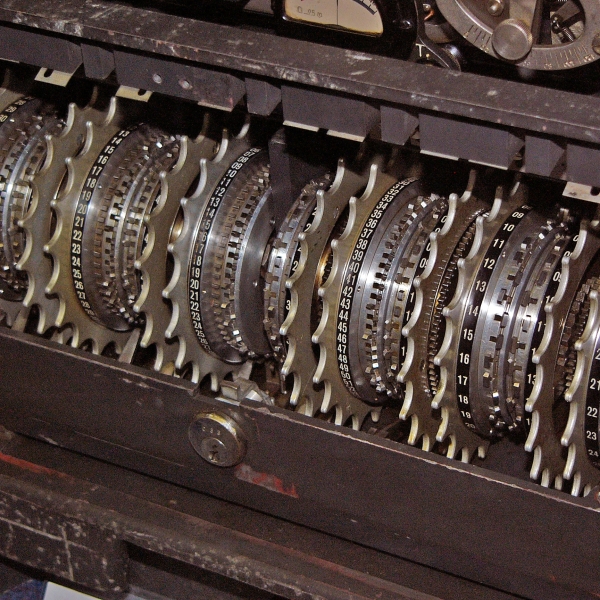
A German cryptographer managed to beat the world’s first programmable digital computer Colossus during this contest. Equipped with minimal knowledge of cryptography and the average computing hardware we can grab nowadays, Joachim Schueth managed to crack the message in a record time of just 46 seconds. The event took place at the National Museum of Computing at Bletchley Park, that hosts a rebuilt version of that time's most powerful machine – the Colossus. If Schueth's computer solved the "mystery" in just 46 seconds, it took the Colossus more than three hours and 35 minutes to beat the algorithm.

"It was unfair because I was using a modern PC, while Colossus was created more than 60 years ago," Schueth told after the contest. "It really is astonishing and humbling that the world's first programmable digital computer was created in the 1940s."

The cracker said that the record achievement was possible due to the technology he used. The message was encoded with a Lorenz S42 machine, a common tool that was used by German high command during the war.

"As well as recapturing the excitement that the Bletchley Park code breakers must have felt, the Cipher Challenge has more importantly highlighted the magnitude of their achievement, their tenacity and their ingenuity," added Tony Sale, one of the many enthusiasts that contributed at the recreation of the Colossus. "Joachim really showed how things have advanced from the days of Colossus," he added.

The recreated Colossus can be seen at The National Museum of Computing at Bletchley Park, Buckinghamshire. It is one of the ten machines built during the World War 2, and played an extremely important role in shortening the conflict.

MORE RELATED ARTICLES: Is Your E-mail Secure? Anti-Hack Encryption Technology Windows Vista BitLocker Drive Encryption Design Sharkoon to Join the RFID Encryption Bandwagon The Dark Side of Hardware – Wireless Keyboard Keylogger Brando's Stysen E08: RFID, the Modern 'Open, Sesame!' Giant Notebook Drives and Full Hardware Encryption for Desktops Canadian Experts Say Data Thefts Were Predictable Encryption Could Prevent The UK Disaster, Experts Believe Where's Web Security Heading To?
 
Comments | Link here | Subscribe
Print | Send to friend
Today's News | Yesterday's News

Search:


30th January 2008, 16:31 GMT | Copyright (c) 2008 Softpedia | Contact:
Read by 858 user(s) | Rating: | 7 vote(s) so far | Cast your vote:
New Technology to Kneel WW2 Encryption Algorithms - USER OPINIONS


We are sorry, there are no opinions available for this article.


SHARE YOUR OPINION ABOUT New Technology to Kneel WW2 Encryption Algorithms

Since you are not logged on, your comments will have to be approved before being displayed.
Click here to login, or register.
Your Name:
Your Email:
Type in the result:
Your Opinion:


DO YOU WANT TO CONTACT US?  

If you have some comments or you want to send us some information you can send us an email directly to .
You can use the form below for the same purpose.
Your full name: (at least 3 characters)
Your email address: (at least 5 characters)
Message subject: (at least 5 characters)
Message text:
(at least 10 characters)
Type in the result:


© 2001 - 2008 Softpedia. All rights reserved.
Softpedia™ and Softpedia™ logo are registered trademarks of SoftNews NET SRL.
Copyright Information | Privacy Policy | Terms of Use | Contact Softpedia | Update your software | Archive