 14 DAY TRIAL //
 Having already decided the main contractors for the next generation of Russian spacecraft, the RosCosmos space agency is currently focusing its efforts and interest on assessing if the manned replacement capsule for the four-decade-old Soyuz can land using onboard thrusters, rather than wings or parachutes. In the history of human spaceflight, the latter are the only two ways that have ever been used to make a touch-down following atmospheric reentry. Now, the Russians are contemplating the possibility of slowing down the descent of their future capsule with a number of jet thrusters.
The idea is not new in itself, as even NASA has considered it for a while, and has even drawn some sketches of potential vehicles employing it. Still, the Americans have abandoned the project as too expensive and difficult. Russia's prime developer of manned spacecraft, RKK Energia, currently faces a tough set of problems, because RosCosmos has set a large number of guidelines for the spacecraft developer, and some of these guidelines intertwine at times, creating confusion, the BBC reports.
The venerable Soyuz spacecraft, which has been in operation for more than 40 years, already relies on thrusters to slow down its descent, but the main breaking system is a parachute complex, located at the end of the vehicle's cone. The thrusters only play a minor role in the overall process, as, if the parachutes were to fail, they couldn't take over and replace the main breaking system in time. In fact, simulations show that all three occupants of the capsule would most likely die in such an event.
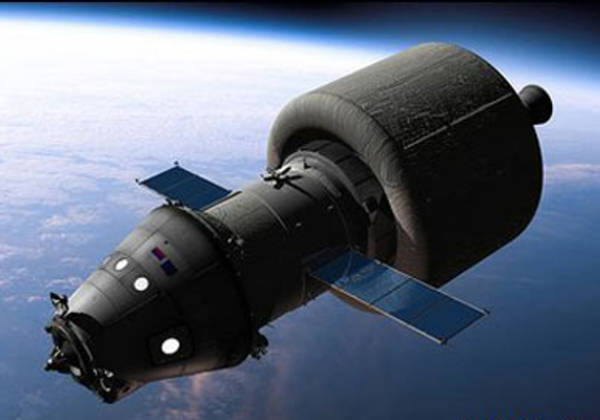
The Korolev-based RRK Energia released its first drawings of the new envisioned spacecraft, dubbed Advanced Crew Transportation System (ACTS), as early as last July, but the design of the ship at the time raised many eyebrows, mostly because it lacked a parachute cargo bay. However, over the last year, engineers at the company have concluded that this solution is the only one that could combine Kremlin's wishes of having the system operational by 2018 with RosCosmos' demands of making the craft able to land on a piece of soil just two by five kilometers in size.
According to unspecified sources, quoted by the Russian RIA Novosti news agency, it may be that the new capsule will be powered by as much as 12 thrusters, located at the base of the cone, and that it will not use solid fuel. Rather, experts at RRK Energia envision using an environmentally friendly, liquid propellant, which would ensure extra maneuverability for the spaceship. The main problem with solid fuel is that it only burns according to a pre-determined timeline, and so it cannot be manipulated in real time.