 14 DAY TRIAL //
 The chemicals that are currently used to power up rocket engines generate a number of toxic compounds when they react with each other, and, for a long time, environmentalists have drawn attention to the fact that, when a shuttle launches, for instance, the ozone layer in the area is depleted by the powerful reactions. Now, experts at the American space agency and the Purdue University are working on a solution, a new type of fuel that is as effective as any other, but more environmentally friendly and also fit for off-world production.
In the future, exploratory space missions to the Moon and Mars will definitely take place. Crews going to other planets will need to be able to produce a lot of the resources they would need in their base at the location, because cargo capacities will, arguably, be limited. Therefore, rather than adding extra fuel tanks to a rocket, it would make more sense to produce the fuel on-site. The new compound the NASA/Purdue team is working on is made up of a frozen mixture of water and “nanoscale aluminum” powder and can be produced at various locations, ScienceDaily reports.
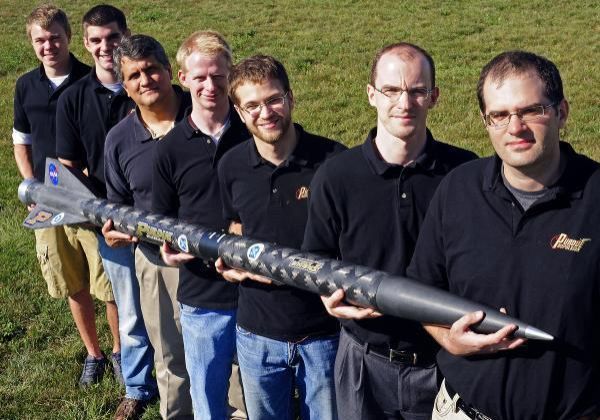
The new propellant has been dubbed aluminum-ice (ALICE). The scientists behind it say that it can also be used to create hydrogen for fuel cells, if it comes down to it. The Air Force Office of Scientific Research and the Pennsylvania State University (Penn State) are also involved in the research. A nine-foot-tall rocket powered by ALICE was already launched earlier this year from a location about ten miles away from Purdue's campus, to an altitude of over 1,300 feet (some 400 meters).
“It's a proof of concept. It could be improved and turned into a practical propellant. Theoretically, it also could be manufactured in distant places like the moon or Mars instead of being transported at high cost,” PU Associate Professor of Mechanical Engineering Steven Son explains. “It is considered a green propellant, producing essentially hydrogen gas and aluminum oxide. In contrast, each space shuttle flight consumes about 773 tons of the oxidizer ammonium perchlorate in the solid booster rockets. About 230 tons of hydrochloric acid immediately appears [sic] in the exhaust from such flights,” PU School of Aeronautics and Astronautics Research Assistant Professor Timothee Pourpoint adds.