 14 DAY TRIAL //
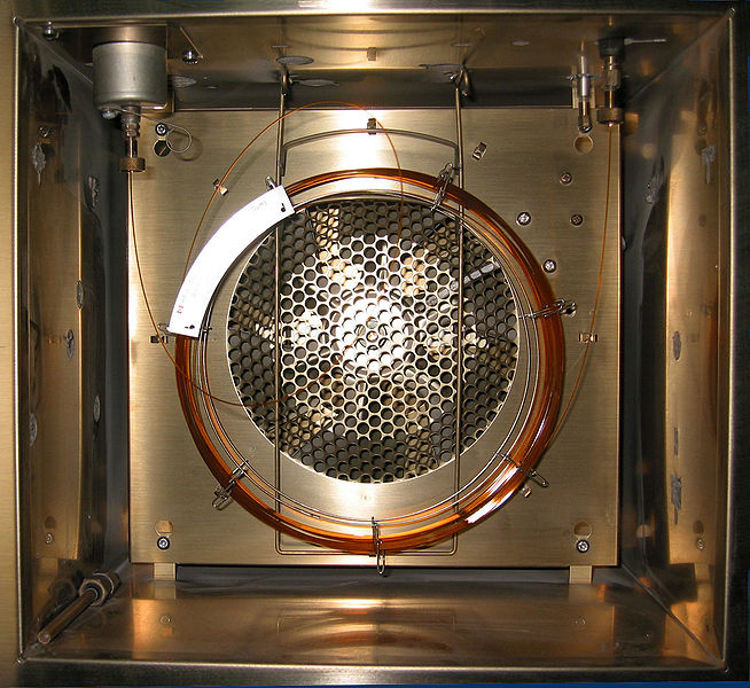
 University of Michigan (U-M) investigators announce the successful completion of a series of tests that certified the performances of a new type of lab-on-a-chip technology. The team created a so-called microfabricated gas chromatograph, which is capable of detecting contaminants in the air.
Testing of the new device, which is many times smaller than its full-sized counterparts, took place inside several homes located next to the Hill Air Force Base, in Utah. The work was commissioned by the US Department of Defense (DOD).
The latter wants access to a small, portable technology capable of detecting traces of trichloroethylene (TCE), a dangerous chemical used on military bases by the mid-1970s, before it was phased out.
Later on, it was discovered that improper disposal of TCE residues led to the contamination of large numbers of homes with the chemical. The chemical can simply seep into the installation of homes located above its plumes.
According to the U-M team, the microfabricated gas chromatograph was able to discover trace amounts of TCE among 50 different other contaminants. They liken this performance to a human being able to find a particular coin in a row stretching from Detroit, Michigan, to Salt Lake City, Utah.
"This is the first (known) study of its kind. Most lab-on-a-chip technologies are used for biomedical analysis of liquids,” explains the director of the project, Ted Zellers. He holds an appointment as a professor in the U-M School of Public Health and the Department of Chemistry.
“Our technology is designed for monitoring contaminants in the air, and this groundbreaking study is the first to prove that it can work outside the laboratory in real-life applications,” the expert says.
The most amazing part of the new research is that the device can be tailored specifically to any type of chemical researchers want. This implies that it could be used to develop next-generation sensors for use in airports and other sensitive locations.
Applications in the field of medicine are also possible. These small chromatographs could be used to search for biomarkers produced by cancer and other conditions in the saliva of patients.
Details of the work that led to the development of the new device were published this month, in the journal Environmental Science & Technology.