 14 DAY TRIAL //
 The Neolithic (New Stone Age) was a period in the technological development of Homo sapiens that started at the end of the Ice Age, 10,000 years ago, and ended around the Mediterranean Sea and other areas about 5,500 years ago, when the Bronze Age started.
It was the period when first human settlements appeared. People left caves for huts made of branches, stones, adobe or bricks, depending on the resources of the place. The gathered huts formed small villages that could be defended easier. The main reason for the settling of the people was the emergence of the agriculture during the Neolithic.
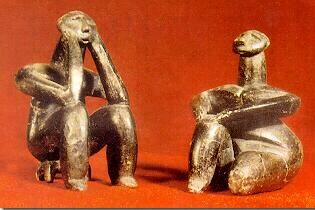
Neolithic clay-made figurines reproduced both animal and human figures. In many cases, human figures represented gods or goddesses. The stone and bone tools got even more complex than those of the Paleolithic.
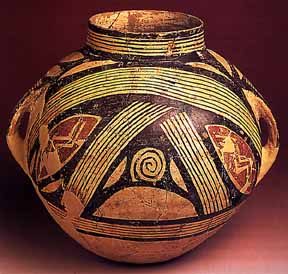
Neolithic was the time when pottery emerged. Paleolithic people kept liquids and foods in wood bowls and baskets. Now, people found that clay could be molded, and once burned, the items could guard foods and beverages. The pottery gave birth to a new class: the potters. The Neolithic people not only made complex pottery items, but also used to adorn them with geometrical paintings and images of humans, animals and plants.
The Neolithic hunter could not rely on megafauna, of which a great part had disappeared (like mammoths and woolly rhinoceroses). But this was the period when the domestication of many animals occurred. The only animal domesticated during the previous Upper Paleolithic (Old Stone Age) was the dog, in China, about 15,000 years ago. Sheep and cattle were domesticated during the Neolithic; the appearance of the livestock led to the emergence of the first shepherds and the transhumant lifestyle, as the people were always on the move searching for pasture and water for their livestock.
To the fishing methods employing hooks, Neolithic people added more complex tools, like fishing baskets and nets, using plant stems and fibers. In shallow water, Neolithic people could use wooden sticks for catching fish. The first 'vessels' appeared in the shape of canoes made of carved tree trunks or skiffs made of a branch scaffold covered by tarred skins. Navigation was made using long poles and only in shallow waters.
Death was a mystery for Neolithic people, who imagined dead people went into another world, where spirits continued their activities. Dead people were, for this purpose, buried in special places, together with some food and tools. In some places, people were buried in big stone constructions, called dolmens, made of stone slabs weighing several tons. The tombs were covered by mounds.
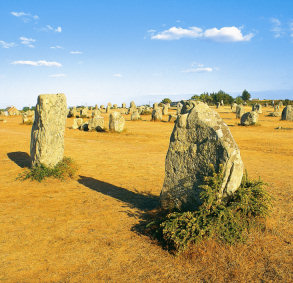
Neolithic people in Western Europe also raised large stone blocks called menhirs. The menhirs were decorated with zigzag rays, squares, rhombuses and circles, carved on one or several sides. Menhirs could have signaled borders between tribes, sacrifice places or worship places. The most famous menhir area is at Carnac (Brittany, France).
The Neolithic is the period when humans started to trade, as people began to differentiate in classes of farmers, shepherds and craftsmen. In markets, people interchanged food, pottery, baskets and various crafted issues.
With the metallurgy, the humans had stepped out of the Stone Age. Probably, one of the first metals known was the gold, whose nuggets were collected from the sand of the rivers. But gold did not have a technological importance, being used mainly for making adornments.
The first processed metals were copper, tin, silver and gold. 8,000 years ago, European populations were using malachite (a copper oxide) to get colorants. Probably ancient people noticed the transformations suffered by this mineral in contact with the fire. At the end of the Neolithic (the last Stone Age), about 6,300 years ago, people from Indus Valley (today northwestern India-Pakistan) to Central Asia started to process the copper. Mining activity for achieving copper ore started. At the beginning, the copper was processed in cold form, as it is soft, but later also heated. After that, people found how to reduce copper ore at 700-800o C, and also how to melt and mold it at 1085o C.
The metals changed all; the new metal tools, weapons and adornments launched people off the Stone Age.