 14 DAY TRIAL //
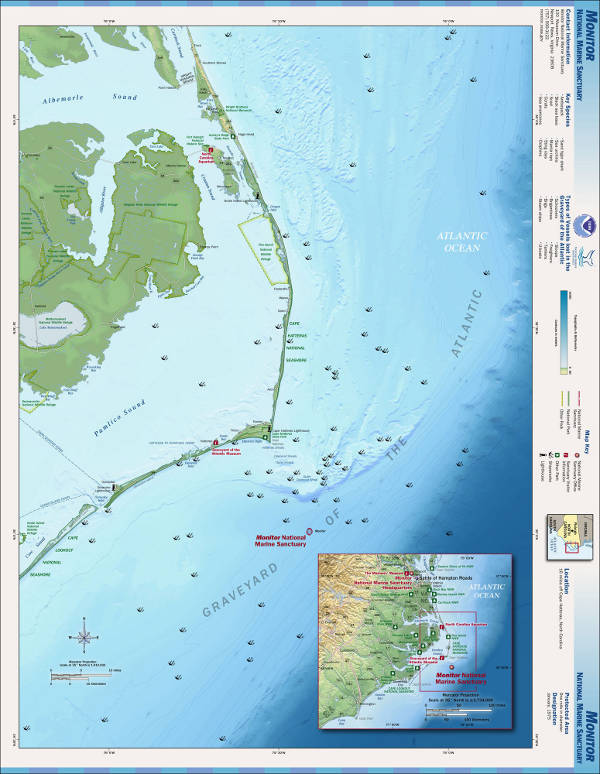
 During World War II, numerous military and merchant ships en route to Europe were destroyed and sunken by the German U-boat (submarine) fleet, which incurred massive casualties and losses in resources to the Allies. A large part of the battle took place in the waters off the coast of North Carolina, and that's why a new National Oceanic and Atmospheric Administration (NOAA) study will focus on this region in its study of battleships that fell prey to the Germans.
According to the federal agency, the grounds that will be investigated starting with August contain ships form the British and US war fleets, merchant ships, as well as a number of destroyed German U-boats. In consultation with the British and German governments, NOAA is conducting this expedition survey with technical expertise and logistical support from the Minerals Management Service, the National Park Service, the State of North Carolina, and East Carolina University. The University of North Carolina Coastal Studies Institute, the University of North Carolina in Wilmington, the Georgia Aquarium, and The Mariners' Museum are also providing support for the investigation.
“The information collected during this expedition will help us better understand and document this often lost chapter of America's maritime history and its significance to the nation. It continues the work conducted by NOAA's Office of National Marine Sanctuaries last summer to research and document historically significant shipwrecks tragically lost during World War II,” says USS Monitor National Marine Sanctuary superintendent David W. Alberg, who will also be the leader of the expedition.
One of the main goals of this year's study is to use the NOAA Ship Nancy Foster to locate previously undiscovered wrecks that were sunk in World War II, and to place these ships within the state's care. To fulfill this objective, experts on the expedition will use modern monitoring techniques, including sidescans and multi-beam sonar systems. When new wrecks are discovered, an advanced, remotely-operated vehicle will be deployed to their location, to take high-definition pictures of the ships.