 14 DAY TRIAL //
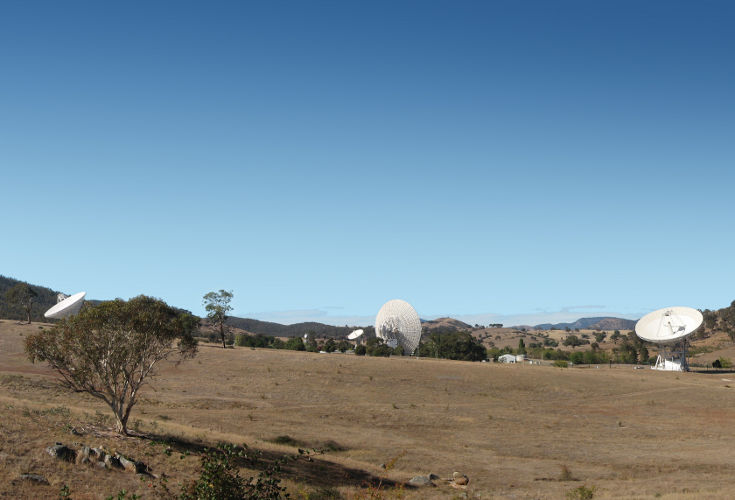
 The American space agency, NASA, admitted a long time ago that its space communication capabilities were dwindling, and beginning to crumble under the large amounts of strain that were being placed on them by an ever-increasing number of simultaneous missions. As a direct measure, officials there decided to reorganize the existing networks under new protocols, but also to construct new listening devices at specific locations around the world. This is what started happening in Canberra, Australia, on February 24, when NASA broke new ground on its campaign to build more antennas for the Deep Space Network, experts at the Jet Propulsion Laboratory (JPL) say.
The new work is being conducted under the guidance of an independent study, which argued that NASA would be far better off if it replaced its massive, 70-meter-wide (230-foot-wide) antennas with smaller versions of last-generation 34-meter (112-foot) ones. Under the conclusions of the studies, this should be done before 2025, and the improvement should be made to the DSN stations situated in Goldstone (California), Madrid (Spain) and Canberra. Most of the instruments already present at these sites are very old, having been built more than four decades ago, and they show signs of damage and tear from being used non-stop all these years.
“There is no better way to celebrate our 50 years of collaboration and partnership in exploring the heavens with the government of Australia than our renewed commitment and investment in new capabilities required for the next five decades,” the NASA Headquarters Deputy Associate Administrator for Space Communications and Navigation, Badri Younes, says of the new work. Officials at the agency add that about three 34-meter antennas should be put to use at the Canberra site by 2018. This will be only the first phase of the project, with many others to follow after that.
“The new antennas, known as 'beam wave guide' antennas, can be used more flexibly, allowing the network to operate on several different frequency bands within the same antenna. Their electronic equipment is more accessible, making maintenance easier and less costly. The new antennas also can receive higher-frequency, wider-bandwidth signals known as the 'Ka band.' This band, required for new NASA missions approved after 2009, allows the newer antennas to carry more data than the older ones,” JPL experts write on their official website. The Laboratory is managed for NASA by the California Institute of Technology (Caltech), in Pasadena.