 14 DAY TRIAL //
 A real breakthrough has been made by a team of scientists in the field of solar energy converters. The new discovery is a fuel cell that, for the first time, surpassed the 40% efficiency milestone, the highest efficiency achieved for any photovoltaic device.
Solar cells have many applications. They have been used for a long time in situations where electrical power from the grid is unavailable, such as in remote area power systems, Earth-orbiting satellites and space probes, consumer systems, like handheld calculators or wrist watches, remote radiotelephones and water pumping applications.
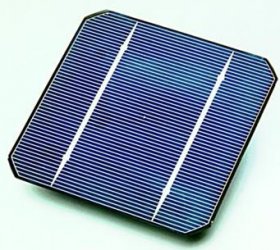
So far, these cells are typically made using a silicon wafer and Solar cell energy conversion efficiencies for commercially available mc-Si solar cells are around 14-16%. There are currently many research groups active in the field of photovoltaics in universities and research institutions around the world.
One of them, a team of scientists from Spectrolab, Inc., a subsidiary of Boeing, created a concentrator multijunction solar cell that uses high intensities of sunlight, the equivalent of 100s of suns, concentrated by lenses or mirrors.
The main advantage of this technique is the fact that the multijunction cells can make use of the broad range of wavelengths in sunlight much more efficiently than single-junction cells, by dividing the broad solar spectrum into three smaller sections by using three subcell band gaps.
"These results are particularly encouraging since they were achieved using a new class of metamorphic semiconductor materials, allowing much greater freedom in multijunction cell design for optimal conversion of the solar spectrum," said Dr. Richard R. King, principal investigator of the project. "The excellent performance of these materials hints at still higher efficiency in future solar cells."
By using subcells, the scientists were able to capture a different wavelength range of light, enabling each subcell to efficiently convert that light into electricity. Thus, they achieved a top efficiency of 40.7%, surpassing the theoretical limit of 37% of single-junction cells at 1000 suns, due to their multijunction structure.
Solar cells are one of the key technologies towards sustainable energy supplies, and this breakthrough can help concentrator system manufacturers produce electricity at a cost that is competitive with electricity generated by conventional methods today.