 14 DAY TRIAL //
 In a new scientific investigation, researchers managed to establish the fact that the evolutionary starting point for all modern vertebrates was set some 360 million years ago. The scientists say that, at that time, a massive extinction of fish species took place, paving the way for the emergence of the first vertebrates. The event apparently promoted extensive biodiversity, even though all vertebrates in existence today, including our own species, evolve from a rather limited pool of species that survived the bottleneck. Details of this investigation appear in the latest issue of the esteemed publication Proceedings of the National Academy of Sciences, the National Science Foundation (NSF) reports.
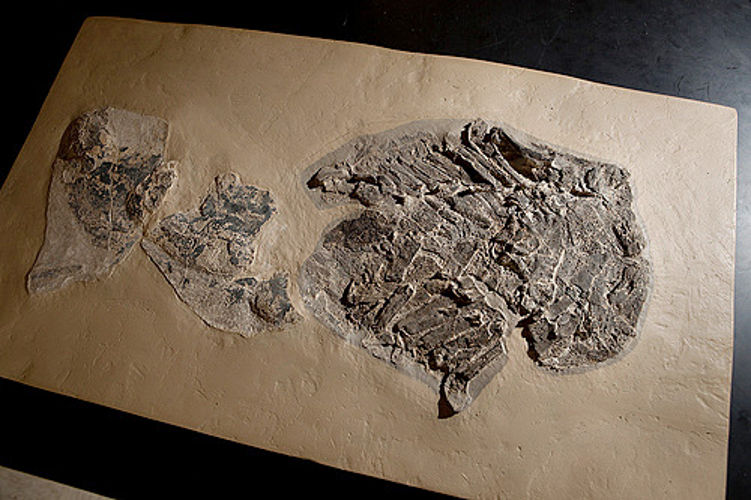
“Everything was hit; the extinction was global. It reset vertebrate diversity in every single environment, both freshwater and marine, and created a completely different world,” explains the lead author of the study, University of Chicago expert Lauren Sallan. She explains that, in the geological epoch preceding the global upheaval, fish ruled the planet's aquatic environments. This is the main reason why the Devonian Period, which stretched between 416 and 359 million years ago, is also known as the Age of Fish. Over the years, experts found numerous fossils, hinting at the fact that a vast array of species lived at the time.
“The Devonian period is known as the Age of Fishes, but it's the wrong kind of fish. Just about everything dominant in the Devonian died at the end of the period and was replaced,” Sallan reveals. “There's some sort of pinch at the end of the Devonian. It's as if the roles persist, but the players change: the cast is transformed dramatically. Something happened that almost wiped the slate clean, and, of the few stragglers that made it through, a handful then re-radiate spectacularly,” adds University of Chicago organismal biologist and anatomist Michael Coates, who was also the second author of the PNAS paper. He adds that the Late Devonian Kellwasser event is widely considered to be one of the biggest five extinctions in our planet's history.
"Something that's seen after an extinction event is a gap in the records of survivors. You have a very low diversity fauna, because most things have been killed off,” Sallan says. “Extinction events remove a huge amount of biodiversity. That shapes in a very significant way the patchiness of biodiversity that persists to the present day,” Coates explains further. The new work was funded by the Paleontological Society, the American Society of Ichthyologists and Herpetologists, the Evolving Earth Foundation, the Palaeontological Association, and the University of Chicago Hinds Fund.