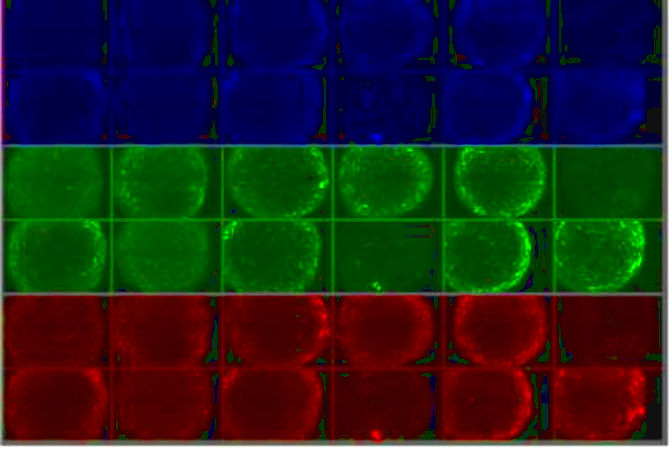
 14 DAY TRIAL //
 Investigator from the Massachusetts Institute of Technology (MIT) recently developed a new type of support structure for stem cells, which allows them to remain alive for weeks without using any foreign genetic material.
Generally, substrates for growing stem cells contain animal cells or tissue, but these can easily contaminate the samples themselves, which means that they can lose some of their capabilities.
This is an especially serious consequence for induced pluripotent stem cells, which are biological units that can transform into any type of tissue in the human body.
Only environmental conditions dictate whether they will turn into nerve cells, or into pancreatic tissue.
Due to this amazing differentiation ability they have, these cells hold great promise for treating a number of disorders, such as for example Parkinson's, multiple sclerosis and spinal cord injuries.
But, in order to make the best of them, researchers need to be able to grow them in sufficiently large quantities, and this is proving to be extremely difficult due to the lack of proper substrates.
One of the main issues in this field of research is the fact that human stem cells are now grown with the aid of cells or proteins derived from mice embryos. If these foreign chemicals would interact with the human body, they would definitely cause an allergic reaction.
Thanks to the MIT collaborations, which includes biologists, materials engineers and chemists, scientists now have a synthetic surface that features no material from mice or other animals.
The data the team recorded of the new surfaces show that they promote and sustain “all-natural” stem cell growth and reproduction for at least three months. Longer periods are also possible, the group says.
Another impressive feat the MIT experts achieved with their new material is the fact that it allows for researchers to separate colonies of identical cells from each other. The surface allows single cells to form colonies of cells of that type with considerable ease.
Details of the new investigation appear in the August 22 issue of the esteemed scientific publication Nature Materials, e! Science News reports.
“For therapeutics, you need millions and millions of cells. If we can make it easier for the cells to divide and grow, that will really help to get the number of cells you need to do all of the disease studies that people are excited about,' says MIT postdoctoral associate Krishanu Saha, one of the co-first authors of the paper.
The work was led by MIT professors Robert Langer, Rudolf Jaenisch and Daniel G. Anderson, in collaboration with Saha and postdoctoral researcher Ying Mei.