 14 DAY TRIAL //
 Our Sun is not by far the only star out there that is capable of hosting planetary systems around their surface. There are at least a couple of hundred stars out there that have exoplanets around them. At least 400 of them have been identified until now, and chances are that thousands more exist. But astronomers have long puzzled over what makes a star able to support the development of planets around it. The answer was recently discovered, some say. Apparently, the chemical lithium is absolutely essential.
Space reports that an analysis of the differences between the stars that have planets and those that don't has revealed a large discrepancy in the amounts of lithium the giant fire spheres have in their composition. The comparison was conducted between Sun-like stars, which are the most likely of them all to have exoplanets orbiting them. The team that made the new find explains that elements such as lithium are not easily produced inside stars, unlike most of the other chemicals that are lighter than iron.
Furthermore, the experts add, most likely, the Big Bang was the main source of lithium. That is to say, the stars today share the same amounts of the stuff that were produced some 13.7 billion years ago. Therefore, all the stars are born with a certain amount of the chemical, which does not change unless reactions in the celestial body destroy the element. Estimates say that some Sun-like stars have a lithium abundance of ten percent of the original amounts produced at the Big Bang, whereas those that resemble our star the most have just one percent of the abundance.
The new study was conducted by a team of researchers from the Instituto de Astrofisica de Canarias in Tenerife, Spain. The investigators, led by astronomer Garik Israelian, looked at data contained in the European Southern Observatory's (ESO) HARPS spectrograph survey, and targeted Sun-like stars specifically. The team determined that those stars with similar lithium concentrations to our own Sun were far more likely to have exoplanets around them, whereas those with higher concentrations of the chemical tended to have none.
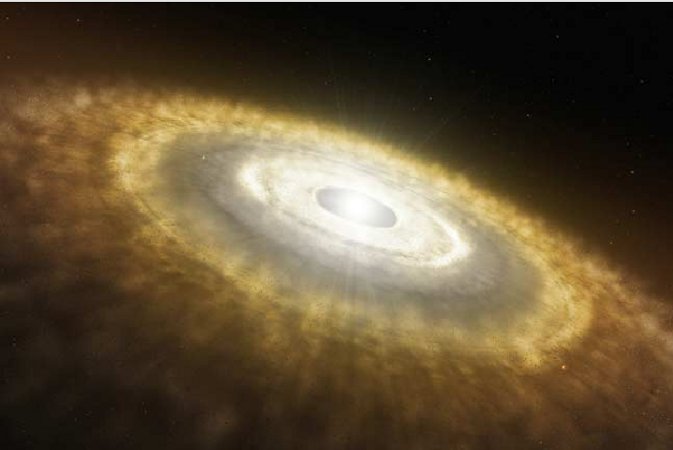
“The explanation of this 60 year-long puzzle is for us rather simple. The sun lacks lithium because it has planets,” Israelian explains. He adds that the protoplanetary disks, from which planets would later differentiate, most likely made the star mix its elements better than usual, forcing the lithium further towards the core, where it burned up, Space reports.