 14 DAY TRIAL //
 You don't even have to say something. Just a laser beam, and the doc tells you what you have and ever have had. A new study, made at the National Institute of Standards and Technology and the University of Colorado at Boulder, and published in the journal Optics Express, shows how molecules from the breath, markers for diseases like asthma or cancer, can be "read" using lasers.
"Known as optical frequency comb spectroscopy, the technique is powerful enough to sort through all the molecules in human breath and sensitive enough to distinguish rare molecules that may be biomarkers for specific diseases. Exhaled breath contains a rich collection of more than a thousand types of other molecules, most of which are present only in trace amounts. Just as bad breath can indicate dental problems, excess methylamine may signal liver and kidney disease, ammonia may be a sign of renal failure, elevated acetone levels can indicate diabetes and nitric oxide levels can be used to diagnose asthma," said lead researcher Jun Ye, of NIST and an adjoint professor of physics at CU-Boulder.
"When many breath molecules are detected simultaneously, highly reliable, disease-specific information can be collected. Asthma, for example, can be detected much more reliably when carbonyl sulfide, carbon monoxide and hydrogen peroxide are all detected simultaneously with nitric oxide. While current breath analysis using biomarkers is a noninvasive and low-cost procedure, approaches are limited because the equipment is either not selective enough to detect a diverse set of rare biomarkers or not sensitive enough to detect particular trace amounts of molecules exhaled in human breath. The new technique has the potential to be low-cost, rapid and reliable, and is sensitive enough to detect a much wider array of biomarkers all at once for a diverse set of diseases. The optical frequency comb is a very precise laser for measuring different colors, or frequencies, of light," said Ye.
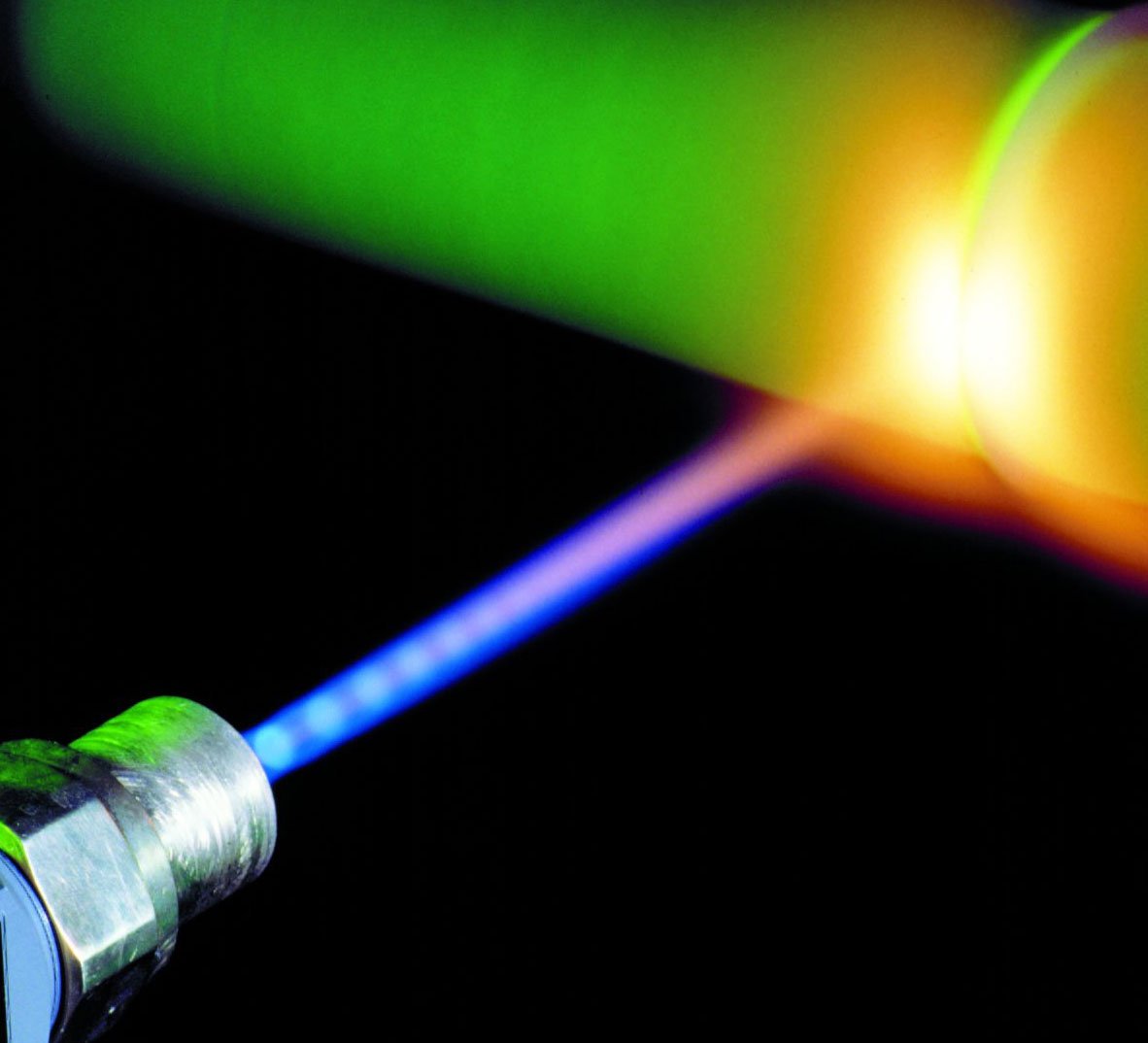
The laser can be programmed for differentiating frequencies of a particular molecule's vibration, on a broad spectral range that can detect thousands of molecules.
"Laser light can detect and distinguish specific molecules because different molecules vibrate and rotate at certain distinct resonant frequencies that depend on their composition and structure," said Ye.
The research team tested the technique on subjects located into an optical cavity (a space between two curved mirrors), and sets of ultrafast laser pulses scanned the cavity. The researchers found traces of gases like ammonia, carbon monoxide and methane from the subjects' breath.
"In one measurement, we detected carbon monoxide in a student smoker that was five times higher compared to a nonsmoking student," said Ye.