 14 DAY TRIAL //
 This is the major archaeological discovery of a pre-Columbian site made in the Caribbean - the Taino or pre-Taino site in southern Puerto Rico comes with fresh info on the Indian life in the area before the arrival of Columbus, from sacred rituals to eating habits. Tainos were the first Indians that Columbus met during his voyages, and they migrated from mainland several centuries before the great explorer discovered the New World.
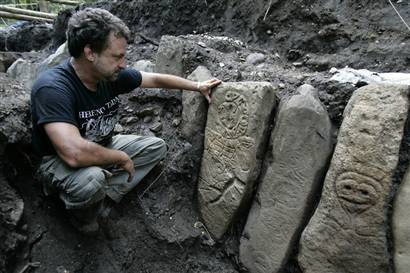
"It contains stones etched with ancient petroglyphs that form a large plaza measuring some 130 feet by 160 feet (43 x 53 m), which could have been used for ball games or ceremonial rites," said Aida Belen Rivera, director of the Puerto Rican Historic Conservation office.
One interesting petroglyph depicts a male human figure with frog legs. There were also several tombs in which the bodies were located face-down with the legs bent at the knees, a pattern detected for the first time in the area. "The plaza may contain other artifacts dating from 600 A.D. to 1500 A.D., including piles of refuse from daily life," said Rivera. "I have visited many sites and have never seen a plaza of that magnitude and of those dimensions and with such elaborate petroglyphs," said Miguel Rodriguez, member of the Puerto Rico's archaeological council, not involved in this research.
The area was known since 1985 for homing indigenous remains, but their size and importance became better known in October 2007, when the U.S. Army Corps of Engineers started excavations to build a dam there.
Experts required the US to stop digging, sustaining that the heavy machinery was destroying important artifacts, exposing them to the elements. The Corps of Engineers then decided that the site will be preserved. "Archeologists make discoveries of this significance every 50 or 100 years - if they are lucky. I'm convinced that a competent investigation of that site will offer us a rare perspective on our pre-Columbian and pre-colonial history. The contractor in charge of the excavation is not equipped to handle such a massive and complex job.", warned Jose Oliver, a Latin American archaeology lecturer at University College London.