 14 DAY TRIAL //
 Dr. Vincent Eke, from the Durham University, in the United Kingdom, is one of the experts that helped inform of NASA's decision to change the location at which it would crash its Lunar CRater Observation and Sensing Satellite (LCROSS) mission. The spacecraft is scheduled to drop its spent Centaurus rocket stage first, and then it will be purposefully deorbited, and set on a course to the Cabeus crater, at the Moon's south pole. The crash will take place Friday, October 9. Eke believes that the mission will be successful in uncovering water ice.
More than 350 tonnes of material will be ejected from the crater as the two instruments crash, predictions show. Telescopes around the world and in the Earth's orbit will point their cameras at the sites, and analyze the observable light signatures. “Water ice could be stable for billions of years on the Moon provided that it is cold enough,” Eke believes. Three separate spacecraft confirmed last month that H20 (water) coated the particles that made up the lunar soil.
“If ice is present in the permanently shaded lunar craters of the Moon then it could potentially provide a water source for the eventual establishment of a manned base on the Moon. Such a base could be used as a platform for exploration into the further reaches of our solar system,” Eke adds. The expert holds an appointment in the DU Institute for Computational Cosmology. He adds that the collisions will have a minimal impact on the Moon, and says that people should not be concerned that the impactor and the rocket stage will alter the natural satellite's trajectory.
“The rocket has roughly the mass of a Transit van and it will hit the Moon at about 5,600 miles per hour. The energy of the collision is roughly equivalent to two tonnes of TNT. While this sounds dramatic, the impact of this will simply create one more dimple on the moonscape. The cratered surface of the Moon shows it has a history of violent collisions with asteroids and comets. Such collisions frequently occur, but the difference is that this time we know precisely where and when to look,” Eke continues. He also worked on analyzing the data beamed back by NASA’s 1998 Lunar Prospector mission.
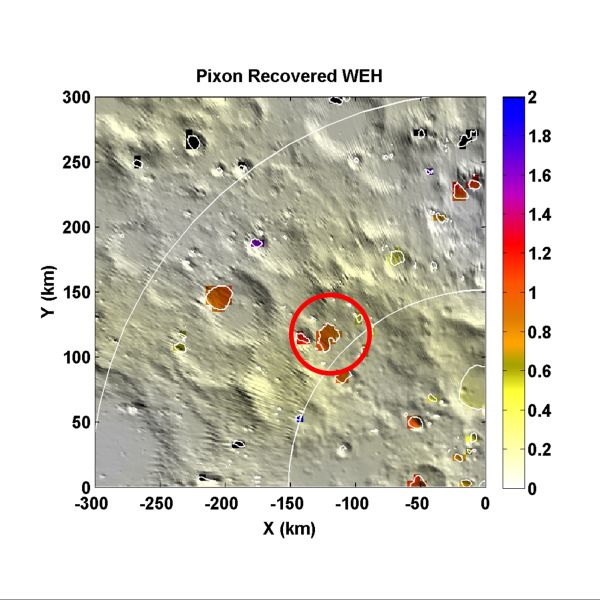
According to statistical predictions, some 200,000 million liters of water may exist in the Moon's shadowed craters. Eke published his investigations in the International Journal of Solar System Studies, Icarus, and collaborated with NASA Ames Research Center Planetary Systems Branch expert Dr. Richard Elphic and Dr. Luis Teodoro on the new research.