 14 DAY TRIAL //
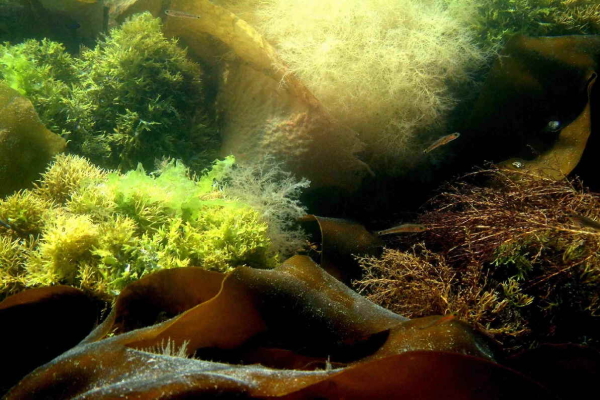
 The First World Conference on Marine Biodiversity takes place on November 11 through 15 in Valencia, Spain, as a result of multiple studies drawing attention to the fact that the biodiversity in Earth's oceans is dwindling, mainly because of climate change. As a result, the entire marine scientific community is buzzing with concern. Among the first presentations made at the Conference, researchers in the UK showed that marine algae travel underwater at a speed of about 50 km (31 miles) per decade.
This is bad news for coral reefs, as they don't get along very well with algae. In fact, sand and algae are responsible for reef destruction, and for changes in the ecosystems around reefs, including the displacement of numerous fish species, and the elimination of others. Nova Mieszkovska, from the Marine Biological Association of the UK, says that the differences registered in such short periods of time could be triggered by rapid macroalgae propagules dispersion.
"The impacts of the pressure of climate change are particularly dramatic, according to results presented at the Conference, in the abrupt deterioration of the Arctic and coral reefs," argues Carlos Duarte, a Spanish Council of Scientific Research (CISC) researcher, and the co-chair of the Conference. "Climate change may deliver the coupe de grace for a catastrophic collapse," he added, referring to the rapid erosion and deterioration of the diversity in the oceans.
Bacteria also pose an invisible threat to the ecosystems, as their diversity levels are still only hinted at, and their spread very little known.
"While it is estimated that 100 to 1,000 million species of bacteria exist, only 6000 of them have been described, since most of them either have low abundances or show little biological activity. Thanks to the availability of sequencing techniques that are much cheaper, researchers have now begun to explore the largely undiscovered world of microbial diversity," said Insitito de Ciencias del Mar CSIC researcher Carles Pedros-Alio.