 14 DAY TRIAL //
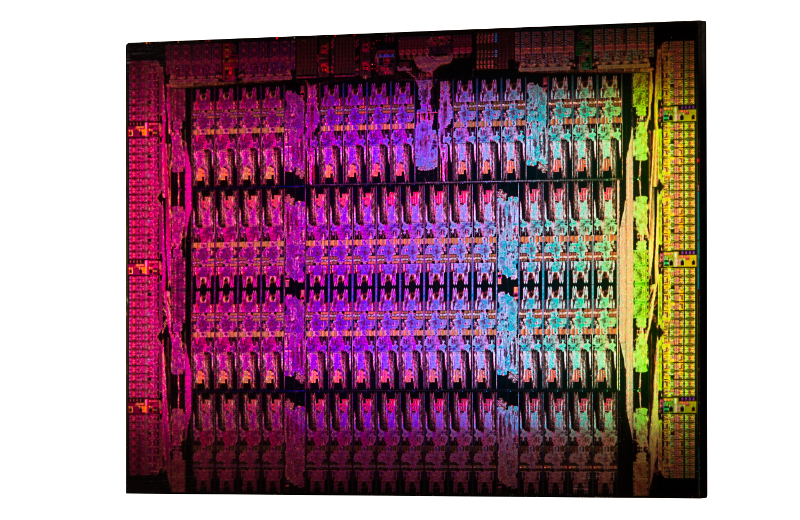
 Just a couple of days ago, the latest Top 500 list was published. Intel took advantage of this opportunity to announce that its first Xeon Phi products, based on the Many Integrated Core architecture (MIC), are finally available.
The Top 500 list is compiled twice a year and ranks the world's mightiest HPC installations (high-performance computing), otherwise called supercomputers.
The latest came out a couple of days ago, and while Intel's processors didn't make the top spot, the company took the occasion as an opportunity to re-launch its Xeon Phi series of x86 PCI Express accelerators.
Designed as alternatives to GPU compute accelerators from AMD and NVIDIA, Xeon Phi coprocessors are finally shipping to partners, even though general availability won't arrive until January 28, 2013.
The Xeon Phi 5110P has a price of $2,649 (2081 Euro / £1,670) and is the one that will be ready by then. The second product, called Xeon Phi 3100, won't debut until a bit later, though still in the first half of 2013. Its price is of $2,000 (1571 Euro / £1,260) per coprocessor.
"Intel Xeon Phi coprocessor represents an achievement in Intel innovation that will help propel us to new heights in research and discovery, and reaffirms our commitment to Exascale-level computing," said Diane Bryant, vice president and general manager of the Datacenter and Connected Systems Group.
Intel hopes to see the Xeon Phi, formerly codenamed Knight's Corner, side-by-side with Xeon E5-2600/4600 product families.
While the latter should perform the standard operations, Xeon Phi would take care of the parallel computing tasks essential in weather pattern prediction, discovery of disease cures and anything else that relies on simulations.
It still has a way to go, though. There is a reason why NVIDIA's Tesla K20 GPU compute modules landed in the Titan, just like there is a reason this newest, strongest ever supercomputer uses AMD Opteron CPUs instead of Intel Xeon.