 14 DAY TRIAL //
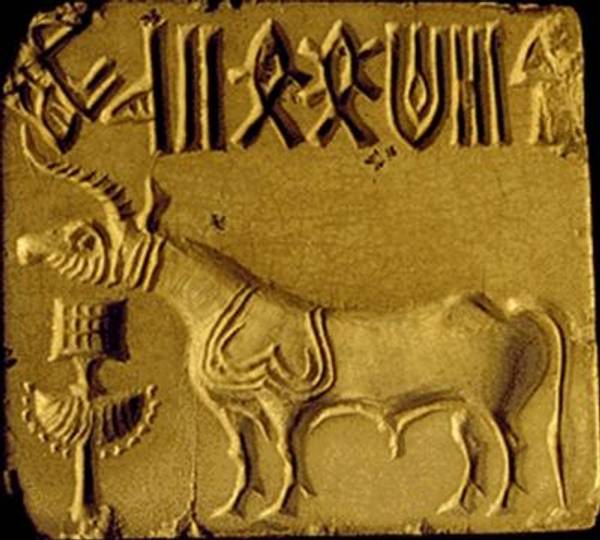
 More than 4,000 objects bearing the symbols characteristic to the Indus Valley Civilization have been discovered in the past century, a wealth of information that should, at least in theory, mean that archaeologists know everything there is to know about the time. However, that is not the case. Since the earliest symbols were made available to the Western world, in 1873, no one has been able to crack the intricate language that belonged to a group of people who lived between the 26th and 20th centuries BC. American and Indian researchers are now using advanced computers to crack the mysterious code.
“The statistical model provides insights into the underlying grammatical structure of the Indus script. Such a model can be valuable for decipherment, because any meaning ascribed to a symbol must make sense in the context of other symbols that precede or follow it,” University of Washington Associate Professor of Computer Science and researcher Rajesh Rao explains the effort. He is also the lead author of a new study detailing the effort, published in the latest issue of the journal Proceedings of the National Academy of Sciences (PNAS).
The new computer model disproved claims made by some researchers, who argued over the years that the symbols discovered on vessels and other object – usually five to six characters long – were not even a language at all. The model showed that, when substituting a symbol from one line with another, the resulting image was far less likely, in percentages, to be part of the hypothetical language. “These results give us confidence that there is a clear underlying logic in Indus writing,” Mayank Vahia, an expert at the Tata Institute of Fundamental Research and Center for Excellence in Basic Sciences, in Mumbai, India, says.
“The finding that the Indus script may have been versatile enough to represent different subject matter in West Asia is provocative. This finding is hard to reconcile with the claim that the script merely represents religious or political symbols,” Rao adds. “One of the main purposes of our paper is to introduce Markov models, and statistical models in general, as computational tools for investigating ancient scripts,” R. Adhikari, a scientist at the Institute of Mathematical Sciences, in Chennai, India, concludes.