 14 DAY TRIAL //
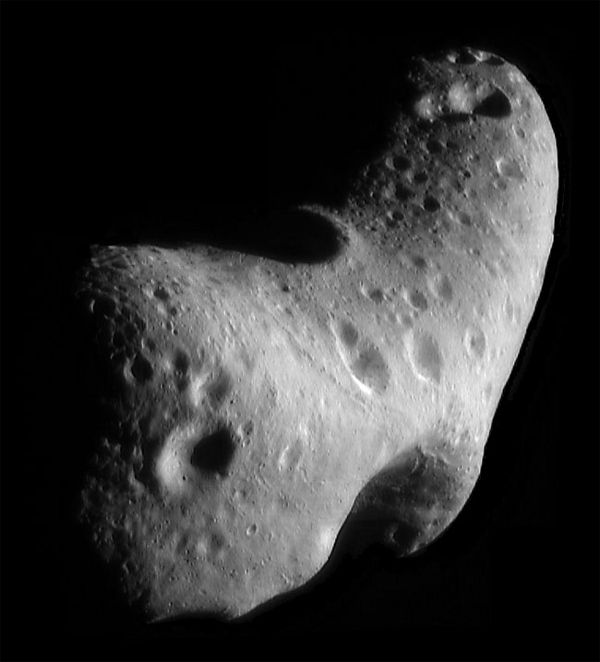
 A team of astronomers announces that they have discovered many types of asteroids, meteors and other space rocks around our planet. These objects are part of the near-Earth Object (NEO) class.
They were identified following a new asteroid survey, which was carried out using the NASA Spitzer Space Telescope. This is one of the American space agency's four Great Observatories.
A number of the recently found structures were discovered to be dark and dull, whereas others were very bright and shiny, indicators of peculiar chemical compositions.
The differences between these bodies are so significant, that astronomers are currently wondering whether they have underestimated NEO. Their diversity appears to be far-reaching, experts say.
About 100 such objects were observed with Spitzer, which is especially equipped to conduct measurements in the infrared portion of the electromagnetic spectrum.
“These rocks are teaching us about the places they come from. It's like studying pebbles in a stream bed to learn about the mountains they tumbled down,” says scientist David Trilling.
He holds an appointment at the Northern Arizona University, in Flagstaff, and is also the lead author of a new study detailing the findings. The work is published in the September issue of the esteemed Astronomical Journal, Space reports.
The team that managed Spitzer throughout the survey says that the research initiative is part of a larger study, which seeks to analyze the individual traits of more than 700 NEO.
“Very little is known about the physical characteristics of the near-Earth population,” Trilling says. Over the past few years, these space rocks have become the target of many investigations.
“Our data will tell us more about the population, and how it changes from one object to the next. This information could be used to help plan possible future space missions to study a near-Earth object,” he adds.
Astronomers have been proposing using various IR space telescopes to conduct surveys on NEO. They believe that hundreds, if not thousands of them may be lurking around our planet.
The danger with these rocks is that at some point a few of them might decide to drop in for a visit. It's the job of these surveys to ensure we are prepared when that happens.
The Wide-field Infrared Survey Explorer (WISE) telescope, one of NASA's newest, has already been conducting all-sky, infrared surveys, which also allowed it to detect NEO.
Experts hope that, in the near future, WISE and Spitzer could wok together to identify and analyze more and more NEO.