 14 DAY TRIAL //
 Looking for a better, free browser has been restricted for many years. The market did not offer too many choices and Internet Explorer was by far the easiest way to go. However, its mischiefs soon echoed on our computers and we were compelled to strap it with a myriad of applications designed to reject the nasties and alert us upon intrusion.
After year 2000, the viable alternatives for the average user were either the faulty Internet Explorer from Microsoft or the ad-ware filled Opera from Opera Software. And, as the attacks towards the market share "owner" at the time (IE6) intensified, Mozilla Foundation was created and gave us hope again. The start was timid and from one year to another people did not know what to call the new browser from Mozilla: Phoenix or Firebird? The issue settled once the publishers of the application decided to register a trademark for the name Firefox.
Baptized thrice, Firefox soon became an appealing alternative to the adware in Opera and the hacker attacks via IE. And so, the battle of the web browsers begins. The undisputed leader up to now in what concerns the market share is Internet Explorer. But Firefox and Opera are soon going to tip the balance in their favor a little.
I proceeded to testing all three of them, just to see which one integrates better on Vista and what may be the problems running them on the latest OS released by Microsoft. The tests were few and from the average user's perspective. I left the bias and my preferences for web surfing aside and judged the results as objectively as possible.
Installing them was piece of cake, especially for IE7 which came packed in Vista. Everybody knows the sizes of the Windows installers, but I am going to tell you once more: IE7 - 14.7MB, Firefox - 5.72MB (English version) and Opera with a little under 5MB, that is 4.68MB. This round is clearly won by the Norwegians.
Regarding the installation folder, Internet Explorer 7 leads by far as Firefox will take no more than 20MB and Opera limits to 13.8MB. IE7 makes a very good first impression as the installed files take only 1.4MB.
However, given the large disk sizes available on the market today, I guess this should not be a problem and these considerations can be regarded as totally irrelevant.
One of the most important aspects when it comes to web browsing is the web page load speed. A series of tests were performed on all three browsers under relatively the same conditions (the same processes were running). To meticulously measure the speed of each browser is absolutely impossible as there are many variables involved that cannot be reproduced for each testing.
The tools for testing the speed can be found here and here. Now everybody who has heard of Opera has definitely seen that it is declared the fastest browser up to now. If you think otherwise, I would hate to shatter your beliefs, but here it goes: Opera is still the fastest out of the three web browsers tested. And although I am a fan since they released the no-adware, free version on the market, I was expecting Firefox and IE7 to load the pages in "andantino".
However, the ranking is as follows. At the first test, I wanted to verify the reaction speed in cold start and warm start conditions. The values I am going to reveal here are subjective to the configuration of my computer, bandwidth speed, processes running during the test and many other factors. But the same factors were made available for each of the browsers registered in the competition.
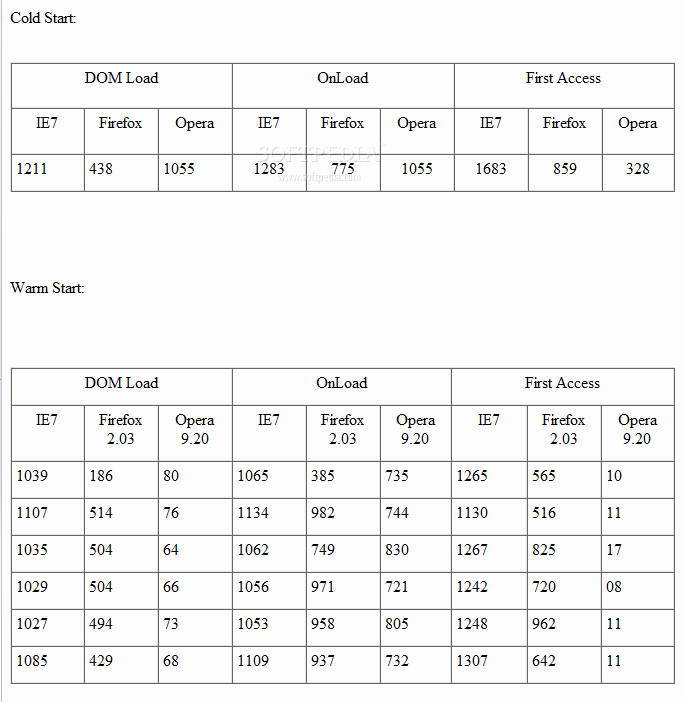
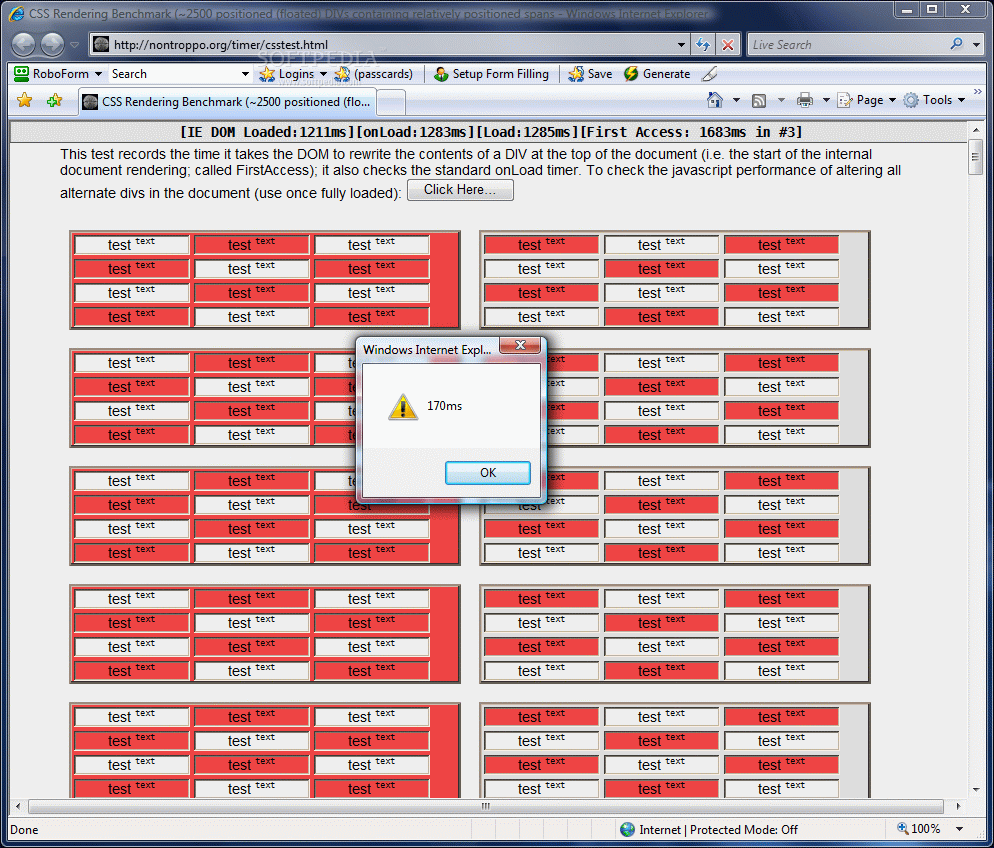
The cold start page loading for the first test consisted in CSS Rendering speed and JavaScript performance. IE7 recorded the following values: Document Object Model (DOM) load: 1211, OnLoad speed: 1283, First Access: 1683 and for JavaScript performance a total of 170 milliseconds were achieved.
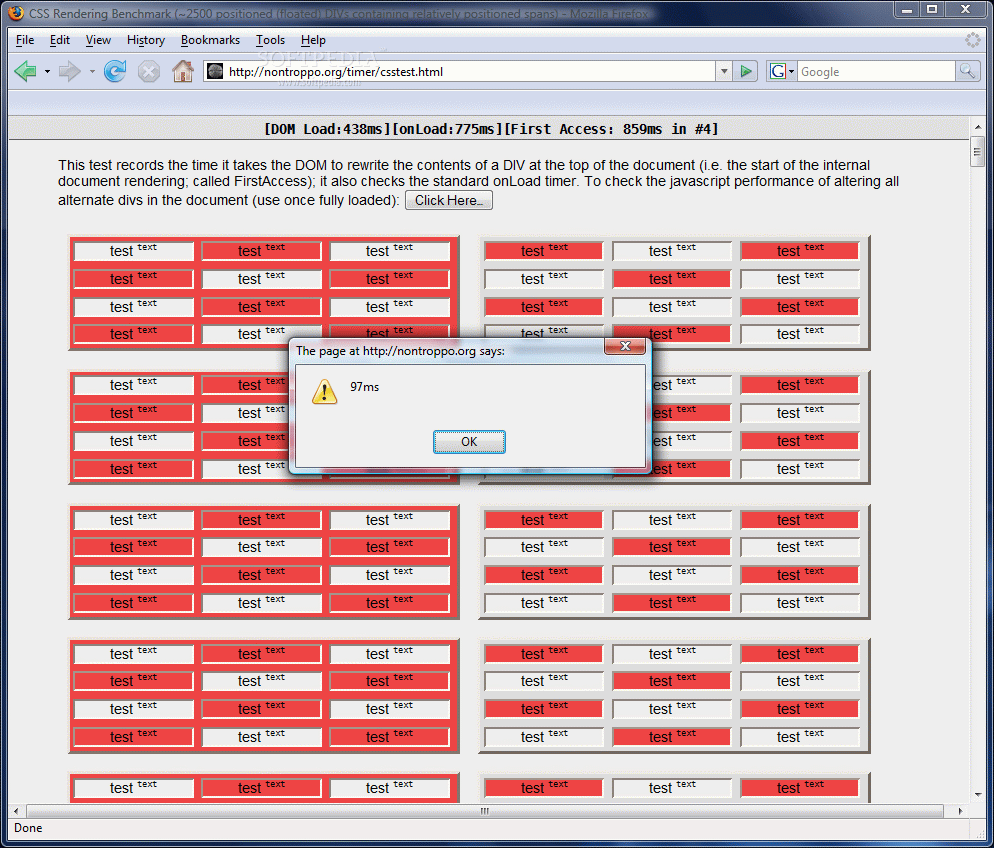
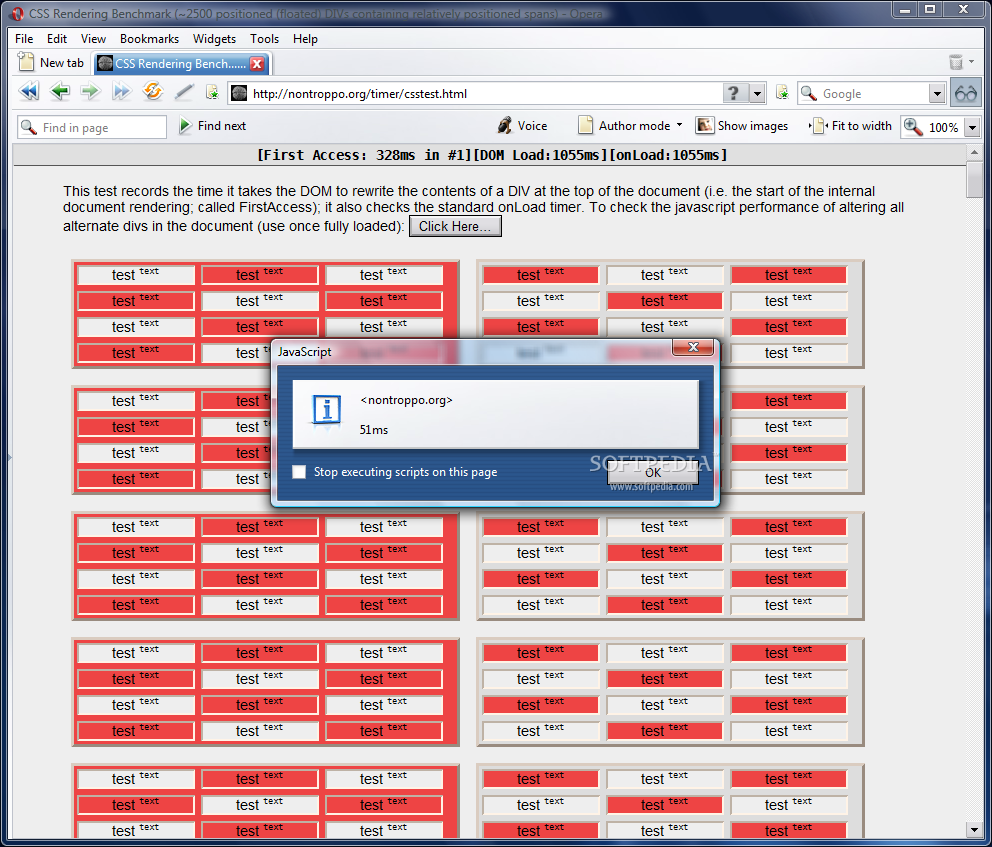
Firefox did better in this first run and recorded 438ms for DOM load, 775ms for OnLoad, 859ms for First Access and 97ms for JavaScript performance. Compared to IE7's performance, that is impressive and not even Opera managed to do much better. The values for the Norwegian browser are a bit higher for DOM load and OnLoad (1055ms and 1055ms respectively), but it gained some thrust when it came to First Access (328ms) and JavaScript performance (51ms).
However, cold start means almost nothing as it happens only at the beginning of the browsing session. The relevant results are to come in warm start testing. The values recorded are simply too far apart not to believe them. Opera scored highest (well, recorded the lowest values so it has a high ranking) with an average of 71.16ms for DOM load, 761.16 for OnLoad and a whopping 11.3ms for First Access. Closely (but not close enough) followed Firefox with a DOM load average value of 438.5ms, 832ms for OnLoad and 705ms for First Access. The turtle here (but not the one that outran the rabbit) is IE7 with the worst scores: DOM load average was 1053.6ms, recorded OnLoad was 1079.83ms and for First Access it scored 705ms.
For the warm start, each browser benefited of six rounds. During the testing, all the applications were closed except for the tested web browser and there was nothing to alter its performance in any way except for the system processes and some necessary services. Additionally, the web browsers were not hindered by any add-on or extension in any way as there was none installed. The browsers were tested the way they were in the original installer.
For the second test, the same environment was provided and the performance parameters included layer movement, random number engine, math engine, DOM speed, array functions, string functions and Ajax declaration. This time, it was easier as the test tool also calculated the total duration in milliseconds, so I am going to present only the average values.
There were 10 test rounds this time, just to eliminate any mistake. The big picture remained absolutely the same and Opera proved its athletic talents by registering the best timings (an average of 408.1ms). A little far behind, but ranking second, came Firefox with a total average of 1335.7. IE7 came last as it scored an average of 3033.8ms.
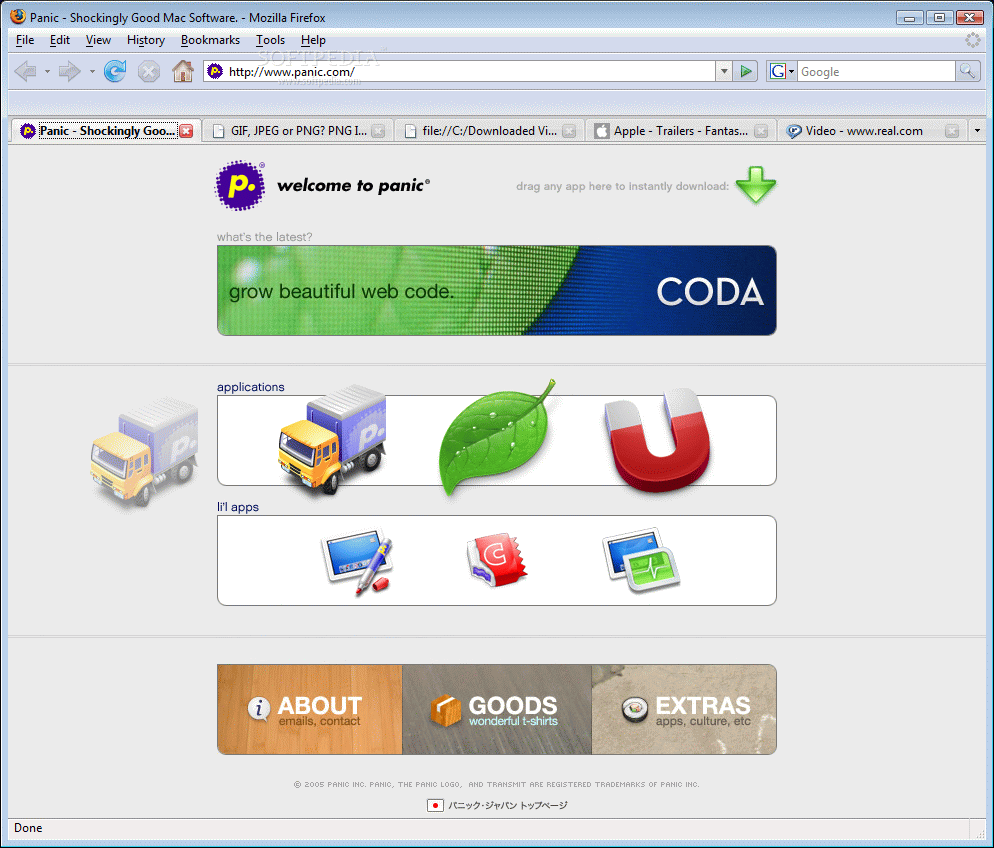
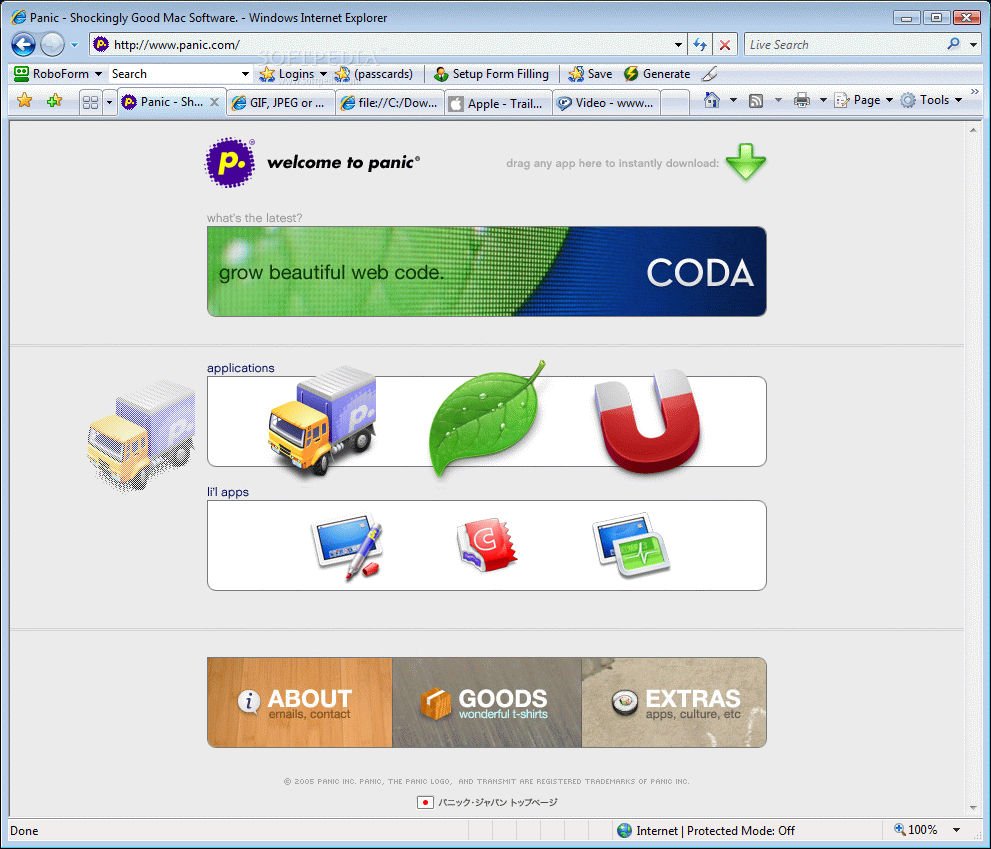
Vista is known to ask a lot of RAM and the minimum CPU requirements used to be quite high. Add the RAM needed by your web browser and either the system or the web browser may generate some nasty errors. Plus, the web browser may crash and you can lose all the opened tabs. Well, not in Opera and Firefox, but IE will definitely not load the last session's tabs.
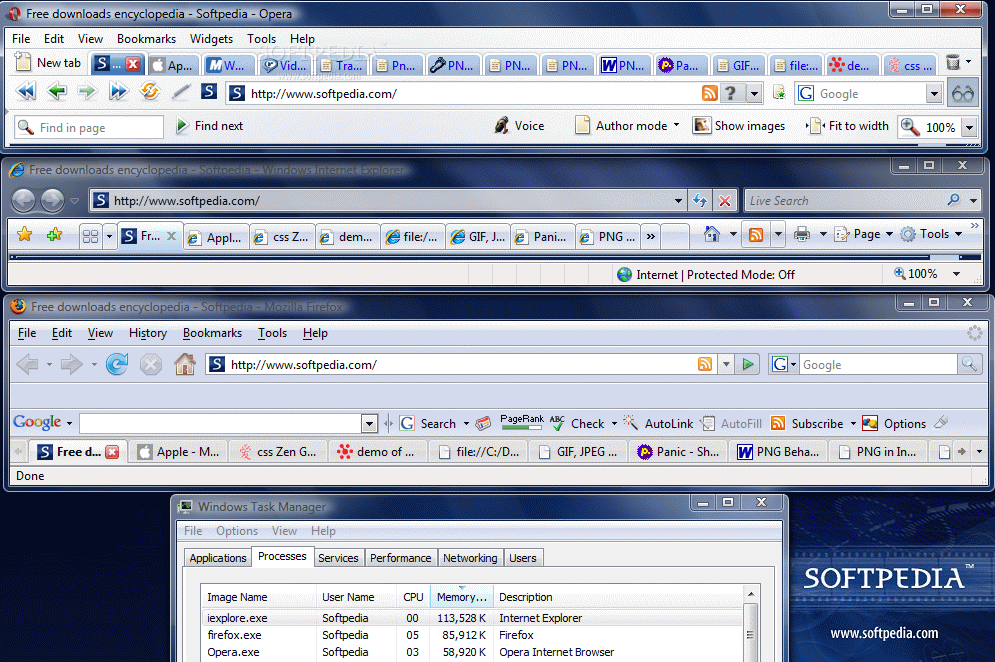
So I loaded 15 tabs (the same 15 in each of them) and waited a while (about half an hour) for the values to stabilize and I concluded. The opened pages contained everything from images (JPEG, PNG, GIF and even one with BMP), all sorts of script formats to video and Softpedia home page.
With IE7 gulping almost 114MB of RAM, it ranked last in the top. About 28MB lower, with almost 86MB of RAM was Firefox, which is pretty strange as it used to have the memory leak problem and reached even values of 600MB. Opera proved that it can conserve the strength of your computer the best way possible and recorded almost 59MB of RAM. Opera's mileage is almost half the IE7's.
Another test on the agenda was how the three applications dealt with PNG transparency or, to use a more formal term, PNG alpha transparency. In this regard, users have asked for implementation of the filter in IE since version 5.5. Half a decade later, the filter is included in Microsoft's latest web browser version. Not quite the same happened with the other two contestants that have implemented the filter as soon as complaints have come knocking at the door.
How do the three browsers deal with this? All of them deal great with alpha transparency and the images look fabulous in the pages. However, upon dragging the transparency layer, IE7 seems to have some issues while the other two contestants seem OK, doing their job just fine. Maybe I am asking too much from IE7, but I was really expecting this to work the same as in any of the two web browsers.
After multiple tests on different phishing websites, all of them loaded in each browser at the same time; there were some differences between them, not too many, but considering the explosion of this type of Internet fraud I think you may be interested in learning which browser protects you best.
Out of 25 phishing websites loaded, only for three of them have I received no alert and were opened with no problems; another one of them could not be opened by two of the browsers and could not be verified.
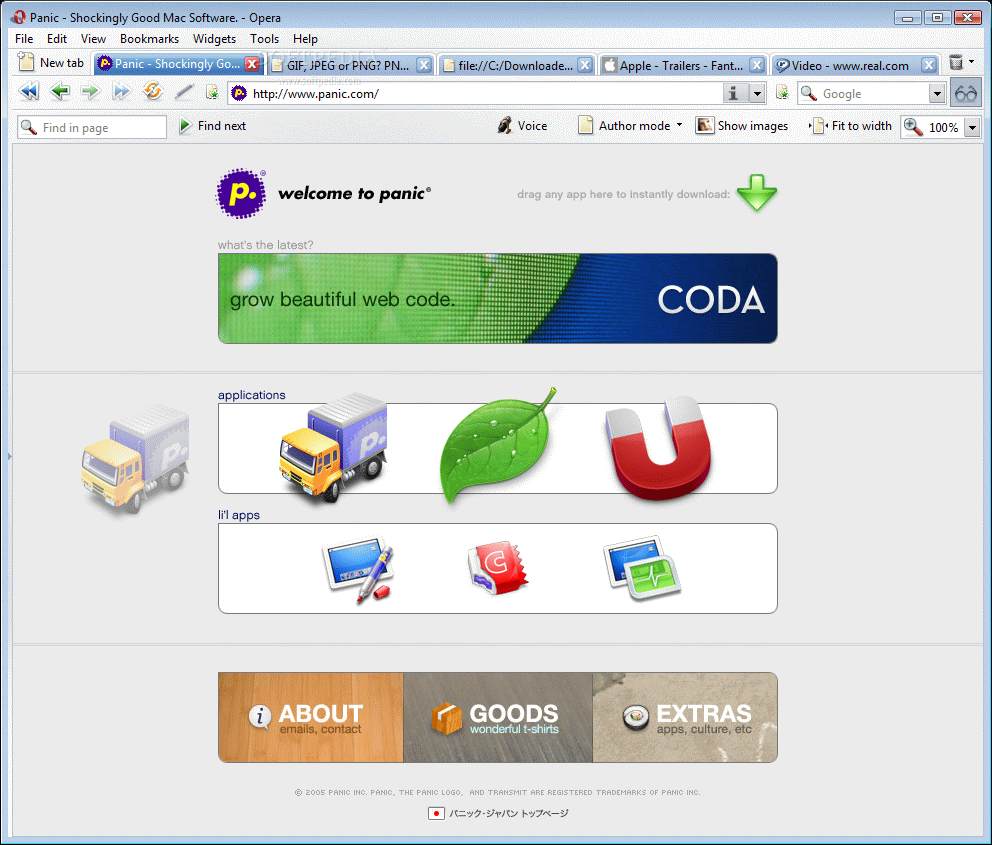
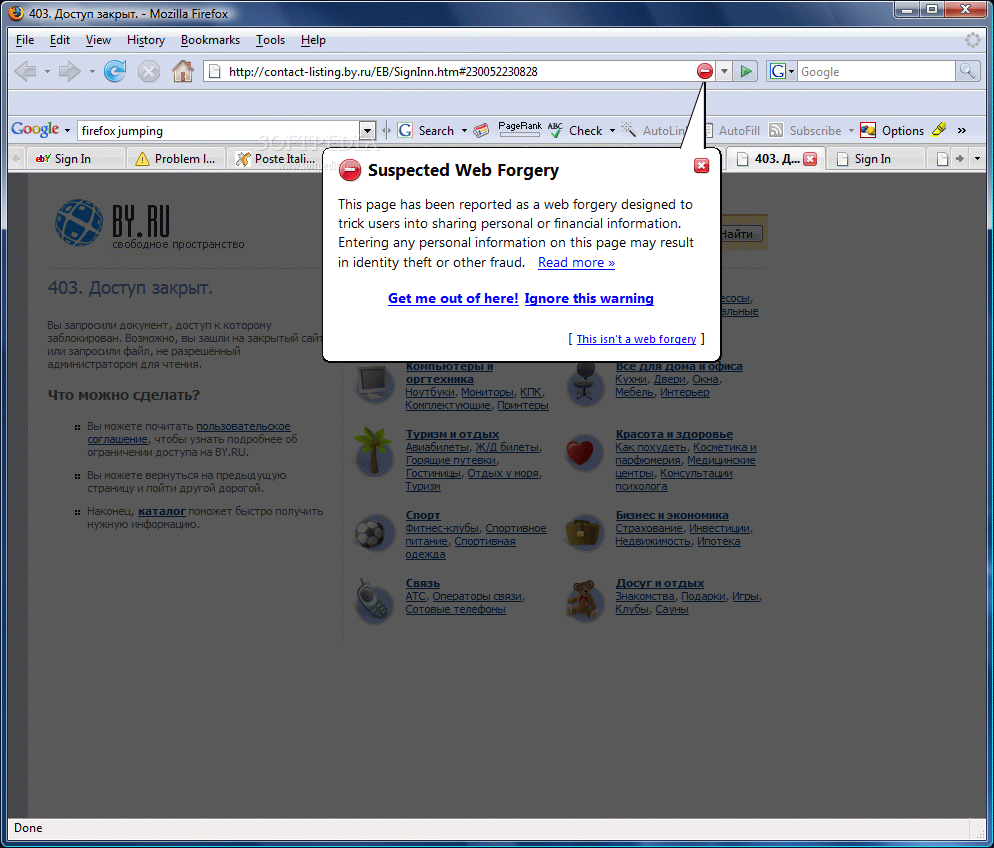
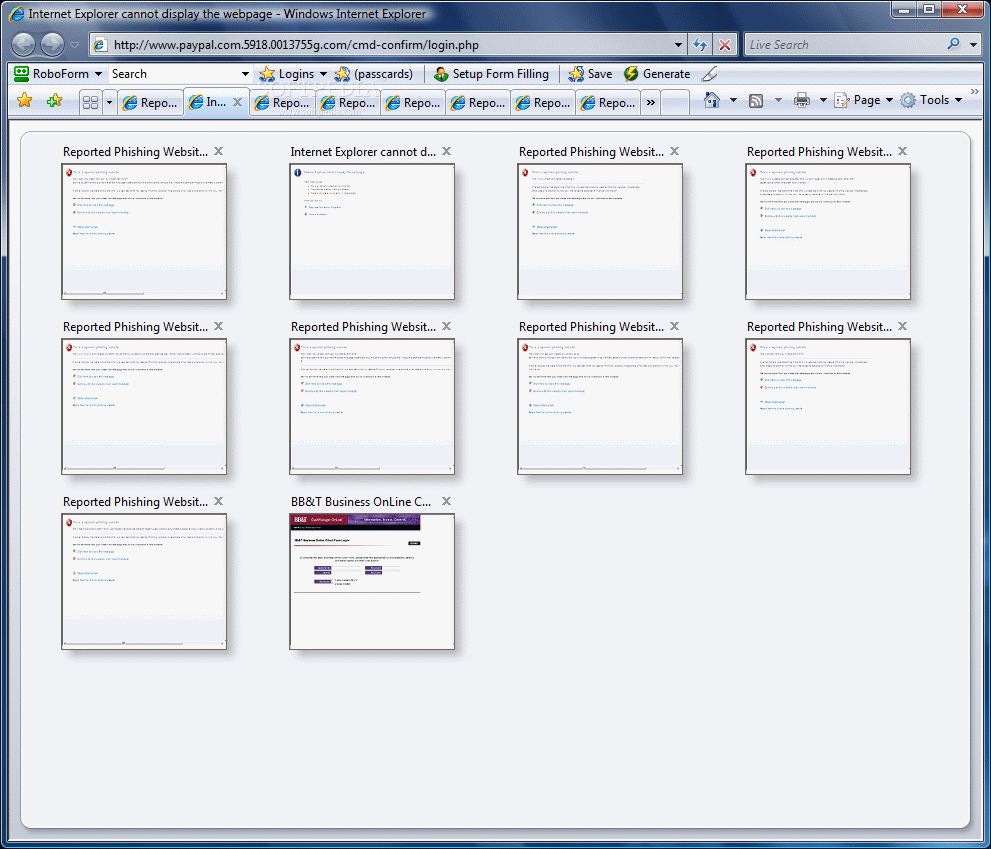
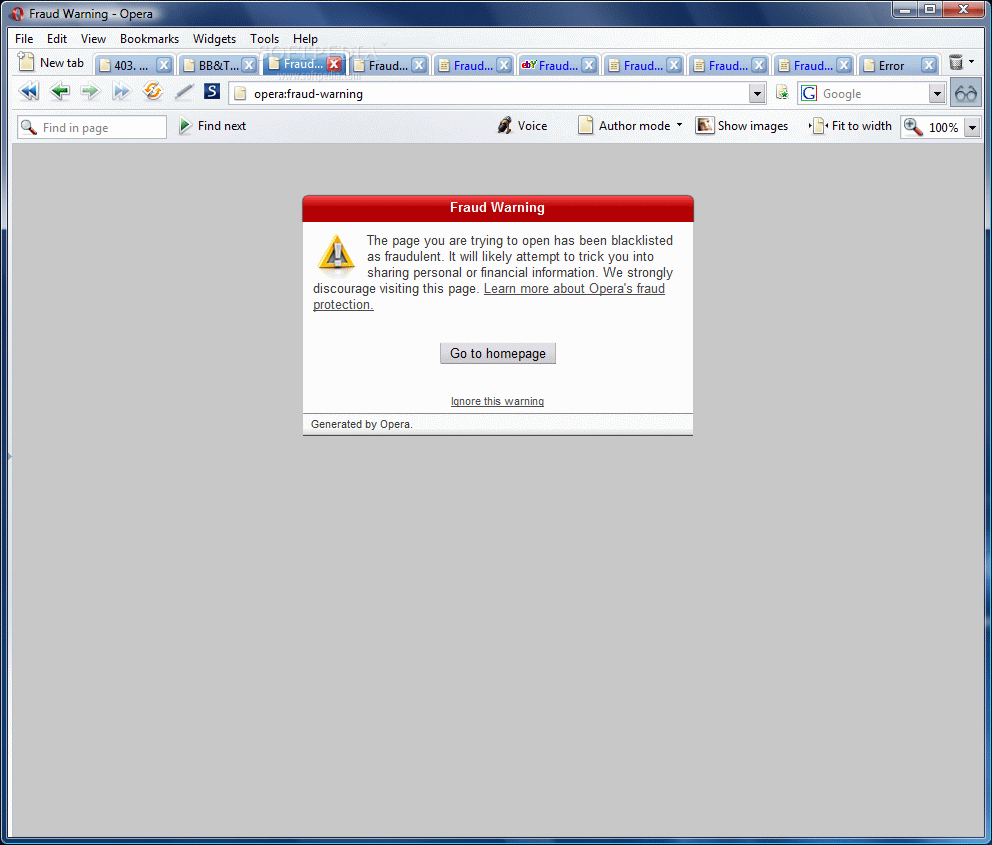
I must say that I was impressed by the way all of them dealt with the websites. The user had the possibility of loading them, despite the evident warning that the area was not safe. The alert regarding the unsafety of the website was most visible in all three of them and while Opera displayed a red warning saying "Fraud Warning" and marked the tab with "Fraud" and Firefox applied a black veil on the page and displayed the "Suspected Web Forgery" dialog, IE7 simply showed an error-like screen saying that the page is reported as a phishing site and turned the red alert on the address bar. All three browsers gave the user the possibility of continuing loading the page with absolutely no restriction.
The browser that did the worst at this test was Opera. Next in line came Firefox. IE7, on the other hand, proved that security is no issue for it is rock solid from this point of view. Opera warned about a certificate mismatch in one case, while in another the download dialog appeared and the user was supposed to store a very strange file on the computer (no warning was visible).
With Firefox, things are pretty much the same and it also prompted me with downloading a weird file instead of analyzing it first. Other than this, both Opera and Firefox let some websites pass through (Opera 2 and Firefox 1). All three browsers agreed on letting one website through.
IE 7, as you can clearly see from the corresponding image, also let one website go through. But, as it was later proved, the website was as real as can be and represented absolutely no threat. Later testing exonerated both Opera and Firefox of the mistake as they too failed to report it as a case of fraud or web forgery.
So the final count gets to this: Opera failed to recognize the phishing in two cases and in another it alerted about the mismatch of page certificates; Firefox opened with absolutely no warning only one phishing website (and the address of those that would not open would be verified and the web forgery warning displayed in plain view). IE7 failed to open one website and the rest of them were correctly labeled as phishing websites.
Out of the 12 tests, Firefox leads the way, as it could not resist opening two pop-up windows (drop-down and sticky). The second place belongs to Opera with opening only three of them (drop-down, floating banner and sticky pop-up). IE7, contrary to my expectations, permitted the opening of four pop-up windows (sticky, floating banner, floating pop-up and drop-down).
The test was not a specific one and googling for "pop-up test" will give you a myriad of results to pick from.
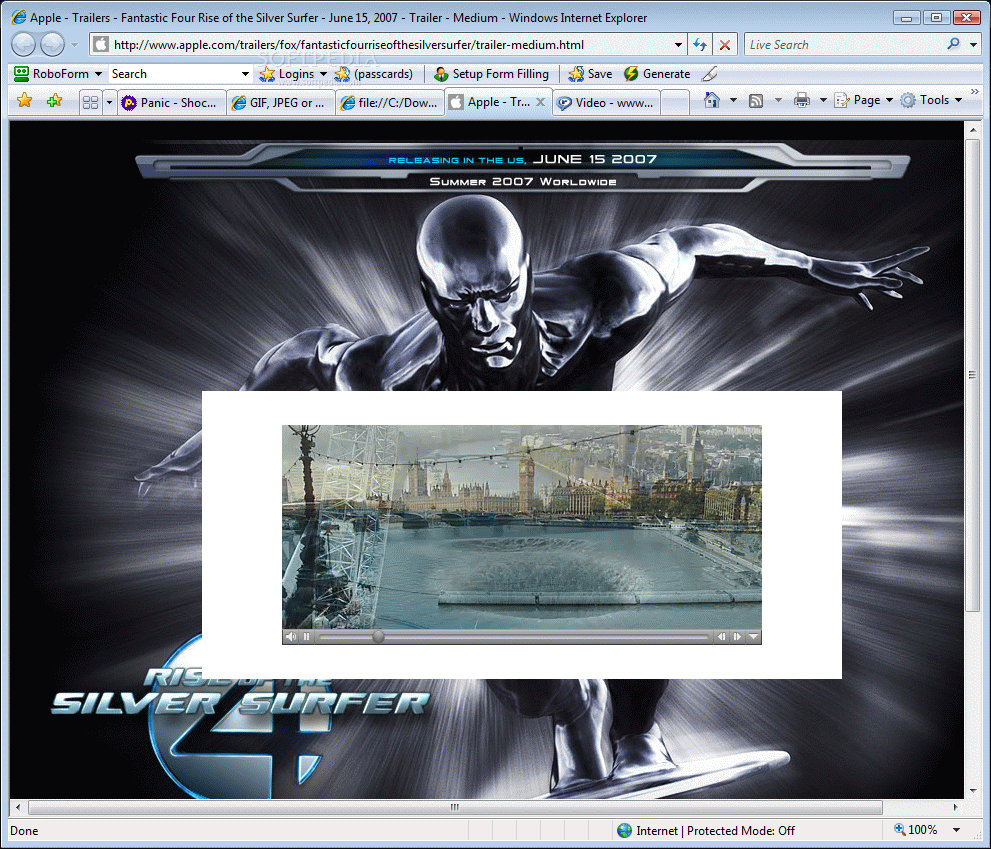
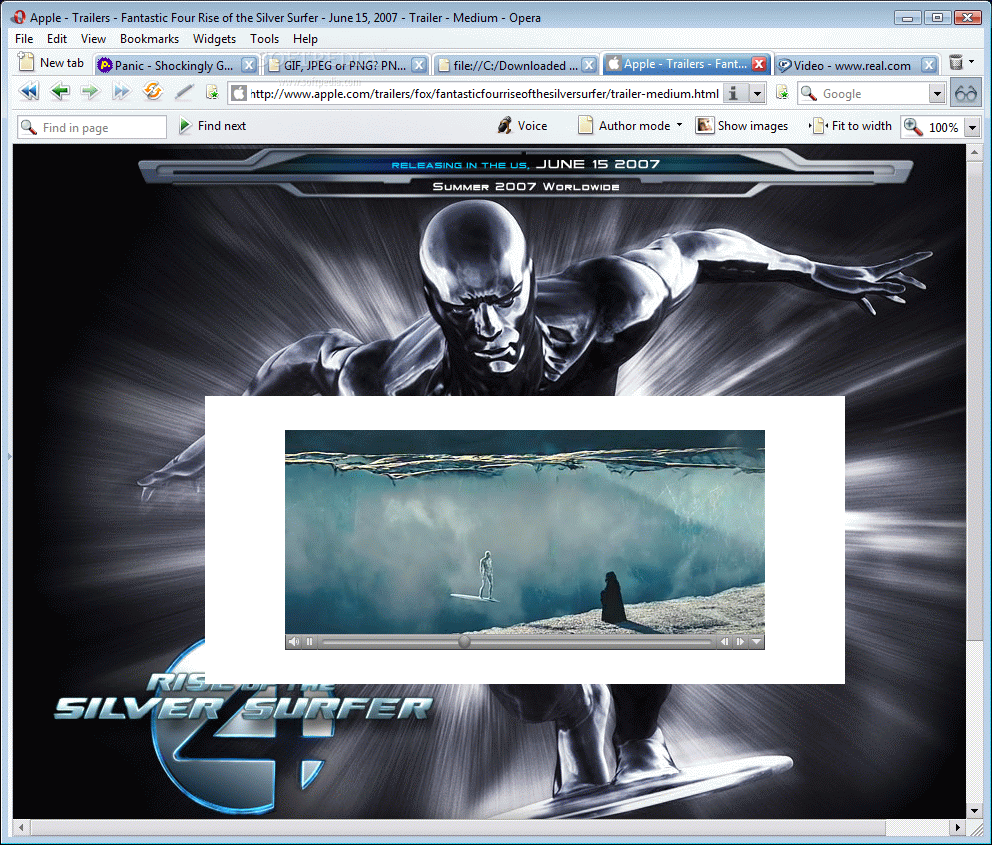
When it comes to online movie playing in Vista there may be some problems, especially with realmedia. The issue is not that it will not play, but if you have a Vista equipped with Aero, this will be disabled while the movie is playing. The computer will return to the original settings as soon as the processes involving realmedia playing will stop.
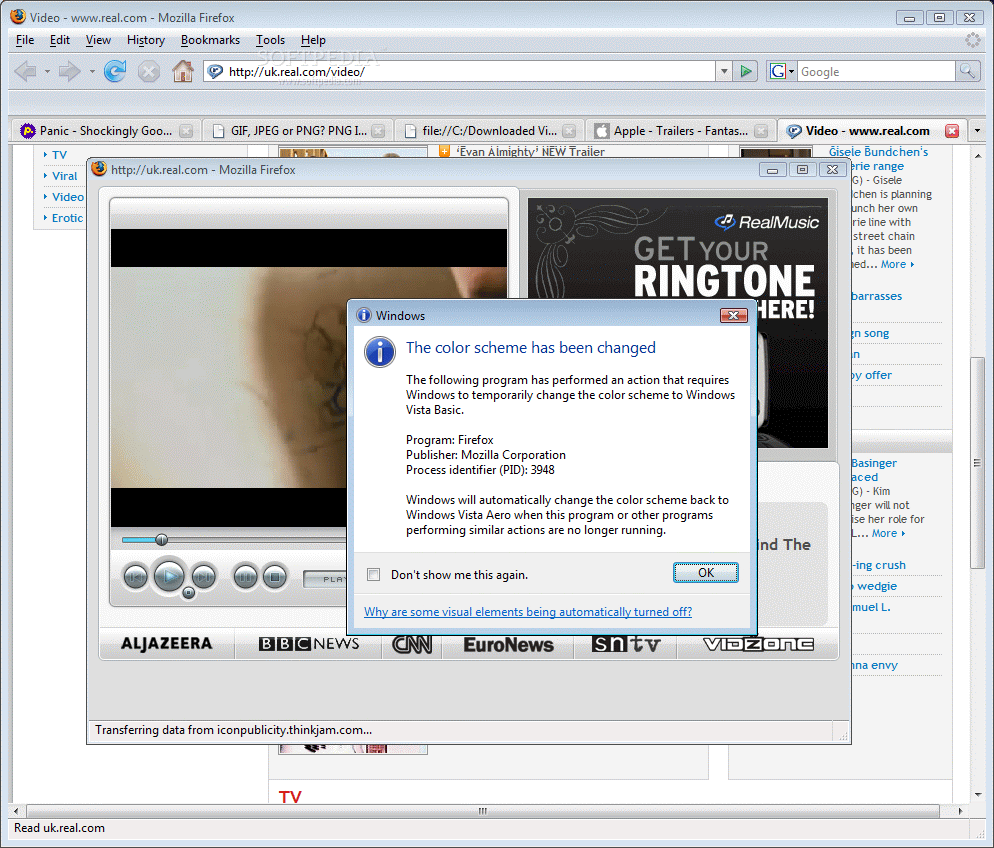
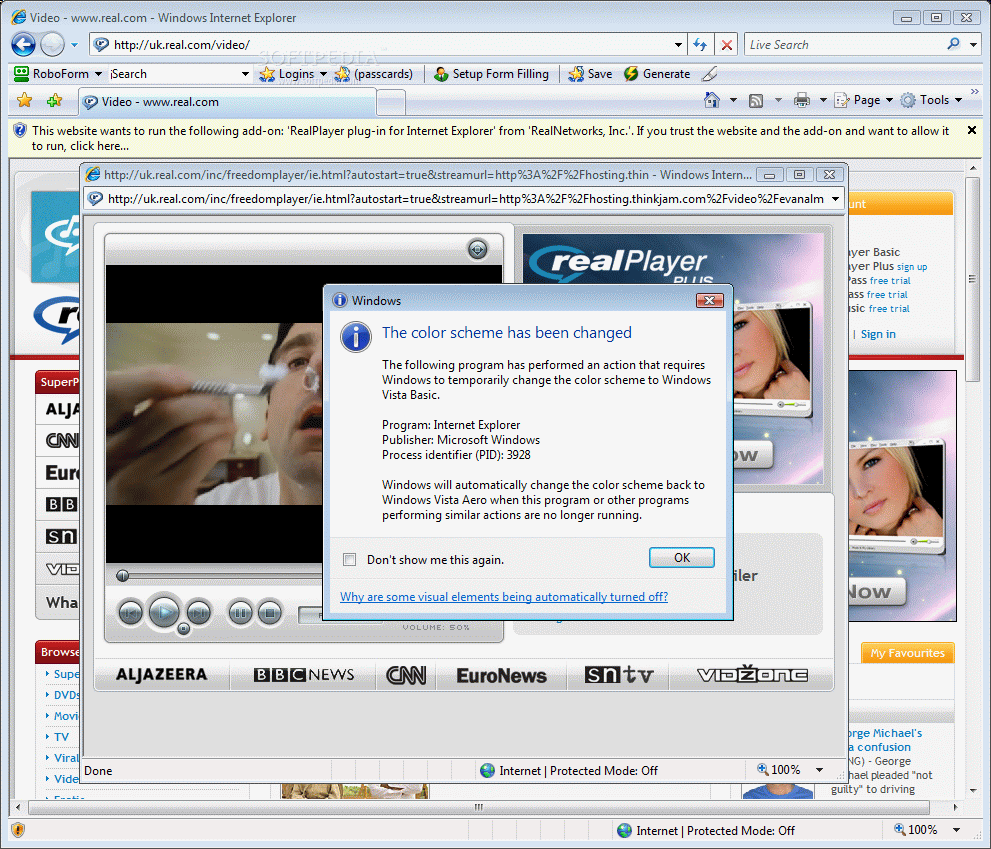
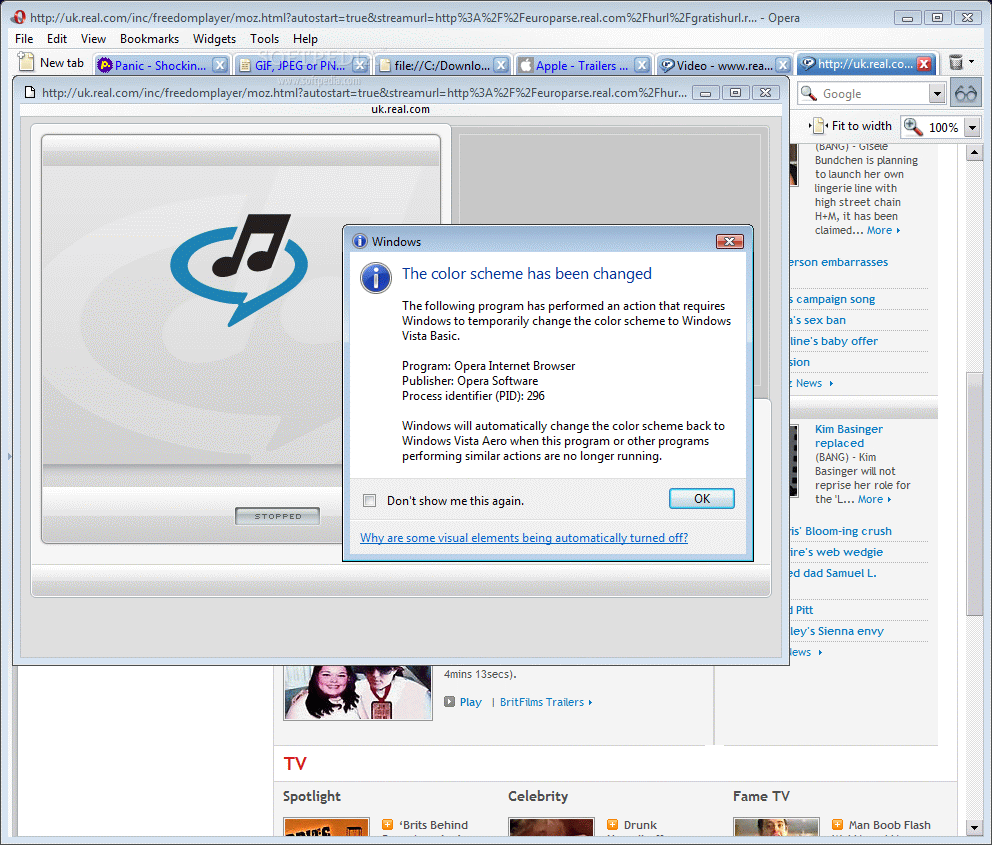
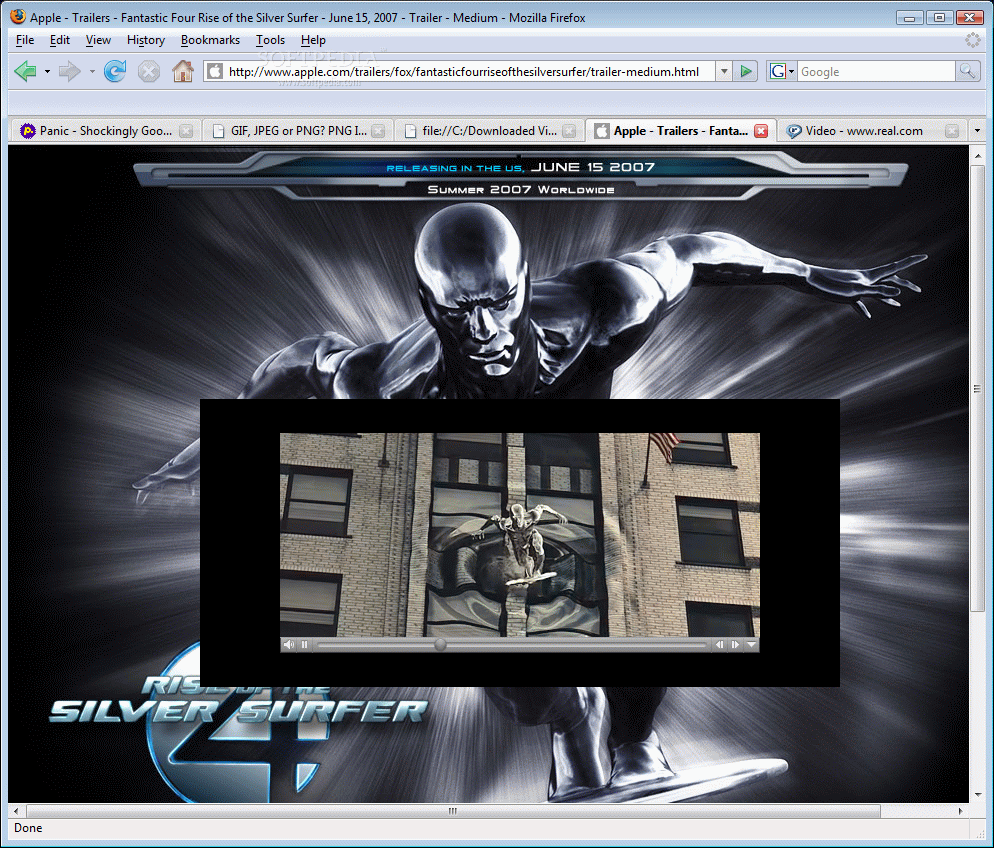
Despite the lack of support for QuickTime media for Vista, all the browsers did a great job at rendering the videos. There were no issue in this regard and aftert downloading the required application (QuickTime player) and restarting the computer, everything rolled fine.
All of them excelled at some tests and all of them had minor difficulties at other tests. However, I can't say for sure which of them is the best as there isn't any.
Based on my testing, IE7 has the best anti-phishing protection but fails in blocking some pop-ups. However, ActiveX is great and prompts you whenever there is some ActiveX component to download. Microsoft's browser proved in many cases that it is the slowest of the three.
Its features may not be as flexible as in Opera or Firefox, but you have to agree that it is a quantum leap from version 6 SP2. The Quick Tabs option similar to Opera's Speed Dial is simply making tabbed browsing a pleasure.
Opera is the fastest of all. The speed score is a proof that this application is using some kind of super-code for Javascript. The security is pretty tight and it almost aligned to the other two. The interface is just gorgeous and the functionality is at abnormal (read above normal) standards.
Its main advantage is speed, as in almost all other categories it ranked third.
Firefox was the "middle" application in the tests. It never ranked first and never ranked last. Speed, pop-up blocking, security, resources, it always was between the two. The interface has never been greater and despite the multiple attacks that made the developer release a series of vulnerability patches it managed to be constant during the tests.
So, if you want security over speed, go with IE7. If speed is what you need and do not care much of the security of the browsing, then choose Opera. And if you are looking for a middle solution or a compromise between the two, Firefox is what you need.