
Softpedia
 

NEWS CATEGORIES:


NEWS ARCHIVE >>
SOFTPEDIA REVIEWS >>
MEET THE EDITORS >>
TRENDING TODAY
Home > News > Apple > Tips&Tricks

December 18th, 2009, 18:11 GMT · By Sergiu Gatlan

How to Set Up the Mac OS X Firmware Password Protection

SHARE:

Adjust text size:

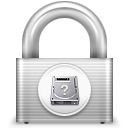
The Open Firmware Password icon
Enlarge picture
Are you always thinking that people might get their hands on your data and you do everything you can to make sure it is always safe and you are the only one that has access to it? If that description applies to you, then you have to know that Apple has a really neat trick in store for you. 

If you want to prevent others from booting your machine and getting access to your data, you can use the firmware password protection features to easily set up a low-level password protection for your Mac.

The firmware password protection feature is off by default on all Mac machines and, according to Apple, the Open Firmware Password tool should be used only on Macs with Mac OS X 10.1 and later. Because Apple does not provide technical support or endorse using the Open Firmware Password Protection feature on earlier versions of Mac OS or with any third-party software utilities, you should be careful and first make sure that your Mac complies with this basic requirement.

On Intel and PPC based Macs, the firmware password protection is based on two different types of firmware: the Intel-based computers use the Extensible Firmware Interface (EFI) technology and the PowerPC processor-based machines use Open Firmware.

Compatible Macs

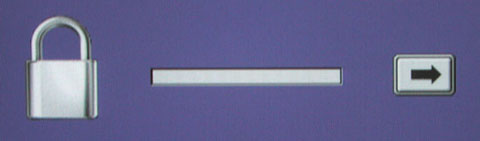
The firmware password protection lock screen
Enlarge picture
To be able to use the firmware password protection, you should have one of the following Apple computers: any Intel-based Mac, MacBook Air, iMac (Slot Loading) and later models of G3 iMac, iMac (Flat Panel) and later models of G4 iMac, iMac G5 and later models of G5 iMac, iBook (all models, both G3- and G4-based), eMac (all models), PowerBook (FireWire), PowerBook G4 and later models of G4 PowerBook, Power Mac G4 (AGP Graphics) and later models of G4 Power Mac, Power Mac G4 Cube – all models, Power Mac G5 and later models of G5 Power Mac.

The steps

The Open Firmware Password dialog
Enlarge picture
As Apple says on its support website, if you have a Mac that is compatible with the firmware password protection feature, you will have to follow these steps to set up a low-level password protection on your machine:

“1. Mac OS X v10.1 to v10.3.9: Download and install the Open Firmware Password application, which you can get HERE.
     Mac OS X v10.4.x: You must use the updated version that can be copied from the software installation disc (located at /Applications/Utilities/ on the disc).
     Mac OS X v10.5.x: Start from the Leopard Install DVD and choose Firmware Password Utility from the Utilities menu, then skip to step 5.
 2. Open the Open Firmware Password application.
 3. Click the icon to authenticate. Enter an administrator username and password when prompted.
 4. Click Change.
 5. Click to select the checkbox for 'Require password to change Open Firmware settings,' as shown below.
 6. Type your password in the Password and Verify fields.
 7. Click OK. A confirmation appears.
 8. Click lock icon to prevent further changes.
 9. Choose Quit from the application menu.”

IMPORTANT

According to Apple, “Firmware password protection does not prevent someone with physical access to the computer from restarting it or turning it off.” This means that firmware password protection is not the ultimate solution to protect your Mac and that you should make sure that your Mac is also physically protected from intruders.

Apple also says that, “The Open Firmware Password can be reset and changed by any one of the following (except MacBook Air):
-  By any administrator user, as designated in the Accounts preferences (or in Server Admin).
-  Via physical access to the inside of the computer.
-  When the computer is started up in Mac OS 9.”

Do you know of other (maybe even more secure) ways of protecting a Mac against intruders? Do you want to make an addition to the information available in this article? Do you want to ask for solutions to problems related to this article’s subject?

Share your knowledge with us and the other readers or feel free to ask for a solution to your problem in the comments section below.

15,849 hits · 13 comments
Link to this article · Print article · Send to friend

MUST-READ RELATED ARTICLES:


Famous Hacker on Snow Leopard Security

Security Experts Use Macs Not for Protection, But for the Experience

Apple Looking to Secure iPhone OS Booting and Installation

Intego Explains How Snow Leopard’s Antivirus Works

READER COMMENTS:


Comment #1 by: Sean McKenna on 19 Dec 2009, 06:44 UTC reply to this comment

I have been using firmware password protection ever since I learned about single-user/verbose mode on a Mac. I have also been familiar for years with the "transfer" or t-command when you boot to use any Mac as an external hard drive. It is a handy mode for transferring large files like videos. The beautiful thing with the firmware password, you can lock your computer down and protect it from being able to just boot CD's and letting any normal user to just take your computer and do something with it. Most people would not know what to do. You can still boot live cd's for linux or even install Windows, you just have to put in your password as you boot (and hold down the alt/option key). It is one of the most simple and yet effective system lockout tools (similar to a bios password but even more powerful).

As for other security concerns, I always create an app on my Macs to lock the screen. One of the features I never get that Mac does not have built into the OS. Using the simple Automator tool you can do this rather easily. I use it when I leave my computer for a few minutes or if I want the screen to not just sit on my desktop and risk excess wear and tear on my screen.

The new firewall in Snow Leopard (10.6) is very handy as well, simple yet effective for most users. One of the reasons I like a Mac at all, the simple ease of use design yet powerful Unix infrastructure enabling you to do so much more....

Comment #1.1 by: Sergiu Gatlan on 22 Dec 2009, 10:49 GMT

I also think that locking your screen from prying eyes while you're away from your Mac is a very good idea.

For this purpose I set the left down corner of the display as a hot spot to start my screen saver and check the "Require password to wake this computer from sleep or screen saver" in the Security.prefpane's General tab.

Also, disabling the automatic login should be a must do for every Mac user that want to make sure that his data is as safe as possible.

Comment #1.2 by: John Hunter on 28 Dec 2009, 12:48 GMT

It's easy to lock the screen with one click - go to Applications >Utilities >KeyChain Access >preferences and tick the box to 'Show Status in Menu Bar'

You will now have a padlock icon at the top of the screen - click this to instantly lock the screen or access many other security options.


Comment #2 by: GT on 03 Jan 2010, 17:44 UTC reply to this comment

I've tried to set the Firmware Password on my 24" Intel iMac with no luck. I am running Snow Leopard 10.6.2 and I have followed the instructions above with no luck.

I have installed the Snow Leopard disc and restarted, however there are no utilities to choose from. I have also tried from the Leopard Disc and because I am running Snow Leopard, it would not let me get past the initial screen.

All help appreciated....

Comment #2.1 by: Sergiu Gatlan on 04 Jan 2010, 09:06 GMT

You have not been able to set up the Firmware Protection on your Mac because it is not available for Macs running Snow Leopard.

I should have made it clearer in the article though - you can only set up Firmware protection on Macs running OS X 10.1 up to 10.5.x (see the first step in the Firmware Protection set up process above).

Comment #2.2 by: GT on 05 Jan 2010, 05:25 GMT

Sergiu,

Thanks for the response. Are you aware of why this omission exists in Snow Leopard ?, it seems bizarre for 10.6.x not to include any additional security protocols that would help protect a mac in the event of theft.

GT

Comment #2.3 by: Sergiu Gatlan on 05 Jan 2010, 07:40 GMT

Actually I have not been able to find an answer to this on Apple's website or the web. If any of the other readers know anything about it I would also be happy to find out the reason why Apple mentions nothing about the Open Firmware on Mac OS X 10.6.x.

Comment #2.4 by: Mike Berg on 11 Jan 2010, 20:55 GMT

I am also SOL in this situation. My disc is corrupt and I need to either boot from CD or boot in Target Disc Mode (holding T while booting). Neither options are working for me, presumably because I set the Open Firmware password in a previous version of the OS and it's still holding. I can't get the Open Firmware Password application to even open on this computer, so I don't even have a way to remove the password. :S So far it's looking like my option is to buy a new hard drive (which I've been putting off anyway) and restore from Time Machine. :(


Comment #3 by: musanim on 17 Nov 2010, 17:24 UTC reply to this comment

What about Mac OS X v10.6.x?

Comment #3.1 by: Sergiu Gatlan on 18 Nov 2010, 09:19 GMT

It is possible to add firmware password protection to a Mac running 10.6. To do this you will have to first install 10.5, add the firmware password and then upgrade the OS to 10.6.

This way you will have a Mac running 10.6 with firmware password protection enabled.

Comment #3.2 by: Dylan rox on 21 Apr 2011, 23:48 GMT

In 10.6 you can enable a firmware password. The Firmware Password utility is in the /Applications/Utilities/ folder of your OS X installer disc. Copy it to your Utilities folder. Then see this article: Setting up firmware password protection in Mac OS X. Ignore instructions for Open Firmware Password and skip to the bottom for instructions for use on Intel hardware.

To Select Go to Folder from the Finder's Go menu. Delete whatever appears in the field then drag the disc's icon into that field. Add, without quotes, "/Applications/Utilities/" then click the Go button. It's an invisible item.

Comment #3.3 by: Sergiu Gatlan on 22 Apr 2011, 07:01 GMT

Thanks Dylan!

Comment #3.4 by: nicky on 19 May 2011, 21:44 GMT

You don't need any utility do set up the EFI Firmware Password.
Just take a look at: http://www.macos.utah.edu/documentation/short_courses/advanced_administration/user_accounts.html

Copyright © 2001-2013 Softpedia. Contact/Tip us at

WindowsGamesDriversMacLinuxScriptsMobileHandheldNews

SUBMIT PROGRAM   |   ADVERTISE   |   GET HELP   |   SEND US FEEDBACK   |   RSS FEEDS   |   UPDATE YOUR SOFTWARE   |   ROMANIAN FORUM