 14 DAY TRIAL //
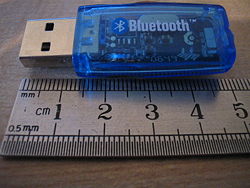
 Bluetooth represents a technology of short-range wireless communications, to replace physical connection between certain electronic devices, such as connecting a personal computer to a wireless keyboard or mouse. It works as a radio frequency transceiver, on the ISM band operating at the 2.4 gigahertz, the same range used by microwave and Wi-Fi.
The system works on the basis of synchronizing all the devices in the fashion of a piconet. A device acts as a master that allows the connection of up to seven slaves which might seem not to participate in the formed network.
The master device could participate in another piconet network, either as a master or slave. In such a network, the radio channel is being shared by a group of devices synchronized to a clock frequency-hopping pattern, generated by the master device.
The synchronization of the slave devices to the master device is a crucial feature of the Bluetooth and is used as a way of fighting against interferences produced by other nearby radio emitters, to produce a secure channel through which data can be transferred.
The radio channel is divided into separate time units named slots, through which slave devices use individually to communicate with the master. The synchronization takes place between the transmission and the reception, so the data can be sent through different frequencies in the ISM band.
The channel used to transfer data supports synchronous, asynchronous or broadcast traffic, each with different and specific use. Synchronous logical links are used to transfer audio data, while asynchronous links may transfer other forms of data.
The problems regarding wireless technology represent the difficulty of connecting wireless devices to each other. The Bluetooth technology uses a connection protocol based on the principles of device "inquiry" and "inquiry scan".
For example, you have a mobile phone from which you want to transfer data to a computer. The mobile phone will initiate an inquiry scan to the area around it to search for other Bluetooth devices. It will detect the Bluetooth signature of the computer and send an inquiry signal to the computer. If the computer recognizes the device, it will respond back to the telephone's inquiry and accept the connection.
All this is made by the Bluetooth technology, without the user ever being aware of anything more taking place except the fact that the task he initiated was completed.
Currently developed Bluetooth devices have distance ranges from 1 to 100 meters, with a power output of 1mW to 100mW (0dBm-20dBm) and transfer rates from 1 Mbit/s to 3 Mbit/s. A new type has been proposed by WiMedia Alliance which will have a transfer rate as high as 53 to 480 Mbit/s.
Health concerns regarding the frequencies emitted by Bluetooth are minimum since all the devices produced emit less power than most of the mobile telephones.