 14 DAY TRIAL //
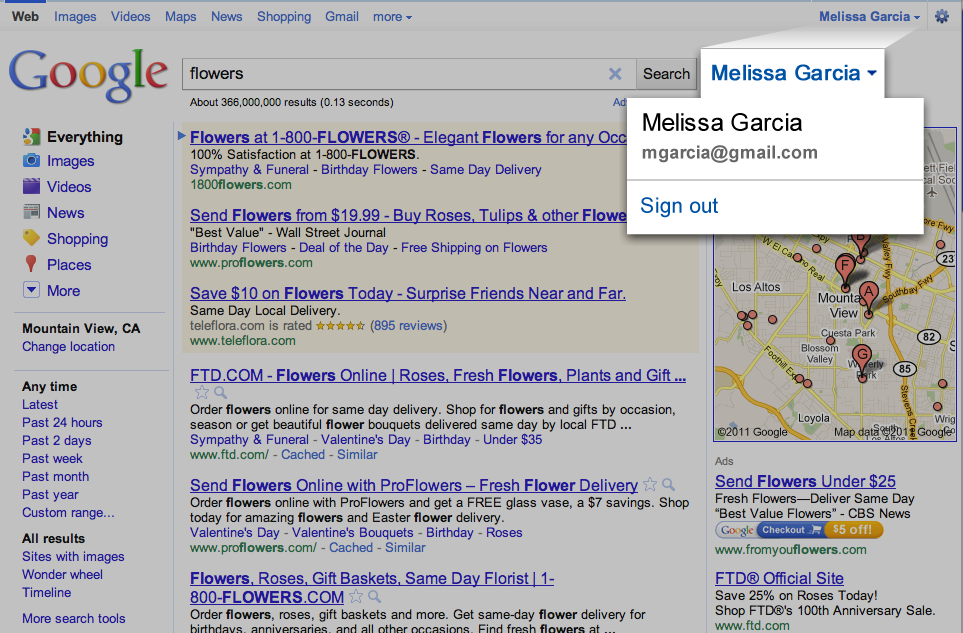
 Last week, Google started rolling out the revamped navigation toolbar which sits on top of many Google products. One of the changes in the new toolbar is the use of the account's name rather than the email address.
This change could be linked to the upcoming Google +1 "social layer," but Google is now clarifying things saying it's all about making users more aware of how they identify themselves in the various Google products.
"We’ve been thinking about the different ways people choose to identify themselves (or not) when they’re using Google--in particular how identification can be helpful or even necessary for certain services, while optional or unnecessary for others," Alma Whitten, Director of Privacy, Product and Engineering at Google, wrote.
"Attribution can be very important, but pseudonyms and anonymity are also an established part of many cultures -- for good reason," she added.
With Google products, there are three states of user authentication. Users that are signed out, or don't have a Google account, are labeled as unidentified.
Google still keeps cookies, IP addresses and even a search history for these users, but it does not track them individually or associate the data and usage with any profile.
Even if users are logged into their Google accounts, they can still enjoy a level of anonymity with some products by using pseudonyms. Blogger and YouTube are perfect examples, as places where people express themselves many may want the freedom to do so without being identifiable in the real world.
Finally, for some products, Google requires that they are linked to your account data, full name and so on. Google says that users are free to use the level of identification they choose, as long as the individual products allow it of course.
"Equally as important as giving users the freedom to be who they want to be is ensuring they know exactly what mode they’re in when using Google’s services. So recently we updated the top navigation bar on many of our Google services to make this even clearer," Whitten added.